
When We Are Hurting: A World Healing Guide for the Broken Heart
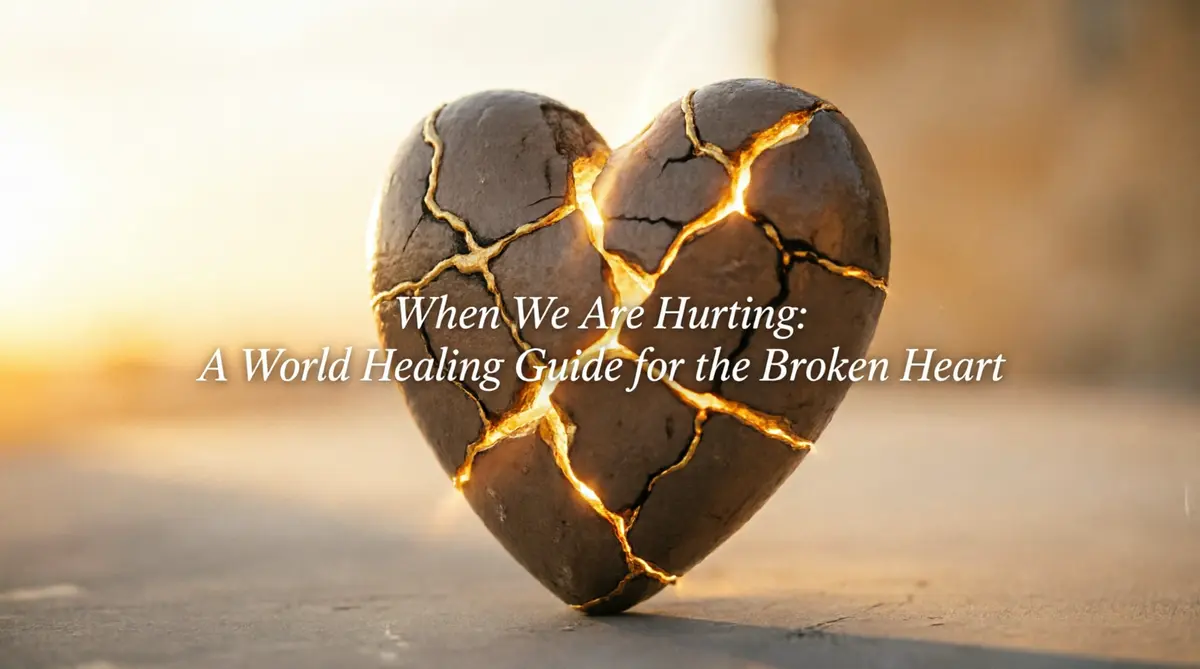
"Pain found me too. Here is what I gathered from every corner of the earth on my way back to myself."
The Night This Was Born.

Three in the morning has a way of stretching itself out longer than any other hour. The fan was spinning above me, the room was too quiet, and one sentence kept looping in my head like a song stuck on repeat. I wasn't looking for a cure. I was just looking for a reason to get through the next ten minutes.
That night is the real reason this guide exists. Not because the ache vanished by sunrise — it didn't — but because somewhere between the ceiling and the silence, a thought landed that wouldn't leave: nobody, in any single country, owns the full answer to how to heal from emotional pain. A grandmother in Lahore has a piece of it. A grandmother in Amritsar has another. A therapist in Boston has one too. A fisherman's daughter in Bogotá carries her own. This guide is an attempt to hand you all those pieces at once.
We don't heal by running from the pain. We heal the moment someone finally sees it.

What Pain Actually Does Inside Us.
Hurt is not just a feeling that sits in the chest. It rewires how the whole body works for a while. Sleep gets thinner. Focus gets shorter. A missed text feels like rejection, and a bad traffic light feels like the universe piling on. This is old wiring — the same survival circuitry that once kept us alive in caves — misfiring in a world of emails and heartbreaks instead of tigers.
Knowing that changes something. It means the mind isn't broken. It's just doing an outdated job. And an outdated job can be retrained — this is the entire idea behind mind training for heartbreak.

Something For The Worst Sixty Seconds.
Some pain doesn't wait for a good moment. It shows up mid-meeting, mid-drive, mid-conversation. For those minutes, three quick anchors:
1. Box breathing — in for four, hold four, out for four, hold four. Four rounds.
2. Cold water on the wrists — a small, almost silly trick that genuinely slows the heart down.
3. The 5-4-3-2-1 count — five things you can see, four you can touch, three you can hear, two you can smell, one you can taste. It yanks the mind out of the spiral and back into the room.
None of these fix anything long-term. They just buy enough calm to reach for what actually will.
Three Roots Every Healing Path Shares.
Before we travel the world, three things hold steady underneath every culture's method.
The body. An exhausted body cannot host a peaceful mind, no matter how good the meditation is. Try this: pick one wake-up time and keep it, weekends included, for seven days straight.
The breath. The nervous system reads breath before it reads thought. Try this: three alarms a day, labeled simply "breathe," ten slow breaths each time.
The inner voice. However we talk to ourselves in private becomes the actual pace of our healing. *Try this:* every time a cruel thought shows up uninvited, answer it out loud with one kinder sentence, even if it feels awkward saying it.
Healing was never one giant leap. It's a thousand small, stubborn steps.
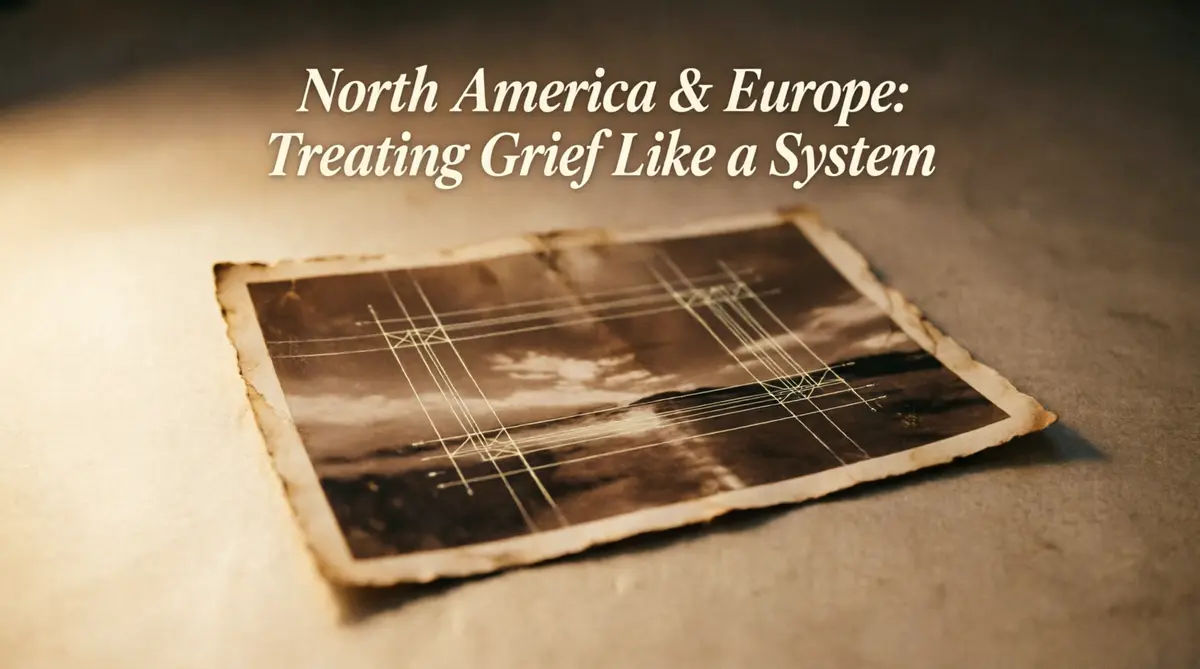
North America & Europe: Treating Grief Like a System.
Here, pain gets studied the way an engineer studies a machine that's misfiring — testable, trackable, correctable.
The core move — the shrinking photograph.** Picture the memory as an old photo. Shrink it, in your mind, down to the size of a coin. Let it drift off into the distance. The memory stays. Its grip doesn't.
Two more worth keeping close:
The countdown wind-down— count backward from ten to one before sleep, imagining warmth spreading from forehead to feet, landing on the thought, I release what I no longer need to carry.
Slow breath, six times a minute — one hand on the belly, breathing at that pace for a few minutes measurably eases the body's stress response.

The Middle East, India & Pakistan: Where Faith and Food Sit Together.
Here, the morning often starts with something as simple as a few dates and a pinch of black seed in warm water — a habit passed down long before nutrition science had a name, still followed in homes from Karachi to Kerala. Alongside it sits a single verse, repeated slowly after prayer: the promise that hardship never arrives without ease walking close behind it, or the reminder to hand over worry to a will greater than our own. In Punjab, on both sides of the border that split it, this same comfort often takes the shape of a shabad sung slowly at the gurdwara, or a line from the Gita recited under one's breath.
Worth adding to that:
A weekly circle— sitting with an elder in Lahore, Delhi, Islamabad, or Mumbai, or anyone whose voice carries the same words, and reciting them together. Pain loosens its grip faster when it's witnessed instead of carried alone.
A slower washing ritual before prayer — treated not as routine, but as a physical way of setting the day's weight down.
An evening charpai conversation. — the old South Asian habit of sitting outside with family as the day cools, saying the hard thing out loud before the house goes quiet.
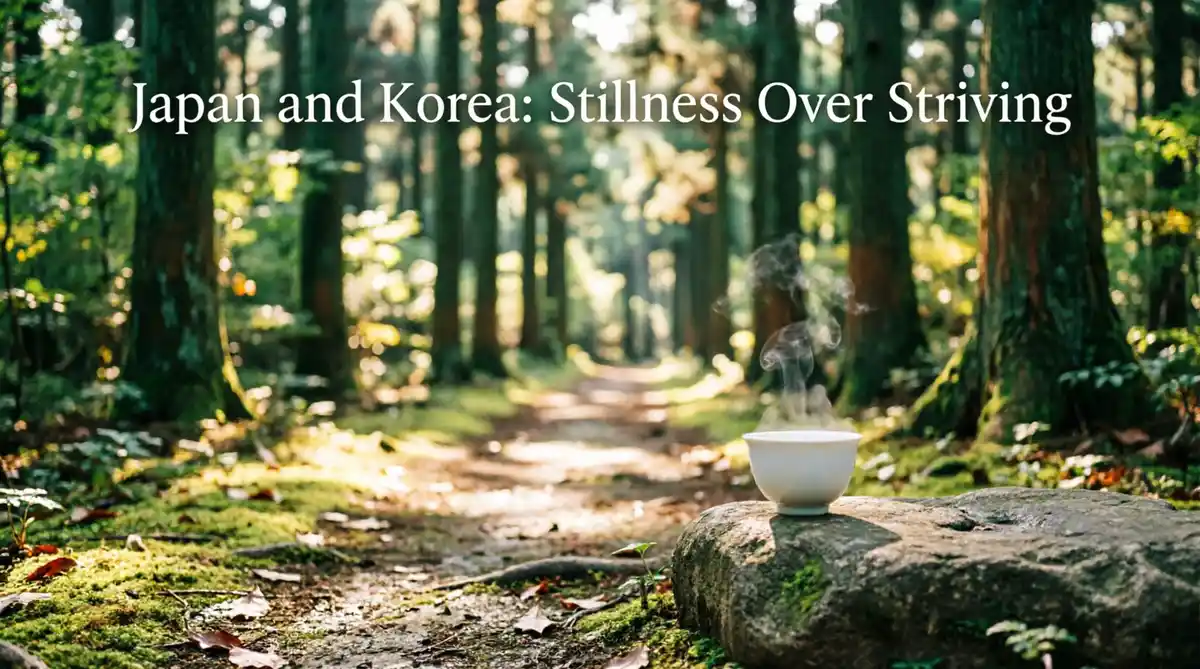
Japan & Korea: Stillness Over Striving.
Here, a slow twenty-minute walk through any patch of green, phone left behind, noticing bark and birdsong instead of notifications, has long been treated as real medicine — not metaphorically, but in ways that show up in slower heart rates and calmer nervous systems.
Two companions to that walk:
A hundred-count descent— counting slowly from one hundred to one, relaxing a little further with each number, ending by holding a picture of a steadier future self for two quiet minutes. This is the root of Silva Method meditation healing.
One cup of tea, made and drunk with full attention — no multitasking, no scrolling. A small ritual that trains a scattered mind back toward one single point.
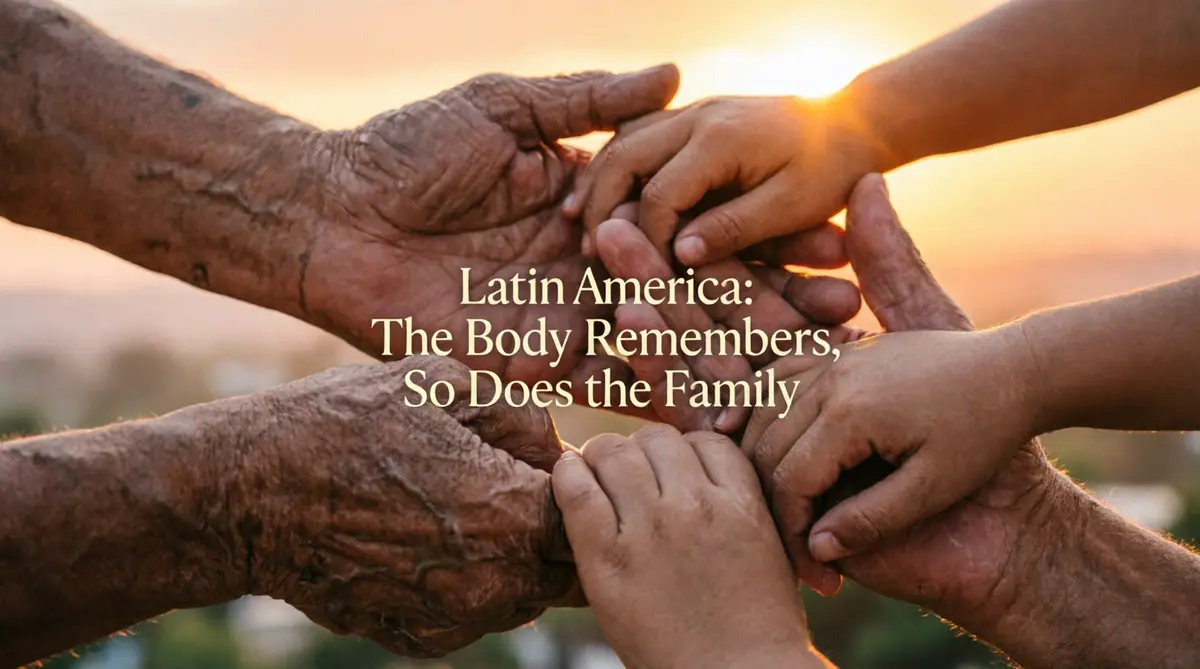
Latin America: The Body Remembers, So Does the Family.
Here, healing often starts in the hips and the shoulders before it reaches the mind. Music with a steady, insistent beat, and permission to move without any choreography, lets something loose that words alone can't reach.
Alongside the movement:
A letter to an ancestor — real or imagined, describing the weight being carried and asking, plainly, for their strength. Old pain, in many family traditions here, is treated as something that can be consciously set down, not just silently inherited.
A weekly family circle — one hard feeling, spoken out loud, witnessed without anyone rushing in to fix it.
One Honest Pause.
This guide is a companion, not a substitute for real professional care. If what you're carrying feels heavier than any single article can hold, or if thoughts of self-harm show up, please reach out to a licensed therapist, a doctor, or a crisis line in your country right away. Asking for that kind of help isn't falling behind in the healing — it is the healing.
Where This Lands.
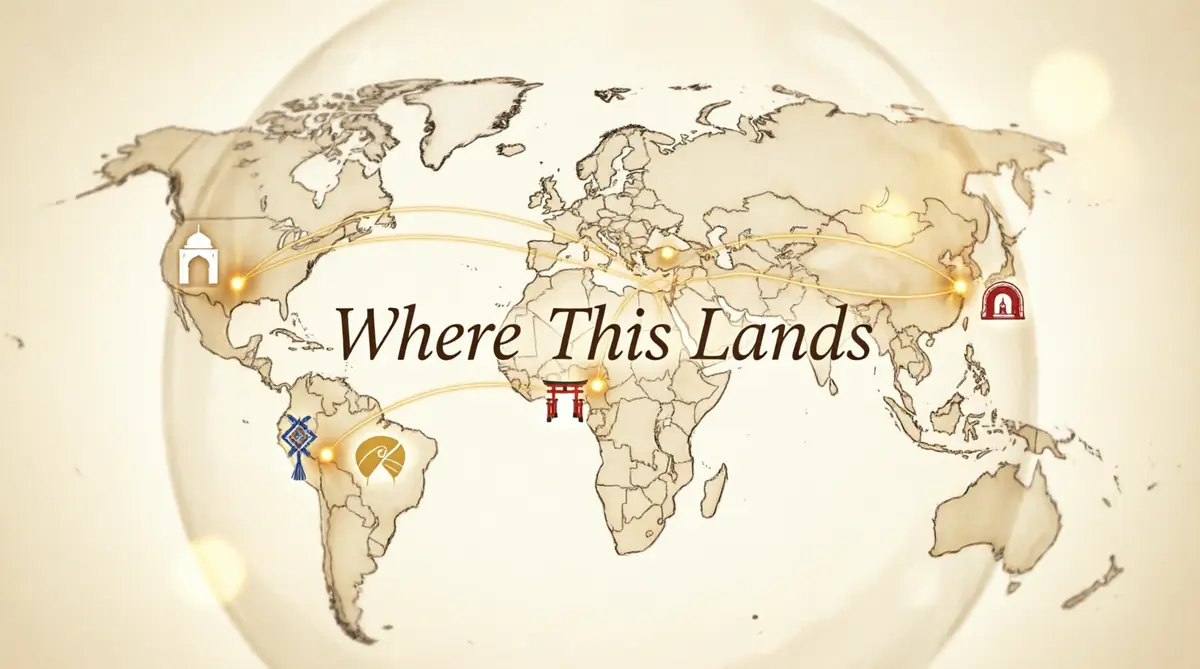
This started in one sleepless room, in one particular country. It ends in every country at once — a kitchen in Lahore, a courtyard in Amritsar, a forest path outside Kyoto, a living room in Bogotá, a therapist's office in Boston — because hurt never needed a passport, and it turns out, neither does mending.
Whichever piece of this spoke to you first, that's your answer to how to overcome hurt naturally: not one universal formula, but every method finally meeting the person who actually needed it.
We were never broken people waiting to be fixed. We were whole people, mid-remembering.
Pick one thing from everything above. Just one. Do it before today closes. That's enough for tonight — and enough has always been where healing quietly begins.