The Spiritual Code of the Second Para of Quran.
Open any copy of the Quran and turn to the second Para — Juz 2, as it is called — and you will find something that feels less like a religious chapter and more like a letter written directly to you. It runs from verse 142 to verse 252 of Surah Al-Baqarah, and it was revealed at a time when the small Muslim community in Madinah was learning, for the first time, how to actually live as a society: how to pray, how to fast, how to treat a spouse, how to handle money, how to keep peace at home. That is what makes this Para different from a lot of religious text people imagine. It is not abstract. It is practical, almost domestic, and that is exactly why it still speaks to a person sitting with a phone in their hand in the year 2026.
This article is going to do two things. First, it will explain, in plain language, what Allah is actually saying to human beings in this part of the Quran — what the core message is. Second, it will pull out five specific verses from this same Para, verse by verse, and show how each one becomes a tool you can actually use: for focus, for anxiety, for a marriage that feels strained, for financial worry, and for the kind of household tension that spills out into how the world sees you. Nothing here will send you to another chapter. Every verse quoted below comes from inside Para 2 itself.

What Is Allah Saying to Us in This Chapter?
If you read Juz 2 slowly, a pattern shows up again and again. Allah is not just giving commands. He is giving reasons, and then He is giving comfort. The Para opens with the change of the direction of prayer, from Jerusalem to Makkah, and immediately uses that event to teach something bigger: that faith is tested, that the outward ritual matters less than the sincerity behind it, and that a community only becomes strong when it is united around something higher than itself.
From there the Para moves into the rules of daily life — fasting, patience during hardship, the correct way to treat a spouse, how to handle debt and charity, how to divorce with dignity if a marriage has to end, and how to spend wealth without becoming attached to it. Woven through all of this is one repeated idea: Allah is close. He is not a distant lawgiver watching from far away. He says plainly in this Para that when His servants ask about Him, He is near, and He answers the call of whoever calls on Him. So the message of Para 2, if you had to compress it into one sentence, is this: here is how to live, and you are never doing it alone.

Applying This in a Digitalized, Distracted World.
The world this Para was revealed into did not have notifications, algorithms, or three screens fighting for a person's attention. And yet the guidance holds up, maybe even better now than before, because the problems it addresses — a wandering mind, a stressed heart, a strained marriage, financial fear, a noisy home — have not gone anywhere. They have only gotten louder. Here is a simple, step-by-step way to bring this Para into a modern routine.
Step one — anchor your day with something fixed.
The Para's emphasis on prayer as a fixed point (facing the Qibla, praying at set times) works as a model for anything: five short moments a day where the phone is down and the mind resets. Even outside formal prayer, borrow this structure. Pick fixed checkpoints in your day that nothing is allowed to interrupt.
Step two — treat patience as a skill, not a mood.
The Quran here does not say "feel calm." It says "seek help through patience," which is an action, something you practice. When stress hits — a bad message, a work deadline, an argument — the instruction is to pause and actively steady yourself before reacting, rather than waiting to feel calm first.
Step three — remember that hardship is described, not hidden.
This Para tells people directly that they will be tested with fear, hunger, and loss. It does not pretend life will be easy. That honesty is itself useful in a world that often sells the idea that everyone else's life is smooth. Knowing that difficulty is normal, and even expected, takes away some of its power to isolate you.
Step four — let close relationships be treated as sacred, not convenient.
The Para's language about spouses is intimate and protective. Applied today, that means resisting the urge to treat a marriage or a close relationship as disposable the moment it gets hard, and instead putting in the same deliberate care the verses describe.
Step five — spend and give with an open hand.
The verses on charity in this Para describe wealth as something that grows when it is shared, not just hoarded. In a digital economy built on comparison and accumulation, this is a quiet but real corrective.
Five Verses From Para 2 — And How to Use Each One.

1. For focus, when your mind keeps drifting.
يَا أَيُّهَا الَّذِينَ آمَنُوا اسْتَعِينُوا بِالصَّبْرِ وَالصَّلَاةِ ۚ إِنَّ اللَّهَ مَعَ الصَّابِرِينَ
اے ایمان والو! صبر اور نماز کے ذریعے مدد طلب کرو، بے شک اللہ صبر کرنے والوں کے ساتھ ہے۔
"O you who believe, seek help through patience and prayer. Indeed, Allah is with the patient." (2:153)
How to use it:
When your focus keeps breaking — during study, during work, during anything that needs sustained attention — this is the verse to sit with. Notice the order: patience comes before prayer in the sentence, because patience is the discipline of staying with something even when it is boring or hard, and prayer is what refuels that discipline. Recite this verse before you start a task that needs concentration, and let the phrase "Allah is with the patient" be the thought you return to the moment your attention wants to wander.
2. For stress, anxiety, and low moments
وَلَنَبْلُوَنَّكُم بِشَيْءٍ مِّنَ الْخَوْفِ وَالْجُوعِ وَنَقْصٍ مِّنَ الْأَمْوَالِ وَالْأَنفُسِ وَالثَّمَرَاتِ ۗ وَبَشِّرِ الصَّابِرِينَ الَّذِينَ إِذَا أَصَابَتْهُم مُّصِيبَةٌ قَالُوا إِنَّا لِلَّهِ وَإِنَّا إِلَيْهِ رَاجِعُونَ
اور ہم ضرور تمہیں کچھ خوف، بھوک، اور مال، جان اور پھلوں کی کمی سے آزمائیں گے، اور صبر کرنے والوں کو خوشخبری دے دو، جو لوگ جب کوئی مصیبت آتی ہے تو کہتے ہیں: بے شک ہم اللہ ہی کے ہیں اور اسی کی طرف ہمیں لوٹنا ہے۔
"And We will surely test you with something of fear and hunger and a loss of wealth and lives and fruits, but give good tidings to the patient — who, when disaster strikes them, say, 'Indeed we belong to Allah, and indeed to Him we will return.'" (2:155-156)
How to use it:
This is the verse for a genuinely heavy day — when anxiety feels physical, when a loss has just happened, when everything feels out of your control. The line to hold onto is "we belong to Allah, and to Him we will return." It is not a denial of pain. It is a reframe: your life, your losses, and your outcomes are not something you have to carry entirely by yourself. Say it slowly when the chest feels tight. Let it loosen the grip that the fear has on you, rather than trying to force the fear away.
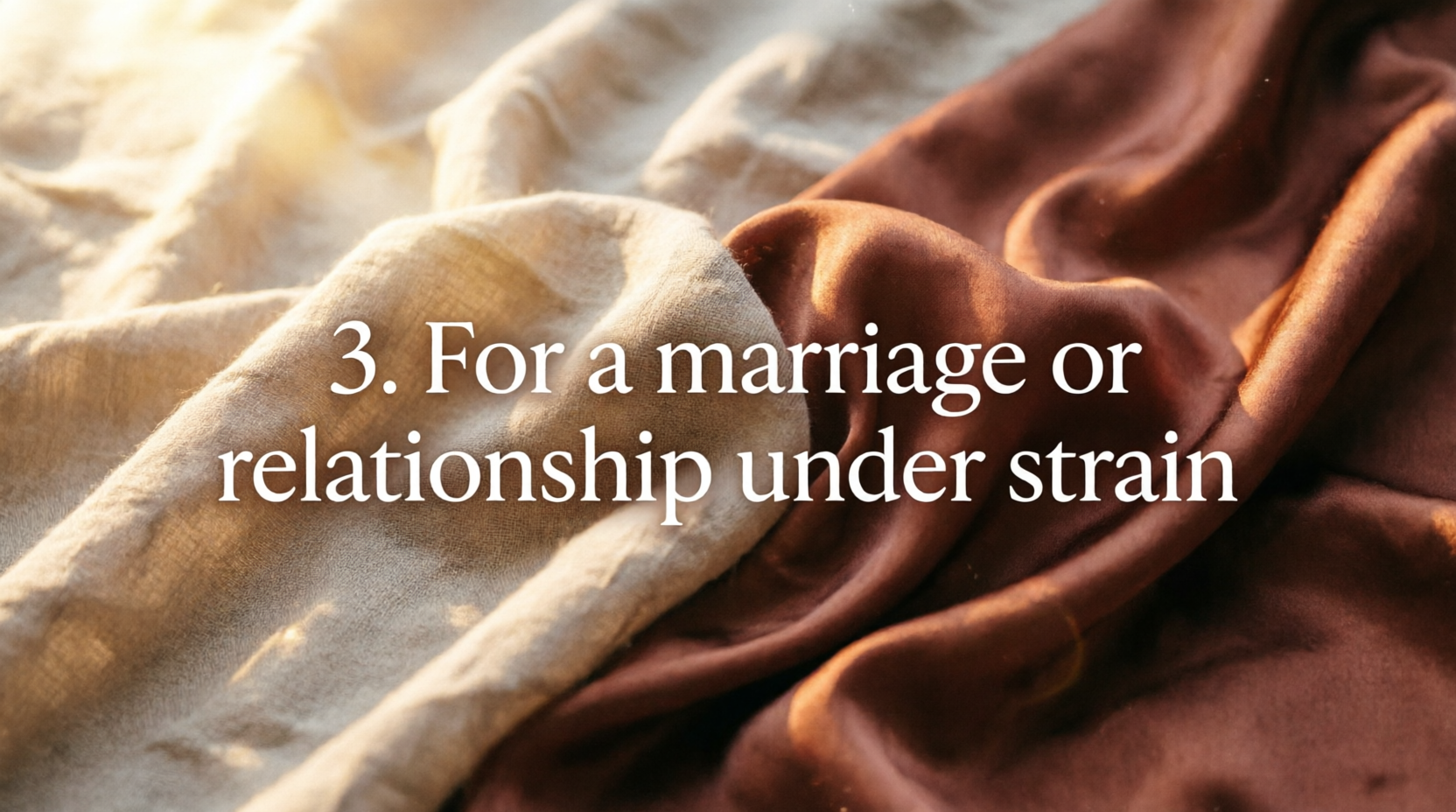
3. For a marriage or relationship under strain.
أُحِلَّ لَكُمْ لَيْلَةَ الصِّيَامِ الرَّفَثُ إِلَىٰ نِسَائِكُمْ ۚ هُنَّ لِبَاسٌ لَّكُمْ وَأَنتُمْ لِبَاسٌ لَّهُنَّ
روزوں کی رات میں تمہارے لیے اپنی بیویوں کے پاس جانا حلال کر دیا گیا ہے، وہ تمہارا لباس ہیں اور تم ان کا لباس ہو۔
"It has been made permissible for you the night preceding fasting to go to your wives. They are clothing for you and you are clothing for them." (2:187)
How to use it:
The word used here is "libaas" — clothing. Clothing covers you, protects you, and sits closest to your body. That is the picture the Quran gives of a spouse: someone meant to shield you and be shielded by you, not someone to keep score against. When a relationship is going through a rough patch, sit with this image specifically. Ask honestly whether you are currently acting like clothing for the other person — covering their weaknesses, protecting their dignity — or whether you have started acting like an opponent instead.
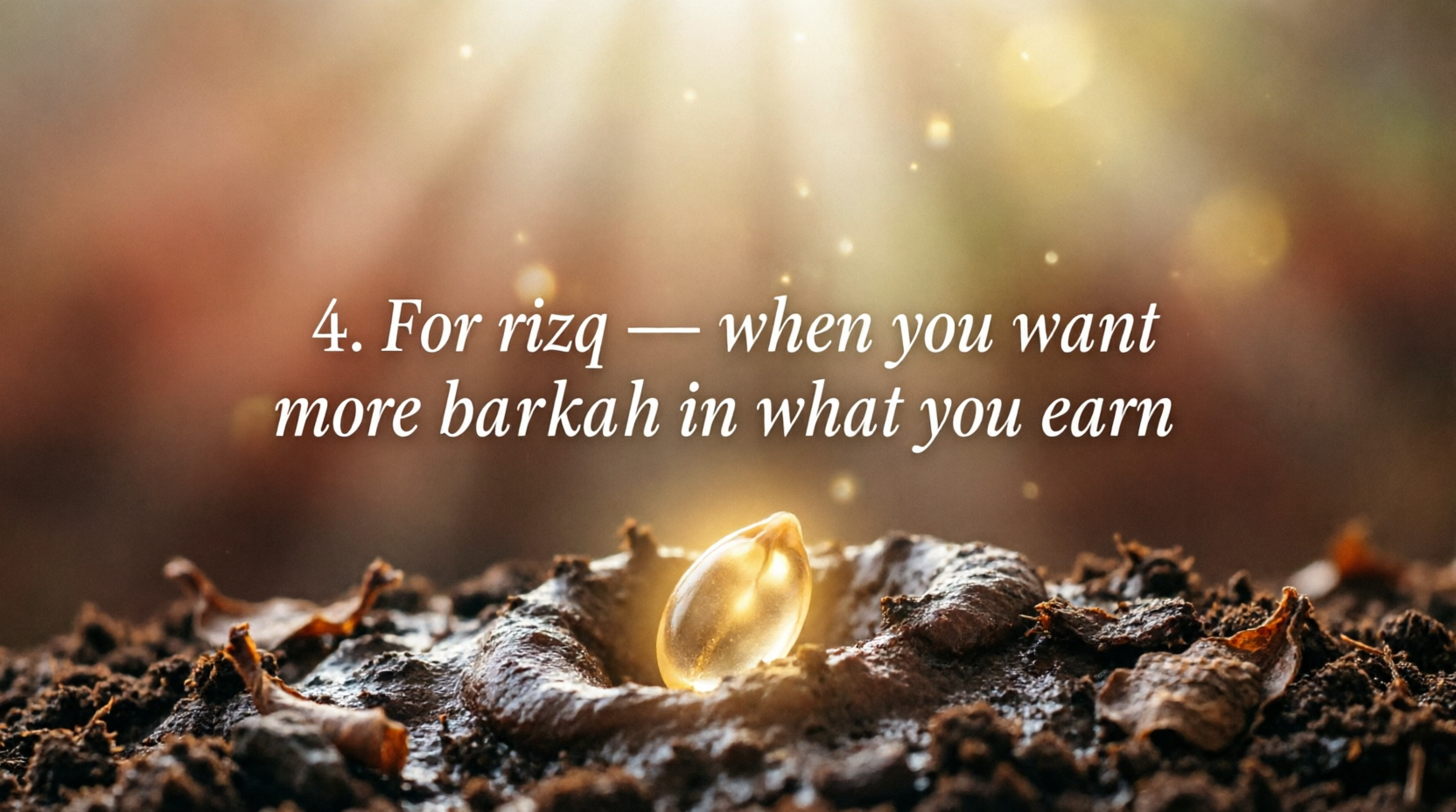
4. For rizq — when you want more barakah in what you earn.
مَّن ذَا الَّذِي يُقْرِضُ اللَّهَ قَرْضًا حَسَنًا فَيُضَاعِفَهُ لَهُ أَضْعَافًا كَثِيرَةً ۚ وَاللَّهُ يَقْبِضُ وَيَبْسُطُ وَإِلَيْهِ تُرْجَعُونَ
کون ہے جو اللہ کو قرضِ حسن دے، تو اللہ اسے کئی گنا بڑھا کر واپس دے، اور اللہ ہی تنگی اور فراخی دیتا ہے، اور اسی کی طرف تمہیں لوٹنا ہے۔
"Who is it that would loan Allah a goodly loan so He may multiply it for him many times over? And it is Allah who withholds and grants abundance, and to Him you will be returned." (2:245)
How to use it:
This verse directly connects giving with increase. If income feels tight, or barakah in your money feels absent no matter how hard you work, this is the verse to recite before you plan your budget. Practically, that means deliberately setting aside something to give — even a small, fixed amount — before you spend on anything else that month. The verse is not a magic formula for wealth; it is a reminder of where increase actually comes from, and it shifts the anxious grip most people have on money into something calmer.
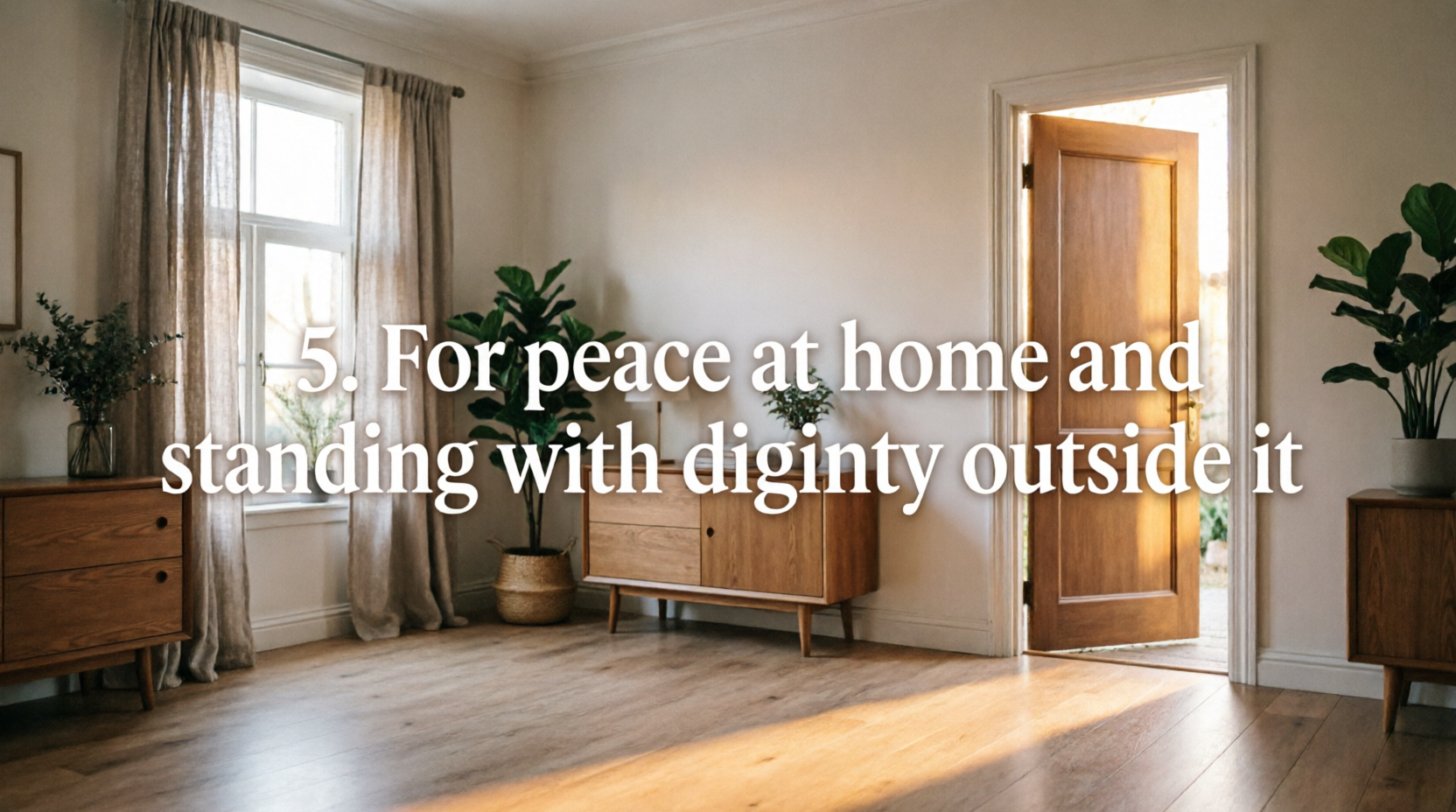
5. For peace at home and standing with dignity outside it
وَلَا تَجْعَلُوا اللَّهَ عُرْضَةً لِّأَيْمَانِكُمْ أَن تَبَرُّوا وَتَتَّقُوا وَتُصْلِحُوا بَيْنَ النَّاسِ ۗ وَاللَّهُ سَمِيعٌ عَلِيمٌ
اور اللہ کے نام کو اپنی قسموں کا بہانہ نہ بناؤ کہ نیکی کرنے، تقویٰ اختیار کرنے اور لوگوں کے درمیان صلح کرانے سے رک جاؤ، اور اللہ سننے والا، جاننے والا ہے۔
"Do not make Allah, [in your] oaths, an excuse against being righteous, fearing Him, and making peace among people. And Allah is Hearing and Knowing." (2:224)
How to use it:
This verse is about not letting pride, an old promise to yourself, or a stubborn grudge stop you from making peace — inside your own house or outside it. A lot of household fights stay unresolved simply because someone has already sworn, even privately, that they won't be the one to speak first. Recite this verse before you walk back into a tense room. The instruction is direct: whatever oath or pride is stopping you from reconciling, drop it. A home that practices this becomes calm on the inside, and that same reputation for fairness and calm is exactly what earns a person real respect in the wider world — not loud self-defense, but a known habit of making peace.

A Strong Way to Close.
What makes Para 2 remarkable is that it never separates the spiritual from the practical. It talks about facing Makkah in prayer in the same breath as it talks about a fair divorce settlement. It talks about the nearness of Allah in the same breath as it talks about eating and drinking during Ramadan nights. The message underneath all of it is simple: your focus, your stress, your marriage, your income, your home — none of it is too small or too ordinary to be spiritual. These five verses are not decorations to recite and forget. They are meant to be lived with, one at a time, in the exact moments they were written for — when your mind wanders, when fear rises, when a marriage feels distant, when money feels
tight, when your own home needs peace before the world will ever give you any
Comments (0)
Please sign in to join the conversation.
No comments yet. Be the first to join the discussion!