
The Silent War on Male Vitality (And How to Win It Back)

Table of Contents
1. The Story Nobody Talks About
2. The Numbers Behind the Feeling
3. Stop Blaming Genetics. Start Blaming Your Chair
4. Your Phone Is Stealing Your Sleep
5. Food Is Part of the Puzzle, Not the Whole Answer
6. Chemicals You Never Agreed To
7. Your Nervous System Never Gets to Rest
8. The Missing Piece: Training Your Mind
9. The Anchor Method: A 4-Week Mind Training Program
10. When It's Not Just Lifestyle
11. Nobody's Doing This to You On Purpose

1. The Story Nobody Talks About.
Ravi is 29. He used to play football every weekend. He stayed up late laughing with friends and woke up ready to move. Now he wakes up tired even after eight hours of sleep. He drags through work, comes home, scrolls his phone for hours, and tells himself he'll start fresh tomorrow. Tomorrow doesn't come.
His blood tests are "normal." But something in him feels dimmer than it used to. When he finally told a friend, the friend said, "Bro, same. I thought it was just me."
It's not just Ravi. It's happening to men everywhere, and almost nobody says it out loud.

2. The Numbers Behind the Feeling.
What if I told you the average man today has noticeably lower testosterone than a man the same age did 30 years ago, and it's not because of his genes?
Researchers led by Prof Hagai Levine pulled together six long-running studies covering nearly 119,000 men and found that average total testosterone fell by 54% between 1972 and 2019, roughly a 1% drop every single year (source: [ZME Science, reporting on the ESHRE presentation](https://www.zmescience.com/science/news-science/testosterone-levels-men-decline/)). Worth noting: other researchers have pushed back on how large the overall decline really is, and some fact-checks put the honest number closer to 15-25% over similar periods, not 50% (source: [Newsweek fact-check](https://www.newsweek.com/fact-check-have-testosterone-levels-fallen-1-every-year-since-1980-1738976)). Either way, the direction is the same. Down.
You don't need a medical degree to know something's off. You feel it. Low energy that sleep doesn't fix. Motivation that vanishes by 3 PM. A quiet sense that you used to have more fire than this.
You're not lazy. You're not broken. You're living through a real shift, and a lot of it can be worked on. But here's the part almost nobody mentions: your body follows your mind. You can fix every physical habit on this list and still feel empty if your head is running on fear, distraction, and noise.
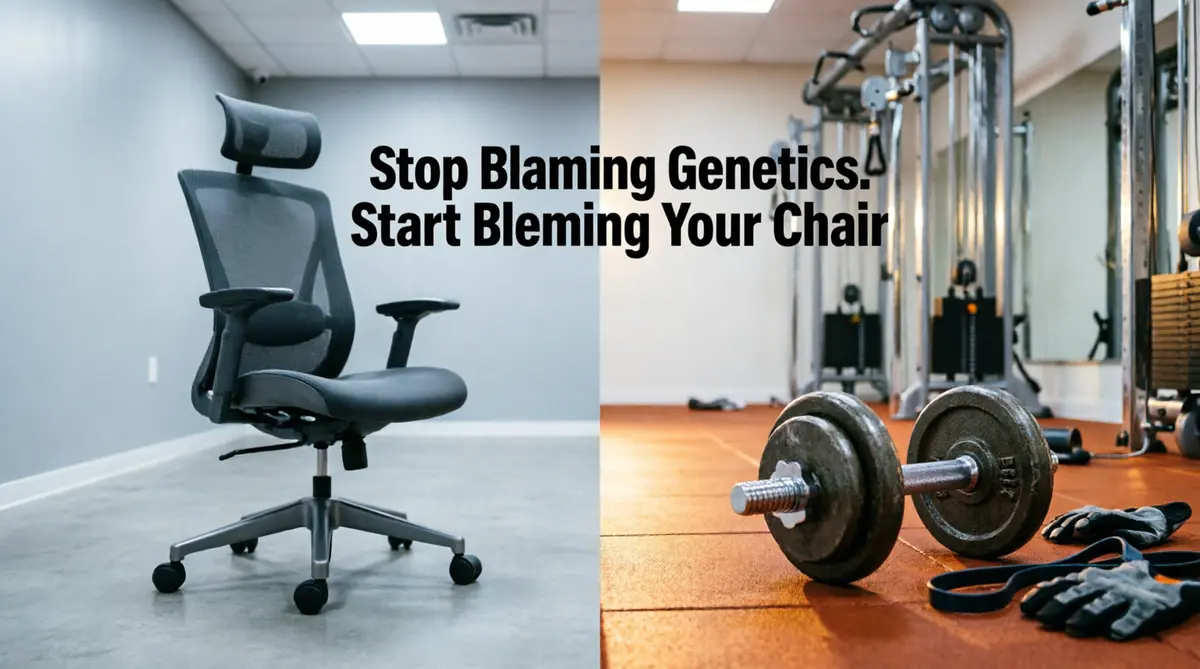
3. Stop Blaming Genetics. Start Blaming Your Chair.
Humans were built to walk, lift, and sweat. You sit for eight-plus hours at a desk, drive home, and sit again. Muscles that don't get used don't just shrink. They stop sending the signals that keep hormone production running.
You need to lift something heavy at least three times a week. Not "it may help." You need it.

4. Your Phone Is Stealing Your Sleep.
Testosterone gets produced mostly during deep sleep. Researchers Leproult and Van Cauter at the University of Chicago found that men who slept five hours a night for one week saw testosterone drop by 10 to 15% (source: [JAMA, 2011](https://jamanetwork.com/journals/jama/fullarticle/1029127)). That's a week of bad sleep undoing months of gym work.
Sleep isn't rest. It's production time. Protect it like your job depends on it, because in a way, it does.

5. Food Is Part of the Puzzle, Not the Whole Answer.
Ultra-processed food and sugar-loaded drinks replaced what men used to eat without a second thought. Under-eating, crash dieting, or chronically skipping meals pushes the body toward energy-saving mode, and hormone production is one of the first things it scales back.
But here's the honest part most articles skip. "Eat more protein and fat" isn't a fix for every man's hormone problem. Obesity, insulin resistance, thyroid issues, chronic illness, and certain medications all affect testosterone in ways that diet alone won't touch. Food matters. It's not the whole story, and treating it like a cure-all does men a disservice.

6. Chemicals You Never Agreed To.
Certain plastics and chemicals in everyday products interfere with hormone signaling in your body. Researchers call them endocrine disruptors. You're not being targeted on purpose. You're being exposed anyway, through packaging and water, every single day, without ever choosing it.
You can't avoid all of it. You can avoid enough of it to matter.

7. Your Nervous System Never Gets to Rest.
Chronic stress keeps cortisol high. High cortisol crushes testosterone. Add hours of scrolling and porn on autopilot, and your body stays stuck in alert mode all day.
Cut the scrolling. Get outside for ten minutes before noon. Morning sunlight resets your body clock, and your body clock resets your hormones.

8. The Missing Piece: Training Your Mind.
Here's what most articles on this topic skip. You can lift weights, sleep well, and eat clean, and still walk around feeling flat and disconnected. Vitality isn't only physical. It's built on focus, calm, and a sense of direction. Most men were never taught how to train their mind the way they train their body. So here's a simple place to start.

9. The Anchor Method: A 4-Week Mind Training Program.
This isn't therapy, and it isn't a replacement for professional help if you need it. It's a simple daily practice, under 20 minutes, built around four pillars: stillness, focus, exposure, and reflection.
Week 1: Stillness.Sit quietly for 10 minutes each morning before touching your phone. Just breathe and notice your thoughts without chasing them. By day 7, you should notice small gaps of quiet between thoughts.
Week 2: Focus. Pick one task daily and give it 25 minutes of full attention. No phone nearby. When your mind wanders, bring it back gently. This rebuilds the mental muscle scrolling has worn down.
Week 3: Exposure. Do one uncomfortable thing on purpose each day. A cold shower. A hard conversation you've been avoiding. This proves to your brain that discomfort doesn't mean danger.
Week 4: Reflection. Write three sentences nightly: what went well, what drained you, what you'll change tomorrow.
Loop these four weeks alongside the physical changes above. This is one man's practical framework, not a clinical treatment, and it works best stacked on top of real sleep, movement, and food.

10. When It's Not Just Lifestyle.
This matters, so it's worth saying plainly. Not every man's low energy, low drive, or low libido is a lifestyle problem. Clinically low testosterone (hypogonadism), thyroid disorders, depression, chronic illness, certain medications, and sleep disorders like apnea can all cause the exact same symptoms described in this article, and none of them get fixed by lifting weights or sitting still for ten minutes.
If you've already cleaned up sleep, movement, food, and stress for a few months and still feel flat, that's not a discipline problem. That's a reason to get blood work done and talk to an actual doctor. This article is a starting point, not a diagnosis, and not a substitute for one.

11. Nobody's Doing This to You On Purpose.
Modern life did this slowly, through sitting, scrolling, bad food, isolation, and a mind that never gets trained. Nobody put this in your water on purpose. But it happened anyway, and most of it is yours to work on.
Stop waiting for permission. Pick one thing today. Lift something heavy. Go to bed an hour earlier. Sit still for ten minutes before you touch your phone. Do it tonight, not "someday." And if it's not working after real effort, see a doctor instead of blaming yourself.