The Day I Stopped Waiting to Feel Ready.
I once knew a girl who kept a rejection folder.
Not a metaphorical one. An actual folder, on her desk, stuffed with printed emails that all said some version of "we've decided to move forward with other candidates."
By the time she was 23, the folder had 31 rejections in it.
Job applications. Scholarship denials. A startup pitch that got laughed out of a room. A relationship that ended with the line "I just don't see you going anywhere."
She told me she used to open that folder on bad nights. Not to torture herself. To count. Like each rejection was proof she was still in the arena, still swinging, still alive to the outcome.
On the night the folder hit 31 pages, she didn't cry. She sat there and wrote one line on a sticky note and pressed it to the front of the folder:
"Every one of these means I showed up. That's the only stat that matters."
Two years later, she runs a design studio with 9 people on payroll. One of them is the guy who once told her she'd never make it as a designer.
Her talent didn't change that night. Her CV didn't change. What changed was the war in her head — and for the first time, she decided to fight on her own side.
That's what this article is about.
Self-Belief Isn't a Feeling. It's a Decision You Make First.
Here's the part almost nobody says out loud: you don't need to feel confident to act confident.
Confidence is not a prerequisite. It's a byproduct.
You don't wait until you believe you can do something and then do it. You do the thing — shaky hands and all — and belief shows up somewhere in the middle, usually when you're too busy to notice it arrived.
Real self-belief isn't arrogance. It isn't ignoring your weaknesses or pretending you're invincible. It's the quiet, stubborn conviction that you're capable of learning, adapting, and getting back up — even without proof yet.
It's the gap between:
"I'm not good at this."
"I'm not good at this yet."
That one word carries the entire future.
Why This Generation Needs It More Than Any Before.
Every generation has had doubt. This one has doubt with a highlight reel attached to it.
You're not just comparing your life to your neighbor anymore. You're comparing your unedited Tuesday to someone else's best 15 seconds, curated, filtered, and algorithmically pushed into your face at 1 AM.
Add rising academic pressure, a job market that keeps moving the goalposts, and family expectations that never quite match your own — and you get a generation that talks itself out of trying before it's even attempted anything.
Self-belief is the shield against all of that. It's what lets a student retake a subject they bombed. It's what gets a job seeker into interview number six after five closed doors. It's what gets an athlete back on the field after the injury that was supposed to end everything.
Without it, ability sits unused in a drawer somewhere.
With it, even modest talent turns into something nobody saw coming.
The Mind-Training Blueprint.
Self-belief isn't hereditary. It's trained — like a muscle, a language, a habit of thought you build one rep at a time. Here's a full system pulled from psychology, movement, breath, tradition, and food.
1. Rewire the Thought Loop (Cognitive Reframing).
Every time a self-doubting thought hits ("I always mess this up"), don't argue with it in your head — write it down. Next to it, write the evidence against it. Then write a balanced replacement: "I've struggled with this before, but I've also improved with practice."
Ten minutes a day, on paper, for three weeks. This is the single most researched way to break a negative thought pattern, and it costs nothing but a notebook.

2. Yoga Poses That Build Physical Confidence.
The body leads the mind more often than we admit. Try these daily:
Tadasana (Mountain Pose): Stand tall, feet grounded, spine long, arms relaxed at your sides. Hold for 60 seconds while breathing slow and deep. It trains your body into stillness the mind eventually follows.
Virabhadrasana II (Warrior II): Wide stance, front knee bent, arms extended, gaze forward. Hold 30 seconds each side. This pose is used specifically because it demands both strength and steadiness at once.
Ustrasana (Camel Pose):
Kneel, arch back gently, hands reaching toward heels. Opens the chest and releases tension often held in the body from suppressed fear.
Follow with 10 minutes of breath-focused meditation. Add a mantra during the practice — something as simple as "I am steady" repeated on every exhale. Repetition is what moves a phrase from your lips into your actual belief system.
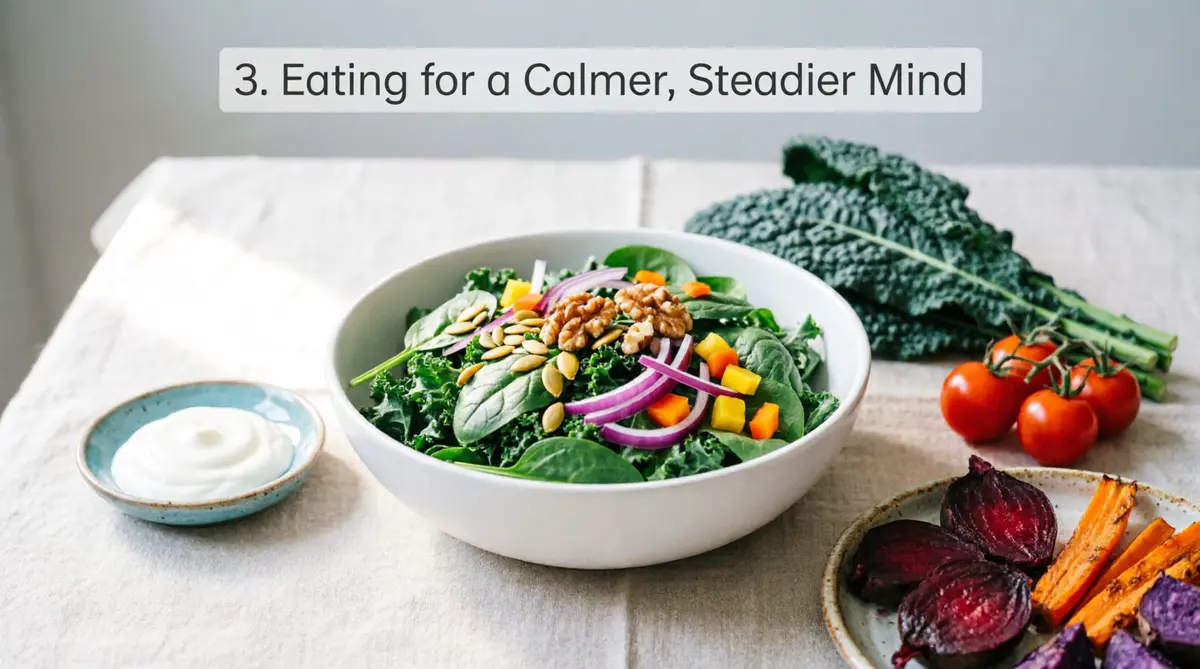
3. Eating for a Calmer, Steadier Mind.
Nutrition doesn't build confidence directly, but it removes the noise that drowns it out. A gut under stress sends anxiety signals to the brain regardless of what you're telling yourself.
Practical, evidence-backed basics: leafy greens, nuts and seeds, fermented foods like yogurt or kefir, consistent meal timing, and real hydration. Cutting back on sugar spikes and heavy caffeine reduces the crash-and-anxiety cycle that quietly wears down resolve. Starting the day with protein instead of straight carbs keeps energy — and mood — level through the morning.
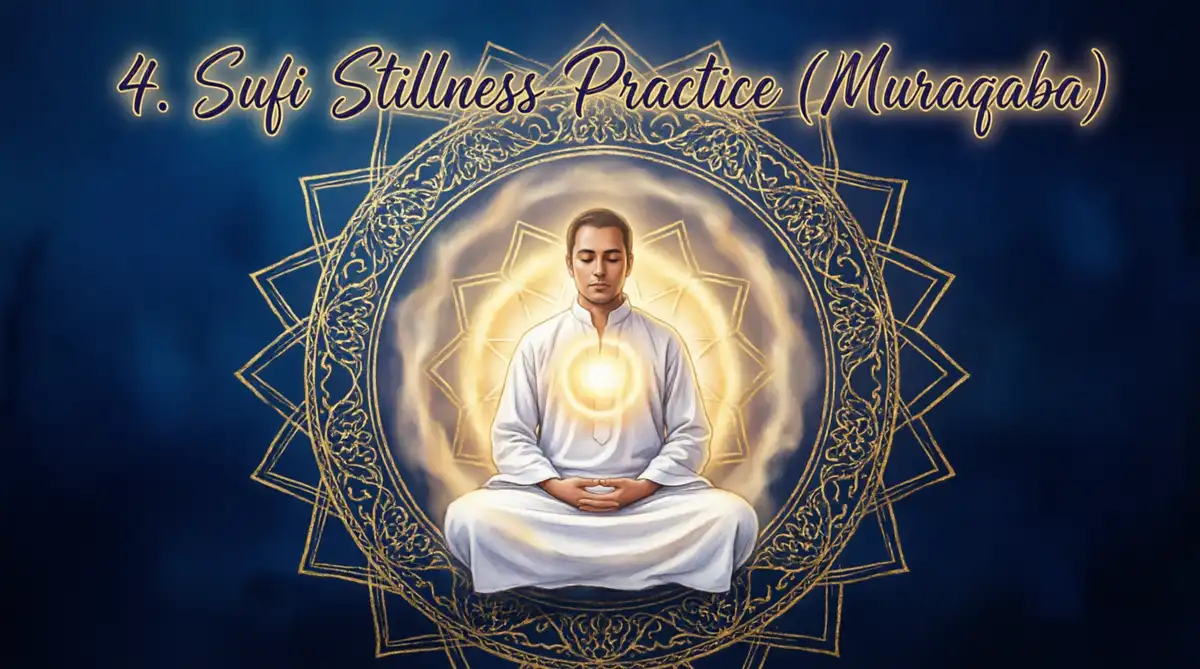
4. Sufi Stillness Practice (Muraqaba).
Sit cross-legged, spine relaxed, eyes closed. Bring your attention to the center of your chest. Breathe slowly, and on each exhale, silently repeat a word that holds meaning for you — a name, a quality, a truth you want to internalize.
Fifteen to twenty minutes daily. The goal isn't to think your way to confidence. It's to sit still long enough that the noise of self-doubt runs out of things to say.

5. What Every Tradition Already Knew
Strip away the specifics and nearly every spiritual tradition agrees on one formula: stillness, repetition, and connection to something larger than the moment's fear.
Christian contemplative prayer builds trust through quiet reflection. Buddhist mindfulness trains non-judgmental awareness so self-criticism loses its grip. Hindu practices of japa (repeated chanting) and satsang (uplifting company) rebuild self-worth through sound and community. None of these require you to adopt a belief system you don't hold — the mechanism works on its own.
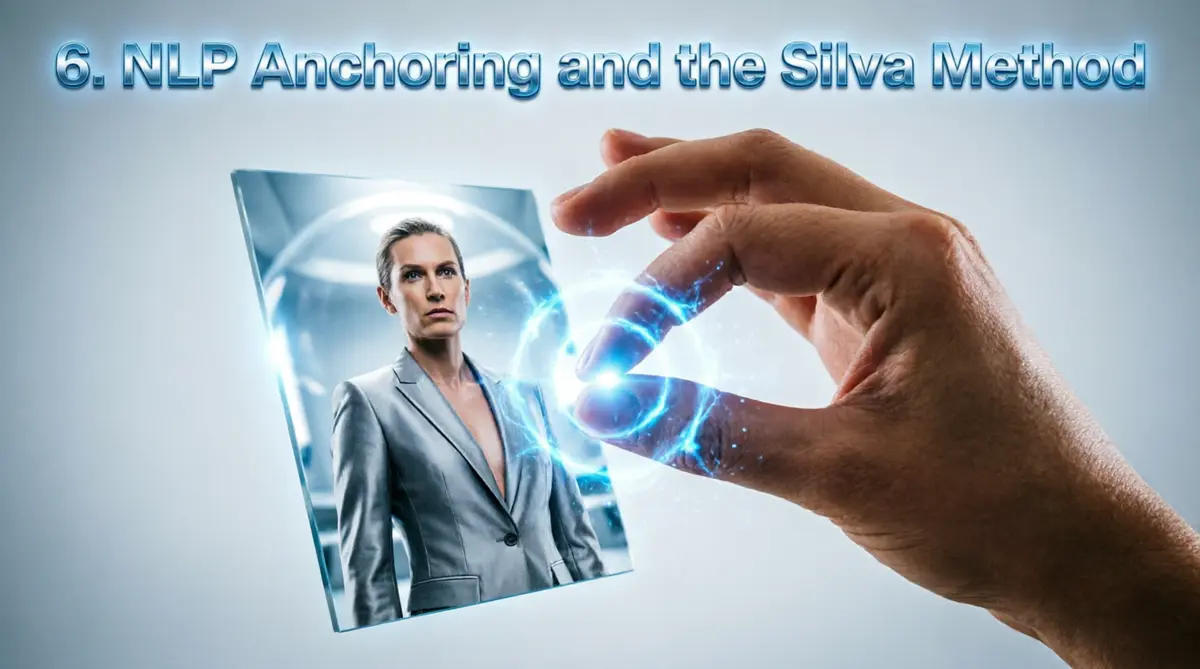
6. NLP Anchoring and the Silva Method.
In NLP, "anchoring" means linking a physical gesture — pressing your thumb and forefinger together, for instance — to a vivid memory of a time you felt genuinely capable. Practice recalling that memory while making the gesture, daily, until the gesture alone can summon the state.
The Silva Method goes a layer deeper, training you to reach a relaxed, focused mental state and then visualize a goal as already achieved. Two structured practices to try:
1. The Future Mirror:
Relax fully, eyes closed, and picture a mirror reflecting your future self — the version of you who has already handled what you're afraid of. Spend ten minutes mentally stepping into that reflection.
2. The Descending Count:
Count slowly backward from 50 to 1, relaxing a different part of your body with each number. By the time you reach 1, you're in a state calm enough that a simple affirmation lands far deeper than it would mid-scroll on your phone.
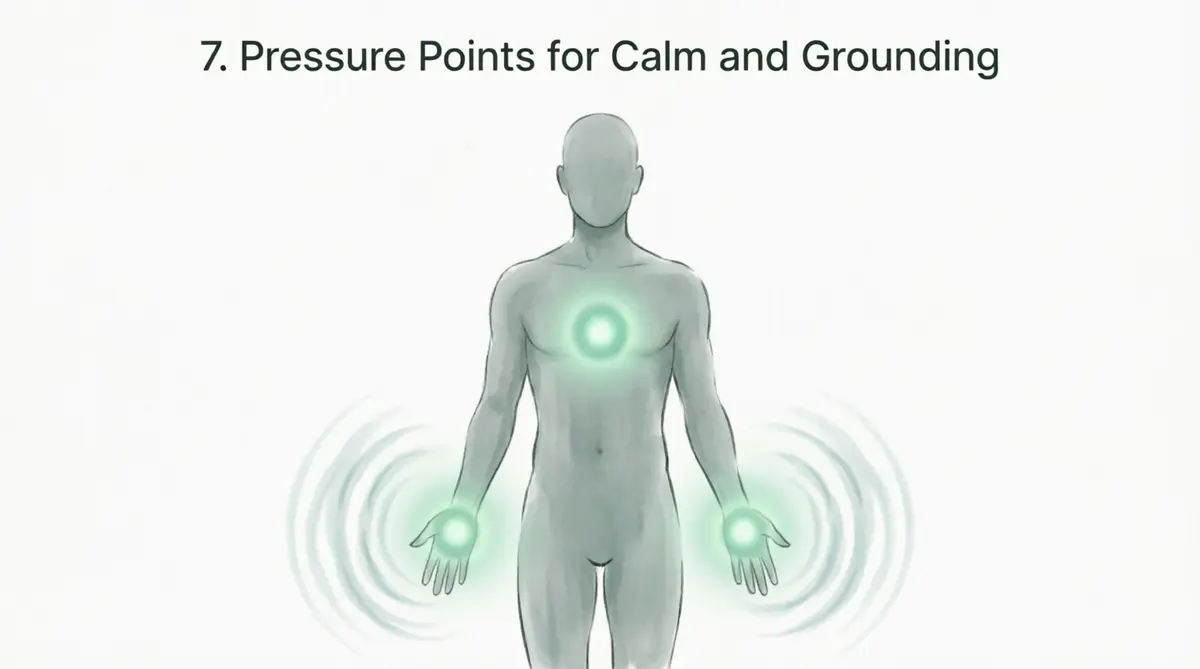
7. Pressure Points for Calm and Grounding.
Two accessible points are widely used in traditional acupressure for emotional balance: the center of the sternum, and the webbing between your thumb and index finger. Press gently for 30–60 seconds each while breathing slowly. This supports a sense of calm that makes room for clearer thinking — it's a complement to the practices above, not a substitute for professional support if anxiety runs deep or persistent.

8. Books Worth the Time.
A short, high-value reading list for anyone serious about rebuilding belief: works on growth mindset psychology, the science of habit formation, and first-person accounts of people who trained themselves through extreme adversity. Ten pages a day, five minutes of reflection after. Small, compounding, and quietly powerful over months.
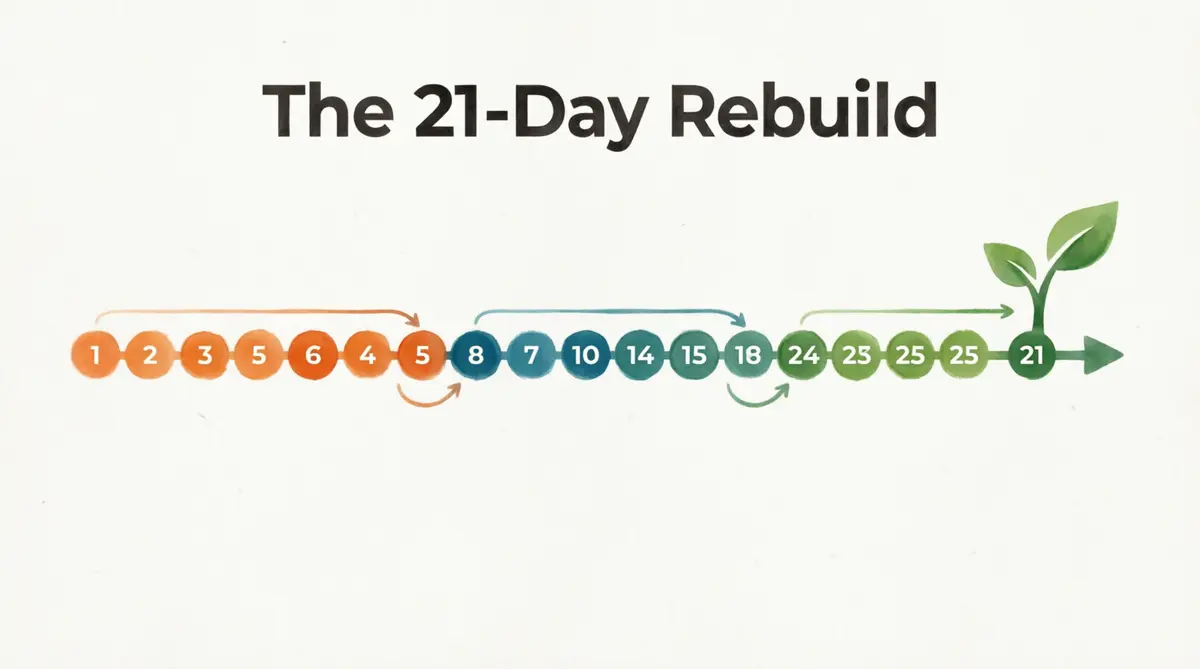
The 21-Day Rebuild.
If you want a structure instead of just ideas, try this:
Days 1–7: Every morning, write one sentence of doubt and one sentence that counters it with evidence, however small.
Days 8–14: Each day, do one thing your more confident future self would do — send the message, ask the question, apply anyway. Skip the feelings check. Just move.
Days 15–21: Each evening, write down one piece of evidence from that day that you're capable of more than you thought a month ago.
By day 21, you won't feel like a different person. You'll feel like the same person — holding proof.

Where This Actually Leads.
The girl with the rejection folder didn't wait for the folder to feel lighter. She built belief while it was still heavy, one sticky note at a time.
That's the whole secret, and it's less glamorous than any quote card makes it look: belief comes before proof, not after it. You don't earn the right to try by feeling ready first. You try, unready, and the readiness catches up somewhere along the way.
Start today. Let the proof follow.