
Quran and AI: Building Better Relationships
Hiba sat in her car outside her own house for almost ten minutes before going inside. She was not stuck in traffic. She was not waiting for a phone call. She was simply tired of walking into a home where everyone lived under the same roof but nobody really talked anymore. Her husband was busy with work messages. Her teenage son barely looked up from his screen. Her mother in law had stopped asking how her day was, because the answers had become short and cold. Hiba loved her family. She was not fighting with anyone. But something warm had quietly disappeared from her home, and she could not explain when it left.
That night, lying awake, she asked herself a simple but painful question. How do people who love each other slowly stop feeling close?
This is not only Hiba's story. It is the story of millions of homes today, because relationships are not usually destroyed by one big fight. They are worn down slowly, by distraction, silence, pride, and the small hurts that are never healed. Phones now sit between husbands and wives at dinner tables. Parents and children share a house but not a conversation. Friends message every day but rarely sit together in person. Modern life gives us more ways to stay connected than ever before, yet many people feel more distant from the people they love than ever before.
And this problem is not about bad people. It is about busy minds, wounded pride, and a world that rewards speed over patience. Understanding this is the first step, but healing it needs something deeper than advice. It needs guidance that touches the heart, and this is exactly where the Quran speaks with a gentleness that feels timeless.
In Surah Ar Rum, Allah says about husbands and wives.
وَمِنْ آيَاتِهِ أَنْ خَلَقَ لَكُم مِّنْ أَنفُسِكُمْ أَزْوَاجًا لِّتَسْكُنُوا إِلَيْهَا وَجَعَلَ بَيْنَكُم مَّوَدَّةً وَرَحْمَةً إِنَّ فِي ذَٰلِكَ لَآيَاتٍ لِّقَوْمٍ يَتَفَكَّرُونَ
اور اس کی نشانیوں میں سے یہ ہے کہ اس نے تمہارے لیے تمہاری ہی جنس سے جوڑے بنائے تاکہ تم ان کے پاس سکون پاؤ، اور اس نے تمہارے درمیان محبت اور رحمت رکھ دی۔ بیشک اس میں غور کرنے والوں کے لیے نشانیاں ہیں
Among His signs is this. He created partners for you from your own selves, so that you may find peace with them, and He placed love and mercy between your hearts. In this there are signs for people who reflect.
This verse, Surah Ar Rum, verse 21, teaches something important. Real closeness is not built by luck. It is built through two ingredients that Allah placed inside us on purpose, love and mercy. Love brings two people together in the beginning, and mercy is what keeps them together when life gets hard, when mistakes happen, and when patience runs low.
Once this idea is clear, the next verse naturally follows it, because love and mercy are not just feelings, they are also a character that has to be practiced. Another verse describes the character that protects every relationship, whether marriage, family, or friendship. In Surah Aal e Imran, Allah describes good people as those who give generously, control their anger, and forgive others.
الَّذِينَ يُنفِقُونَ فِي السَّرَّاءِ وَالضَّرَّاءِ وَالْكَاظِمِينَ الْغَيْظَ وَالْعَافِينَ عَنِ النَّاسِ وَاللَّهُ يُحِبُّ الْمُحْسِنِينَ
جو لوگ آسانی اور تنگی، دونوں حالتوں میں خرچ کرتے ہیں، اور غصہ پی جاتے ہیں، اور لوگوں کو معاف کر دیتے ہیں، اور اللہ نیکی کرنے والوں سے محبت کرتا ہے
They are the ones who give whether times are easy or hard, who hold back their anger, and who forgive people. Allah loves those who do good.
Surah Aal e Imran, verse 134, quietly explains why so many relationships break. Not because love disappears, but because anger is not controlled and forgiveness is not offered. The Quran is not asking us to feel nothing when we are hurt. It is asking us to master that feeling before it controls our words.
Tafsir scholars such as Mufti Muhammad Shafi, in Maarif ul Quran, explain that the love and mercy mentioned in Surah Ar Rum work together like two seasons of a relationship. Love often burns bright in the beginning, and mercy is what remains steady later, when both people have seen each other's flaws and still choose gentleness.
Once we understand what these verses mean, the next step is to actually feel them, not just read them. Turning this guidance into a habit is called tadabbur, which simply means reflecting slowly on a verse instead of rushing past it. Try this tonight. Read the verse from Surah Ar Rum once. Sit quietly for one minute. Ask yourself honestly, have I been a source of mercy in my home today, or have I only expected mercy from others. This is not a ritual invented by man. It is simply using the Quran the way it was meant to be used, as a mirror for the heart.

This same ache for connection is not only felt by Muslims, and so it is worth looking, gently, at how other faiths have spoken about it too. In the Bible, 1 Corinthians chapter 13 describes love as patient and kind, not easily angered, and one that keeps no record of wrongs. The Bhagavad Gita, in chapter 12, describes a person who is dear to God as one who is friendly and compassionate toward all beings and quick to forgive. Buddhist teaching places great value on compassion and mindful speech, encouraging people to pause before reacting in anger. None of these traditions are identical, and their beliefs differ in many ways, but on this one point, they agree. Relationships survive on patience, mercy, and self control, not on always being right.
With this shared wisdom in mind, the question becomes practical. How does someone actually build these habits in a busy modern life. This is where AI can quietly help, not as a replacement for faith or for the people you love, but as a practical assistant. AI cannot forgive your husband for you, and it cannot replace a real conversation with your mother. But it can help you plan a difficult conversation calmly instead of angrily. It can help you write a heartfelt message when your own words feel stuck. It can remind you of the daily habits you promised yourself you would build. It can act like a private journal that helps you notice your own patterns of anger or silence. Used this way, AI becomes a small support tool, not a decision maker for your relationships.
Real change never begins with a big promise. It begins with one small, honest step taken today. Hiba did not fix her whole family in one night. She began by putting her phone away for twenty minutes at dinner and asking her son one real question. That was enough to start, and it is enough for anyone to start with too, which is why the plan below is built around small, daily steps rather than one big transformation.
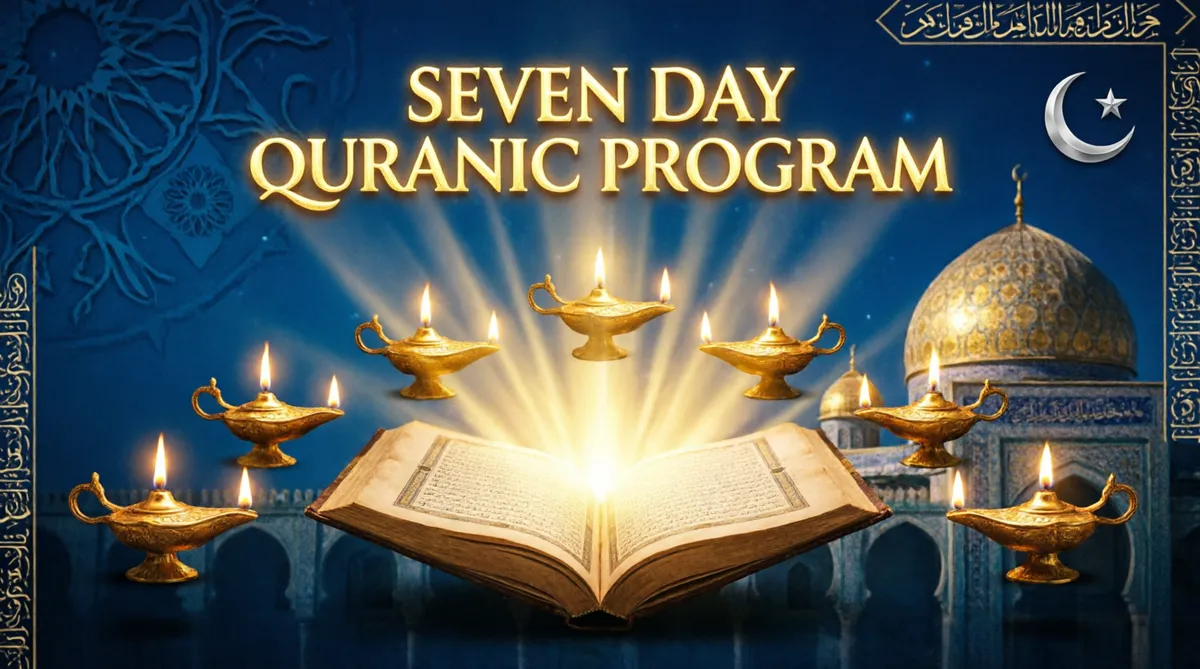
Seven Day Quran Action Plan
Day One
Read Surah Ar Rum, verse 21, slowly. Notice the two words, love and mercy. Today, offer one act of mercy to a family member without expecting anything back.
Day Two
Reflect on Surah Aal e Imran, verse 134. Before responding to anything annoying today, pause for five seconds. Practice holding your anger rather than releasing it.
Day Three
Study how the Prophet Muhammad, peace be upon him, treated his family with gentleness. Choose one habit of his, such as smiling often, and practice it today.
Day Four
Reflect on forgiveness in the Quran. Think of one small hurt you are still holding onto. Silently forgive that person today, even if you never mention it to them.
Day Five
Reflect on gratitude for the people in your life. Thank one family member directly today for something specific they did, however small.
Day Six
Reflect on patience during hardship. If a disagreement happens today, respond with calm words instead of raised ones.
Day Seven
Reread Surah Ar Rum, verse 21, one final time. Write down, in your own words, what love and mercy should look like in your home starting next week.
Seven Day Quranic Reflection and Mindfulness Plan
Day One
Sit quietly for five minutes after Fajr or any prayer. Simply breathe and think of one relationship you are grateful for.
Day Two
Practice muhasabah tonight. Ask yourself honestly how you treated your family today, without excuses.
Day Three
Make a short, sincere dua for the person you find hardest to get along with.
Day Four
Practice dhikr quietly for a few minutes, remembering that Allah sees the effort you put into being kind, even when others do not notice.
Day Five
Reflect on one hardship in your relationships and remind yourself that patience is rewarded, not wasted.
Day Six
Spend five minutes in silence, away from your phone, simply present with a loved one.
Day Seven
Reflect on your whole week. Write one sentence describing how your heart feels different from Day One.

Seven Day AI Action Plan
Day One
AI task, plan a calm conversation. Example prompt, help me plan a gentle way to talk to my husband about feeling distant lately. Outcome, a calmer opening line instead of an angry one.
Day Two
AI task, practice patience. Example prompt, give me three ways to pause before reacting when I feel angry at home. Outcome, simple techniques you can use today.
Day Three
AI task, write a heartfelt message. Example prompt, help me write a short, warm message to my mother thanking her for something specific. Outcome, a message you actually send.
Day Four
AI task, understand a pattern. Example prompt, I keep arguing with my teenager about the same issue, help me understand what might be going wrong. Outcome, a clearer, calmer perspective.
Day Five
AI task, build a small habit. Example prompt, help me create a simple daily habit to connect with my family for ten minutes without phones. Outcome, one realistic new routine.
Day Six
AI task, prepare for forgiveness. Example prompt, help me think through how to forgive someone who hurt me without pretending it did not happen. Outcome, emotional clarity before the conversation.
Day Seven
AI task, reflect on progress. Example prompt, help me summarize what changed in my relationships this week and what I should focus on next. Outcome, a simple plan going forward.
If your relationship struggles come with deep sadness, ongoing conflict, abuse, or thoughts that feel too heavy to carry alone, please also speak to a qualified counselor, therapist, or trusted religious scholar. Faith, reflection, and AI can support you, but they are not a replacement for professional help when it is truly needed.
Hiba still has ordinary days. Her family still gets busy, still gets tired, still forgets sometimes. But now, most nights, she puts her phone down at the door before she puts her keys down. She looks at her family first. Love brought them together many years ago, and mercy, chosen daily, is what is quietly bringing them close again.
FAQ Questions.
What does the Quran say about love and mercy in relationships
Surah Ar Rum, verse 21, explains that Allah placed love and mercy between spouses so they can find peace with one another.
How can AI help improve family relationships?
AI can help plan calm conversations, draft heartfelt messages, track small daily habits, and offer reflection prompts, though it cannot replace real human effort or professional help.
Do other religions teach similar relationship values?
Yes, Christianity, Hinduism, and Buddhism all emphasize patience, compassion, and forgiveness as central to healthy relationships, though each tradition expresses this differently.
Potential Featured Snippet Answer
Surah Ar Rum, verse 21, teaches that Allah created spouses to bring peace to one another and placed love and mercy between their hearts, showing that strong relationships are built on both affection and patience.
Suggested Internal Links, an article on Quranic guidance for anxiety and peace of mind, an article on using AI for daily habit building, an article on forgiveness and letting go in Islam
Suggested External Authoritative. Sources, Quran.com for verified Quran translations and tafsir, official Bible translation sites such as biblegateway.com, recognized Bhagavad Gita translation sources such as holy-bhagavad-gita.org