
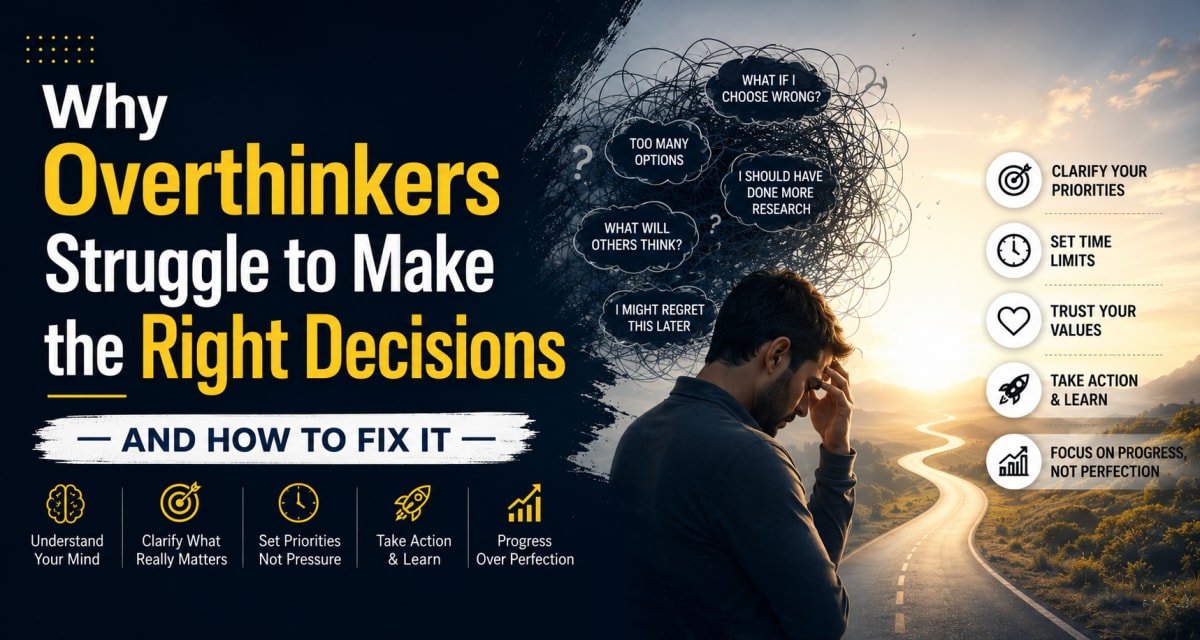
Stop Overthinking: Simple Ways to Make Better Decisions.

What Is Overthinking?
Have you ever felt like your brain won't stop? Thinking about the same thing again and again, taking hours to make small decisions, always wondering "what if" - this is overthinking.
Overthinking means thinking too much. When you analyze something so much that you can't take action, that's overthinking. It's like a sickness that slowly eats your mind.
In simple words. Overthinking is when your brain gets stuck in one place and keeps going in circles, like a broken record playing the same song again and again.
How Does Overthinking Affect Your Mind?
Overthinking is not just a mental problem - it affects your whole life. Let's understand how:
1 Brain Stress and Anxiety.
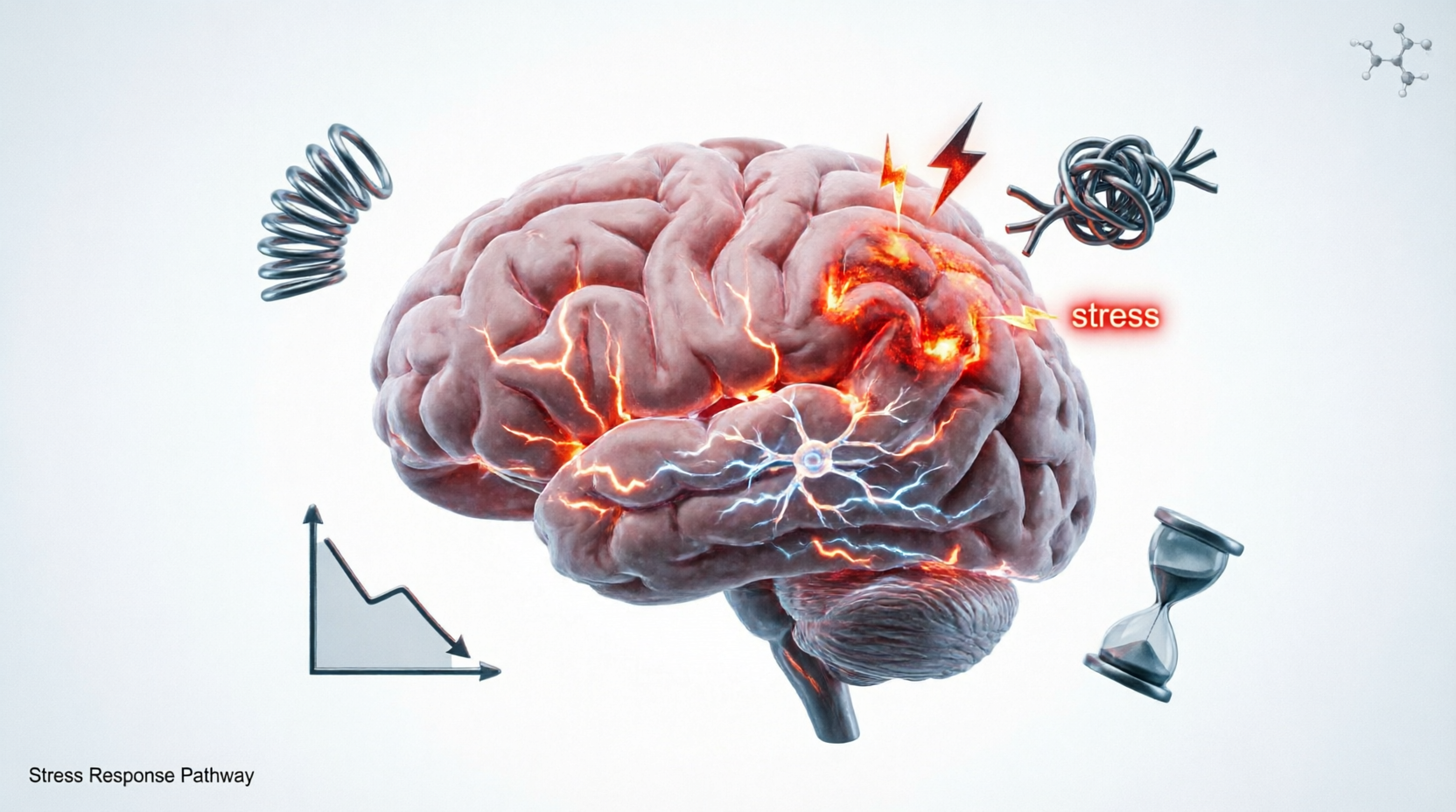
When you overthink, your brain releases stress hormone called cortisol. This hormone makes you feel anxious, tired and overwhelmed. Research shows that overthinkers have 3 times more risk of anxiety disorders.
2. Can't Make Decisions.
Too much thinking stops you from making any decision. You feel every option must be perfect, but perfection doesn't exist. So you get stuck.
3. Sleep Problems.
Even at night when you try to sleep, your mind keeps running. Tomorrow's meeting, yesterday's conversation, future planning - everything at once. This causes insomnia and poor sleep.
4 Physical Health Problems.
Overthinking doesn't just hurt your mind, it hurts your body too:
- Headaches
- Stomach problems
- Weak immune system
- High blood pressure
- Heart problems risk
5. Ruins Relationships.
When you overthink every small thing, it affects your relationships too. You become suspicious, insecure and irritable.
5 Best Solutions from Around the World.
Solution #1: The 5-Second Rule (From USA).
What Is It: Mel Robbins' rule is very simple. When you need to make a decision or take action, count 5-4-3-2-1 and act immediately.
How It Works:
- Acting within 5 seconds activates your prefrontal cortex
- It takes you from overthinking mode to action mode
- Your brain doesn't get time to overthink
How to Use It:
- Decision to wake up? 5-4-3-2-1 and get up
- Need to send email? 5-4-3-2-1 and send it
- Want to go to gym? 5-4-3-2-1 and leave
Solution #2: The 10-10-10 Rule (From Corporate World).
What Is It:Suzy Welch's rule makes decision making easy.
Three Questions:
1. What will be the result in 10 minutes?
2. What will happen in 10 months?
3. What will happen in 10 years?
Why It Works:
This rule gives you perspective. What seems very big today, you might not even remember in 10 years.
Example:
- Want to change job?
- 10 minutes: Little stress
- 10 months: Settled in new job
- 10 years: It was the best decision
Solution #3: Mindfulness Meditation (From Japan and India).
What Is It: Staying in the present moment, without judging.
What Science Says:
- 8 weeks of mindfulness practice shrinks amygdala (fear center) by 20%
- Overthinking reduces by 40%
- Focus and clarity increases.
How to Do It:
- Sit quietly for 10 minutes daily
- Focus on your breathing
- When thoughts come, just observe them and let them go
- You can use phone apps: Headspace, Calm
Solution #4: Time Boxing Technique (From Silicon Valley).
What Is It: Setting fixed time for every decision and task.
How It Works:
- Restaurant menu: 3 minutes
- Choosing outfit: 5 minutes
- Important decision: 30 minutes
- Research: 1 hour maximum
Benefit:
According to Parkinson's Law, work expands to fill the time you give it. Less time = less overthinking.
Solution #5: The "Good Enough" Philosophy (From Scandinavia).
What Is It: Choosing "satisficing" instead of perfection.
Two Types of People:
1. Maximizers: Always search for the best (overthinkers)
2. Satisficers:Accept what meets their criteria (happy people)
Research Finding:
Satisficers are 30% happier than maximizers and make decisions 50% faster.
How to Use It:
- Decide your non-negotiable criteria first
- Accept the option that meets criteria
- Don't keep looking further.

5 Science-Based Methods That Few People Know.
Method #1: Cognitive Defusion (ACT Therapy).
Research:2024 study shows cognitive defusion reduces overthinking by 60%.
What Is It: Watching your thoughts from outside. Instead of "I am a failure," think "I am having the thought that I am a failure."
Technique:
- Sing the thought like a song
- Think the thought in a cartoon character's voice
- This makes the thought less powerful
Method #2: Vagus Nerve Stimulation.
Science:Stimulating the vagus nerve activates parasympathetic nervous system, which stops overthinking.
How to Do It:
Cold Exposure: Wash face with cold water in morning
Deep Breathing: 4-7-8 technique (4 sec inhale, 7 sec hold, 8 sec exhale)
-Humming: Hum "Om",Allah or any song
Gargling: Gargle with water.
Result: You will feel calm in 2 minutes.
Method #3: Implementation Intentions (WOOP Method).
Research: Gabriele Oettingen's research shows this method increases goal achievement by 300%.
WOOP:
Wish: What do you want?
Outcome: What will be the best result?
Obstacle: What problems might come?
Plan: Make if-then plan
Example:
- Wish: Reduce overthinking
- Outcome: Peaceful mind, better decisions
- Obstacle: Old habit will come back
- Plan: If I start overthinking, I will immediately use 5-4-3-2-1 rule
Method #4: Neuroplasticity-Based Thought Stopping.
Science: Brain creates new habits in 21-66 days.
Technique:
1. When overthinking thought comes, immediately say "STOP" (in mind or loudly)
2. Immediately shift focus to physical sensation (coldness in hand, feet on floor)
3. This breaks the neural pathway
Research: 2025 study shows overthinking episodes reduced by 70% in 30 days.
Method #5: Digital Detox + Nature Therapy.
Research:
- Stanford University 2024: 90 minute nature walk reduces rumination (overthinking) by 50%
- Reducing screen time reduces anxiety by 40%
How to Do It:
- 30 minutes phone-free nature time daily
- 2 hour park walk on weekend
- No phone in bedroom
- Turn off notifications.

How to Apply These Solutions in 2026?
July - Foundation Month
Week 1-2:
- 5 minutes deep breathing after waking up
- Practice 5-Second Rule in small decisions
- Reduce phone use to less than 2 hours
Week 3-4:
- Apply 10-10-10 Rule in every decision
- 10 minutes mindfulness meditation daily
- Make a journal: "What did I overthink today and how did I stop it"
August- Building Habits.
- Use WOOP method with your goals
- Nature therapy on weekends (park, garden)
- Apply "Good Enough" philosophy in shopping and daily tasks
September - Advanced Level.
- Practice cognitive defusion techniques
- Include vagus nerve stimulation in daily routine
Apply time boxing to every task
October Onwards - Maintenance
Daily Routine:
1. Morning (7 AM): 10 min meditation + 5 min deep breathing
2. Afternoon (1 PM): 15 min nature walk
3. Evening (6 PM): Journaling - what did I learn today
4. Night (10 PM): Phone off, calm activities
Weekly:
- Sunday: 2 hour digital detox + nature time
- Wednesday: 30 min vagus nerve exercises
- Saturday: Review - which technique is working.

Quick Action Plan - Start Today
Today:
Try 5-4-3-2-1 rule in 3 decisions
Do 10 minutes deep breathing
Don't use phone after 9 PM
Tomorrow:
Make one decision using 10-10-10 rule
Take 15 minute park walk
Stop one thought using cognitive defusion
This Week.
Set one goal using WOOP method
Do nature therapy for 3 days
Start time boxing
Remember These Points:
There is no perfect decision - only decision.
Action kills overthinking.
New habit forms in 21 days.
Start small, stay consistent.
Trust yourself.

Final Message:
Overthinking is a habit, and every habit can be changed. 2026 is your year - control your mind, transform your life. Start today. Don't wait for tomorrow.
5-4-3-2-1... START NOW.
Shoaib Nasir
Comments (0)
Please sign in to join the conversation.
No comments yet. Be the first to join the discussion!