
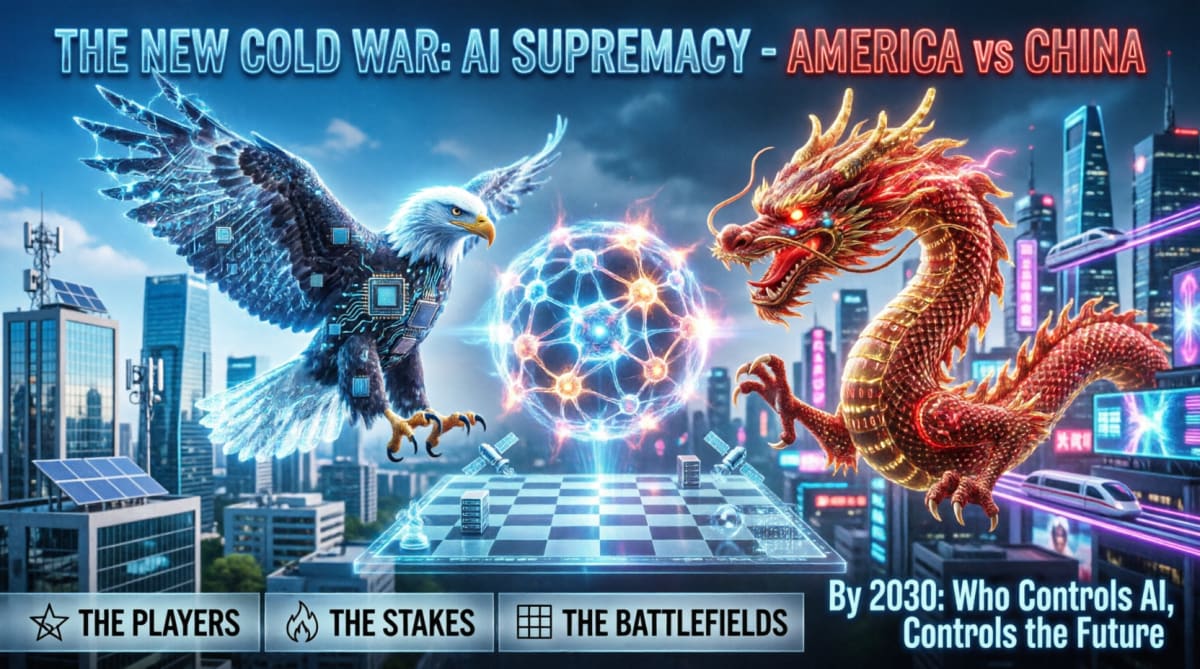
The New Cold War: America vs China in the Global AI Race.
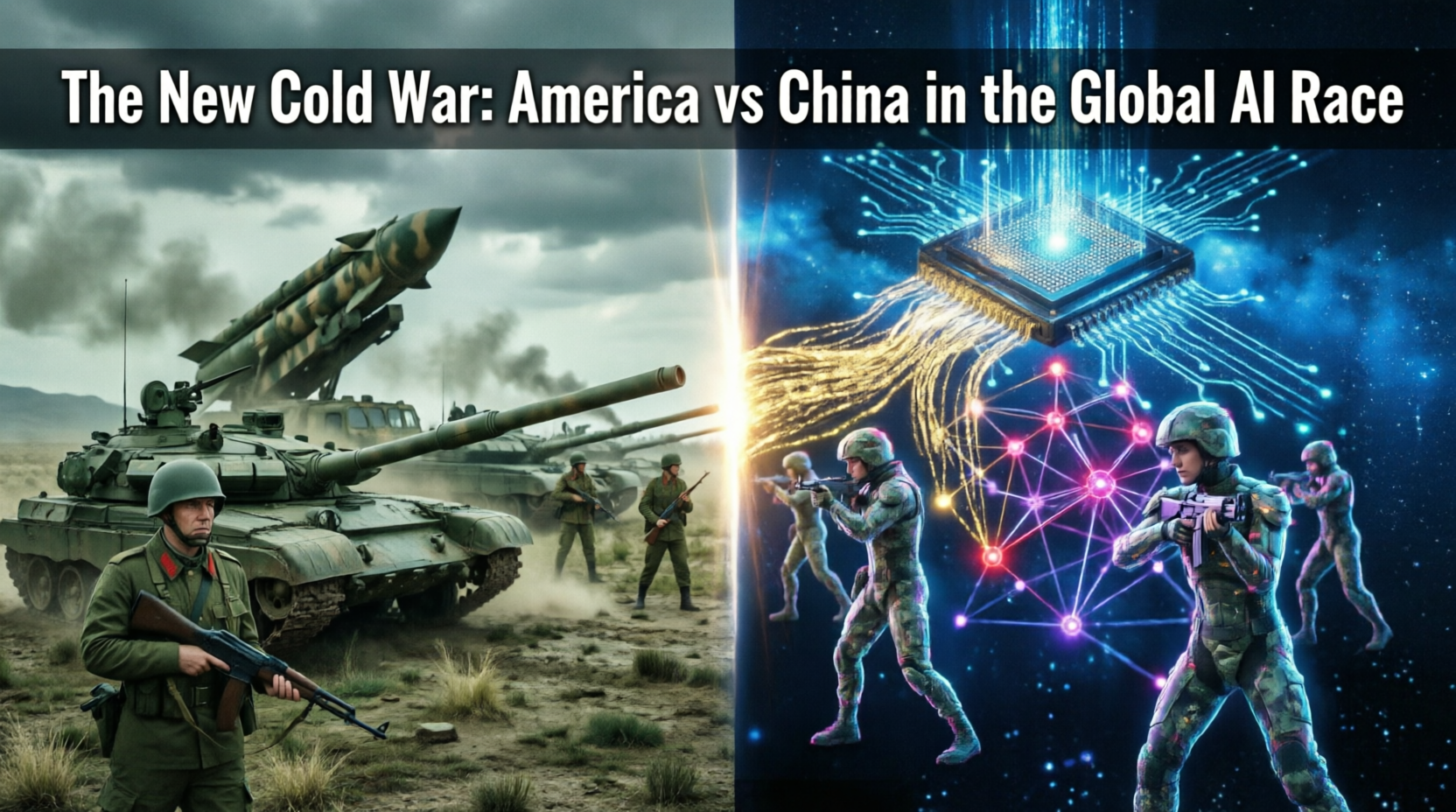
There is a race happening right now, and most people don't even notice it. It's not happening on a battlefield. It's happening inside computer chips, inside research labs, and inside government offices in Washington and Beijing. This is the AI race between America and China, and many people are now calling it a new Cold War.
But here is the truth. This is not the old Cold War that your parents or grandparents talk about. That war was about missiles, spies, and two countries that barely traded with each other. This war is different. America and China buy and sell products to each other every single day. Millions of jobs in both countries depend on this trade. So this "Cold War" is strange. Both sides are fighting, but both sides also need each other. Let's understand this story properly, step by step.
Why AI Became the New Battlefield.
Think about it this way. In the last century, the strongest countries were the ones with the most oil, the most factories, or the most soldiers. Today, the strongest country will be the one with the smartest machines. AI can help a country build better weapons, run a stronger economy, and even predict what the enemy is planning. This is why both America and China see AI not just as a business tool, but as a matter of national survival.
America has companies like OpenAI, Google, and Anthropic building some of the smartest AI models in the world. These companies are supported by huge amounts of money, top universities, and access to the best computer chips.
China, on the other hand, has been building its own path. Companies like DeepSeek shocked the whole world by creating AI models that were cheap to build but still very powerful. This proved something important: China doesn't need to copy America's method. It can find its own shortcuts.
The Chip War: The Real Weapon of This Battle.
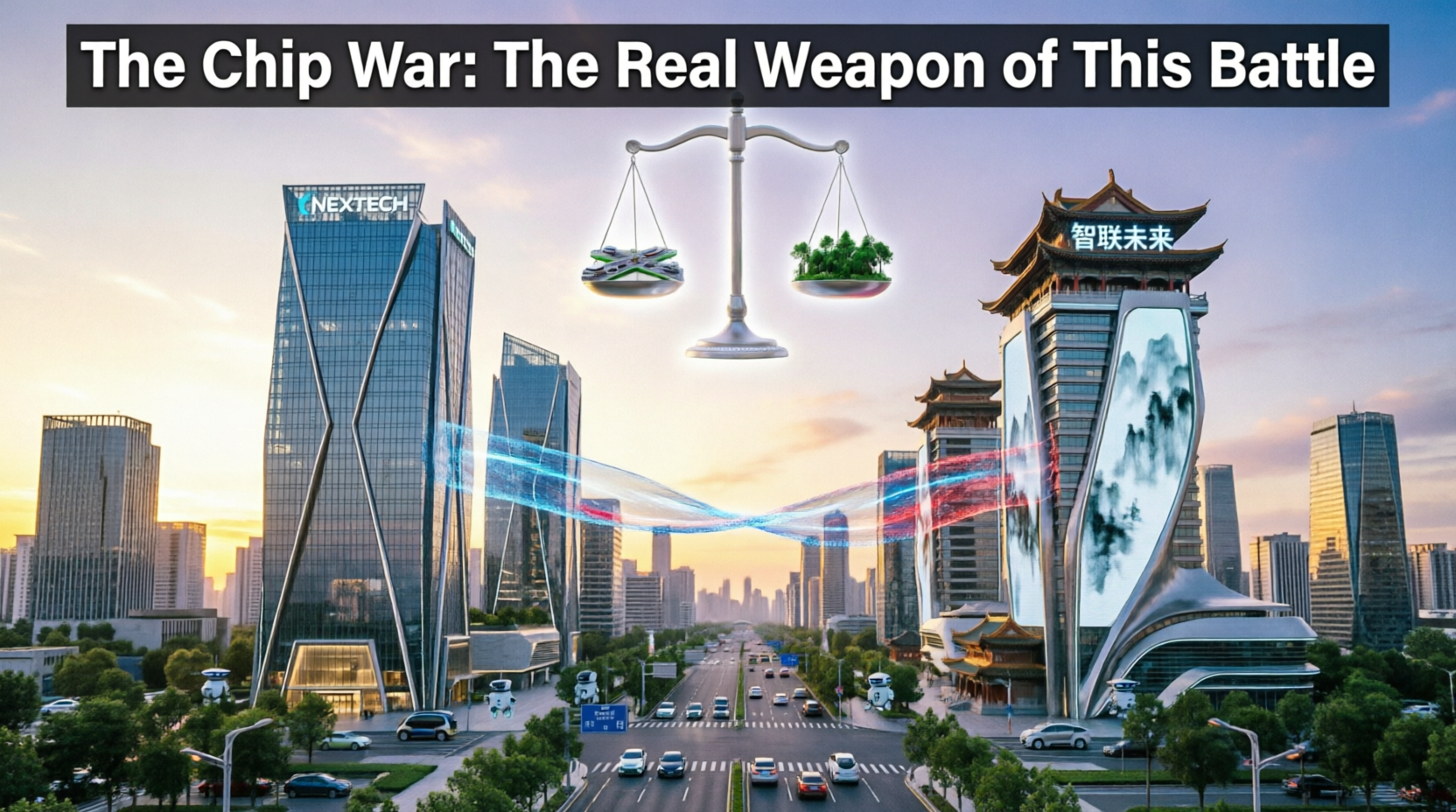
If you want to understand this Cold War, you must understand chips. Not the potato kind. Computer chips, also called semiconductors.
These tiny chips are the real fuel behind AI. Without powerful chips, even the smartest AI model cannot run properly. America knows this. So a few years ago, the US government put strict rules stopping companies like Nvidia from selling their most advanced chips to China.
The idea was simple: if China cannot get the best chips, China cannot build the best AI. It sounded like a smart plan on paper.
But here is the twist. China did not sit quietly and accept defeat. Instead, China pushed its own engineers and companies to build chips at home. Progress was slower, yes. But it forced China to become more independent. In a strange way, America's chip ban became the reason China started working harder on its own technology.
This is the real lesson here: you cannot fully stop a determined nation from growing. You can slow them down, but you also push them to find new solutions.

Two Different Strategies, Two Different Philosophies.
America's strategy has mostly been: build the biggest, most powerful AI models, keep the technology closed and protected, and stay ahead through raw power and money.
China's strategy has mostly been: build smaller, cheaper, efficient AI models, share many of them for free as "open weight" models, and win the hearts of developing countries who cannot afford expensive American AI tools.
This difference matters a lot. Many countries in Asia, Africa, and Latin America cannot afford to pay huge amounts of money for AI services. When China offers free or cheap AI tools, many governments and businesses in these regions start using Chinese technology. Slowly, without any war or weapon, China builds influence around the world.
This is the quiet part of the Cold War. It is not about who screams the loudest. It is about who quietly becomes part of daily life in more countries.
The Human Cost Nobody Talks About.
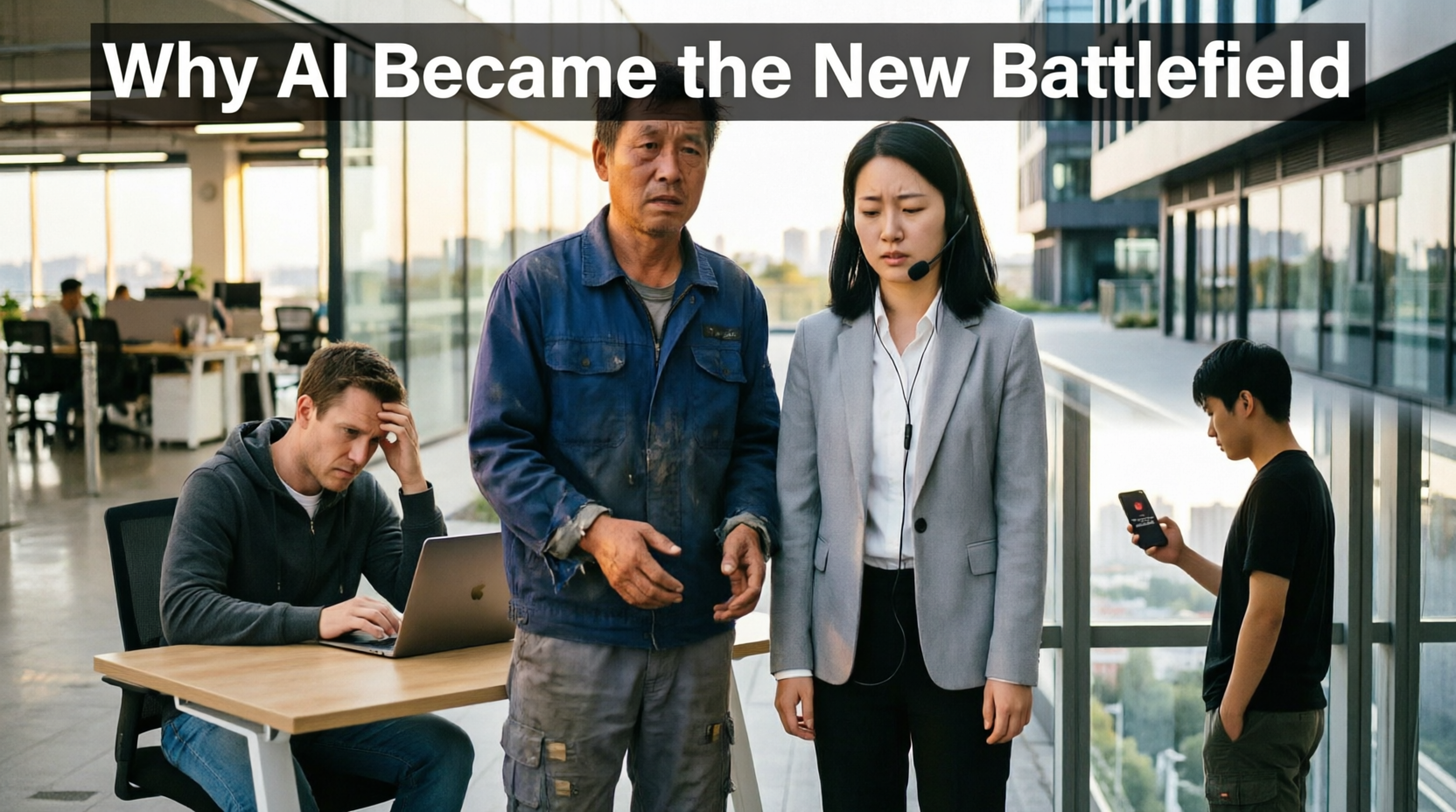
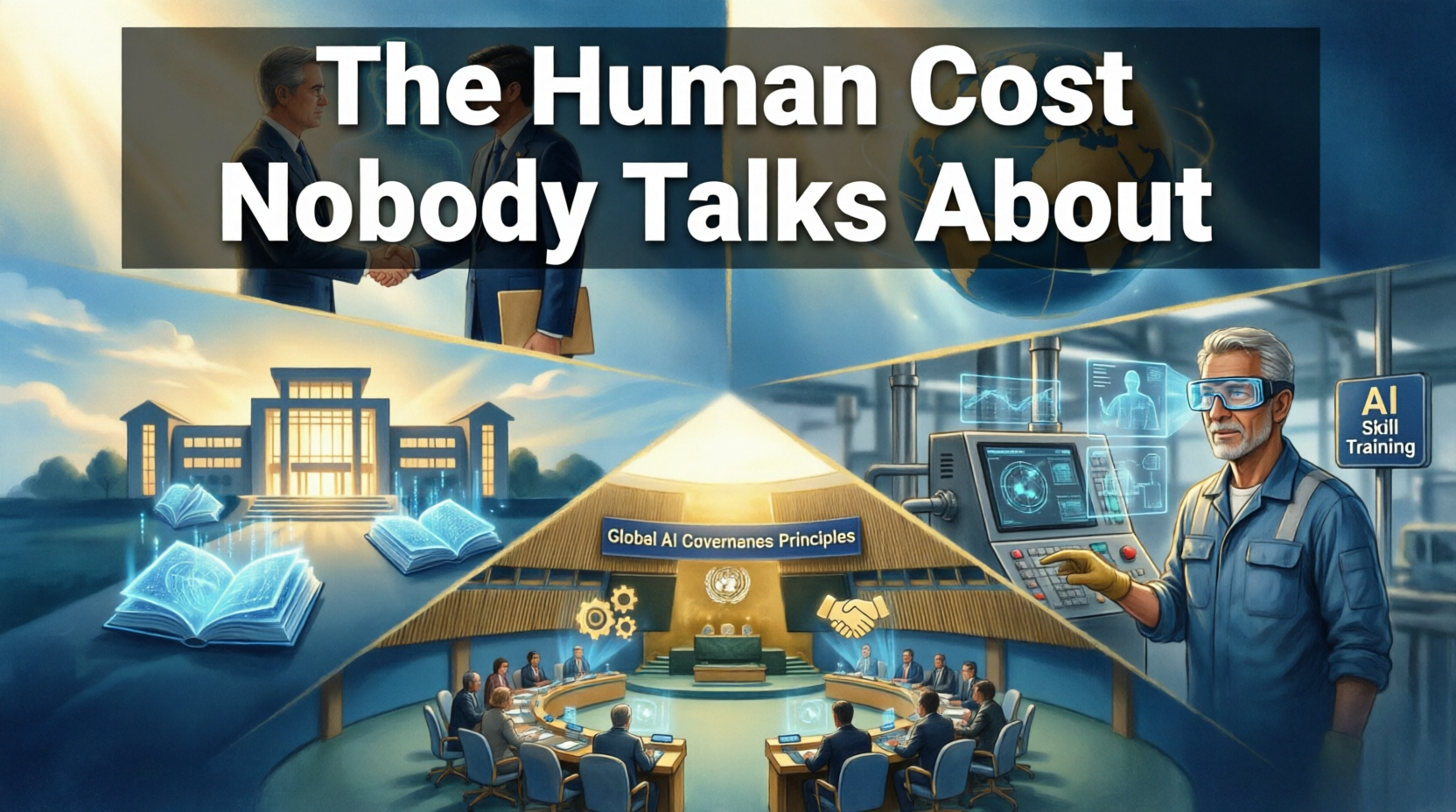
While governments fight over chips and rules, real people are caught in between. Engineers in California worry about losing their jobs to cheaper AI made in China. Engineers in Shenzhen worry about America blocking their access to tools they need to do their jobs. Regular workers in factories, call centers, and offices worry if AI will replace them completely, no matter which country wins this race.
This is the part of the story we must not forget. A Cold War between two governments always becomes a hot, personal struggle for millions of ordinary families trying to pay rent, feed their children, and keep their jobs safe.
So What Is the Real Solution?
Now let's talk about solutions, because complaining about problems is easy. Fixing them is hard.
First solution: Smart cooperation instead of total war.
Complete separation between America and China is not realistic in a connected world. Both nations should agree on basic safety rules for AI, even while competing in business. For example, both sides can agree that AI should never be used to control nuclear weapons without human approval. This kind of small agreement builds trust, even between rivals.
Second solution: Countries should not be forced to pick a side.
Right now, many smaller nations feel pressure to choose either American AI or Chinese AI. This is unfair. Just like countries can buy phones from different companies, they should be allowed to use AI tools from different countries based on what works best for them, not based on political pressure.
Third solution: Invest in education, not just weapons.
The country that trains the most skilled AI engineers and researchers will win this race in the long run, not the country with the strictest export ban. Instead of only blocking each other, both nations should invest heavily in schools, universities, and training programs. Skilled people, not just powerful chips, are the real long-term advantage.
Fourth solution: Protect workers during this transition.
Governments on both sides need serious plans to help workers who lose jobs because of AI. This means retraining programs, financial support during the transition, and honest communication with the public about what is coming. Ignoring this problem will only create anger and instability in society.
Fifth solution: Global rules, not just national rules.
AI does not stay inside one country's borders. A dangerous AI tool built in one nation can affect people everywhere. The world needs some basic shared rules, similar to how nations agreed on rules for nuclear weapons and chemical weapons in the past. This won't stop competition, but it can stop total chaos.
What Happens Next?
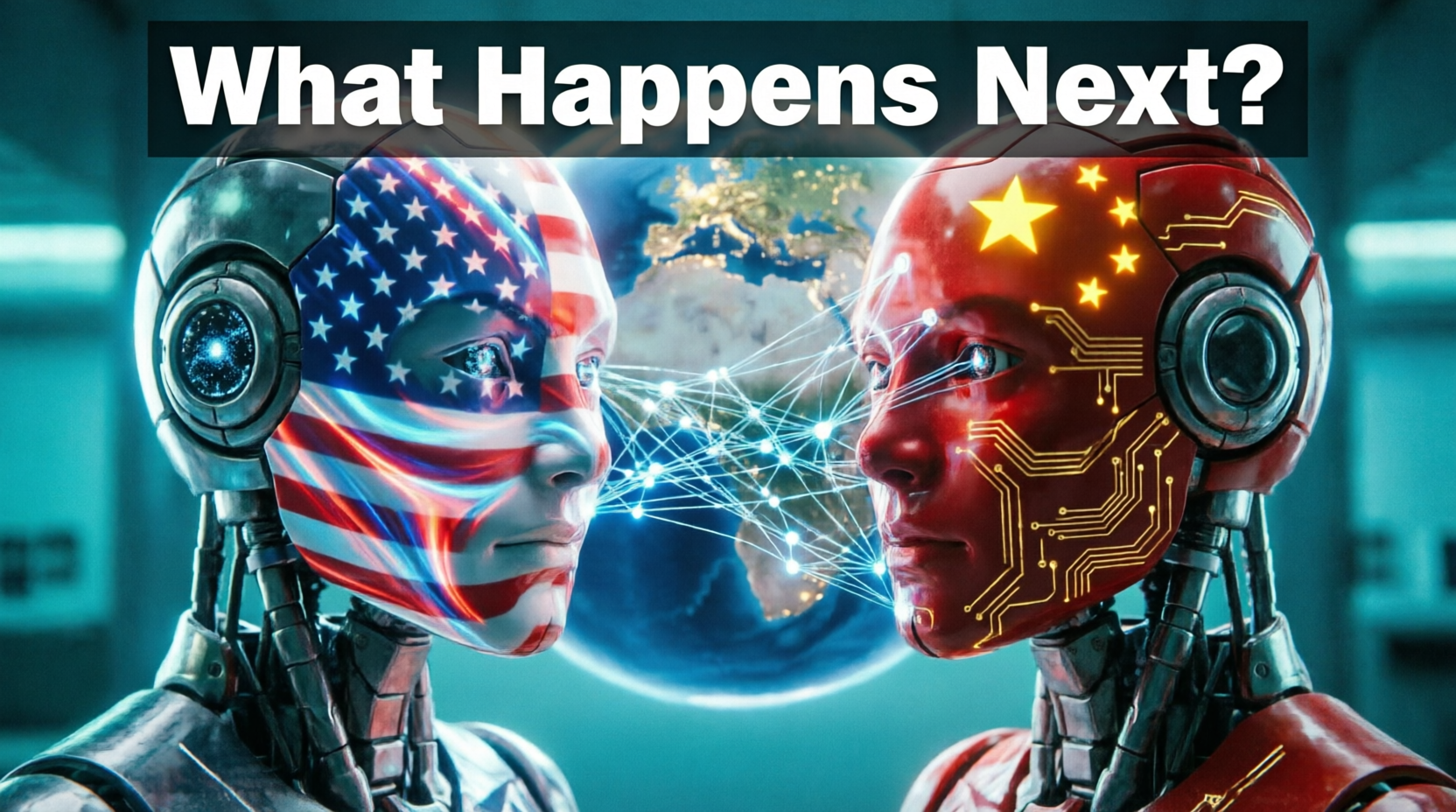
Nobody can predict the future with full certainty, but a few things seem likely. America will keep trying to stay ahead through advanced chips and huge amounts of funding. China will keep pushing hard for self-sufficiency and will keep spreading cheap, accessible AI tools around the world. Smaller nations will try to benefit from both sides without fully choosing one.
This Cold War in AI will probably not end with one country completely defeating the other. Instead, it will likely settle into a long period of tension, competition, and occasional cooperation, similar to how two rival businesses in the same city still sometimes work together on shared problems like traffic or pollution.
Final Thoughts.
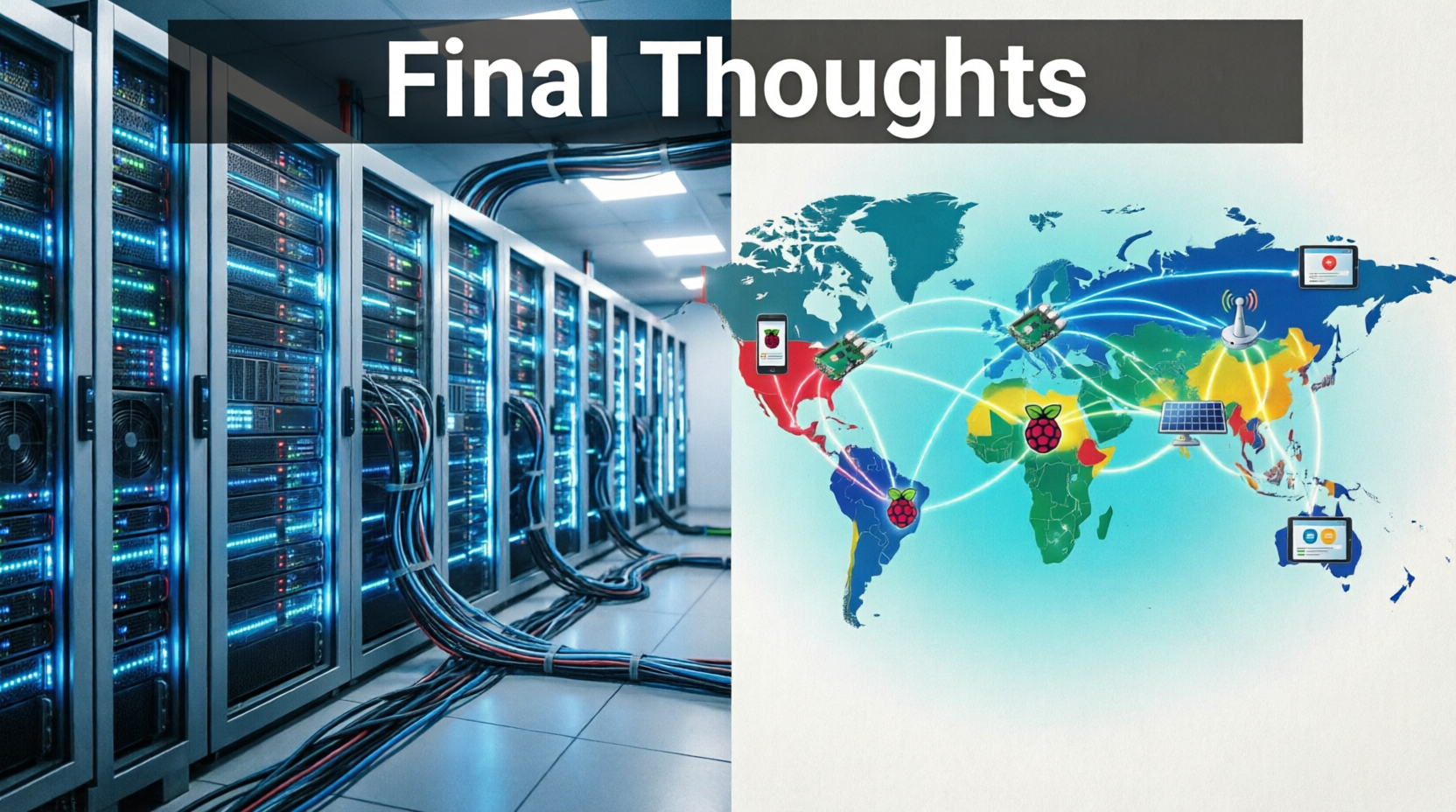
This is not just a story about two governments fighting for power. It is a story about the future of work, the future of education, and the future of daily life for billions of people. The real winners of this race will not just be the country with the smartest robots. The real winners will be the countries that take care of their people during this massive change, while still pushing the boundaries of what AI can do.
The AI Cold War is real, but it does not have to end in destruction. If both sides choose wisdom over ego, this rivalry could actually push humanity toward faster medical breakthroughs, better education tools, and smarter solutions for climate change. The choice
is still open. The next few years will decide which path we take.
Comments (0)
Please sign in to join the conversation.
No comments yet. Be the first to join the discussion!