My Doctor Asked Me a Question About My Prayer That I Could Not Answer
I want to tell you a small story first.
Imagine a woman named Aisha. She is forty three years old. She has prayed five times a day since she was a little girl. For her, prayer was never exercise. It was worship. It was connection. It was something she did without thinking, the same way she breathed.
One day her doctor asked her something simple. He asked, how many times a day do you stand up straight, then bend forward, then kneel down slowly, then sit back up, all with control and without rushing. Aisha thought about it and said, five times, during my prayers.
The doctor smiled and said, then you already have a daily habit that looks a lot like what people pay to learn in a yoga class.
That single sentence is why this article exists.
Now, before we go further, let me be completely honest with you, because this topic deserves honesty more than excitement.
This article is not going to tell you that prayer is yoga. It is not going to tell you that every single position in prayer has an exact matching yoga pose with identical medical proof behind it. That would not be true, and I am not going to pretend it is true just to make this article sound impressive.
What I am going to tell you is something simpler, and I think something more beautiful. Two very different traditions, coming from completely different beliefs and completely different parts of the world, both ended up encouraging the human body to do very similar things. Stand tall. Breathe deeply. Bend with control. Rest the head low for a moment. Sit quietly. Pause the mind.
That is not a small thing. That is worth talking about.
Let us go through this slowly, the same way Aisha started noticing her own body for the first time.
Standing tall and raising the hands
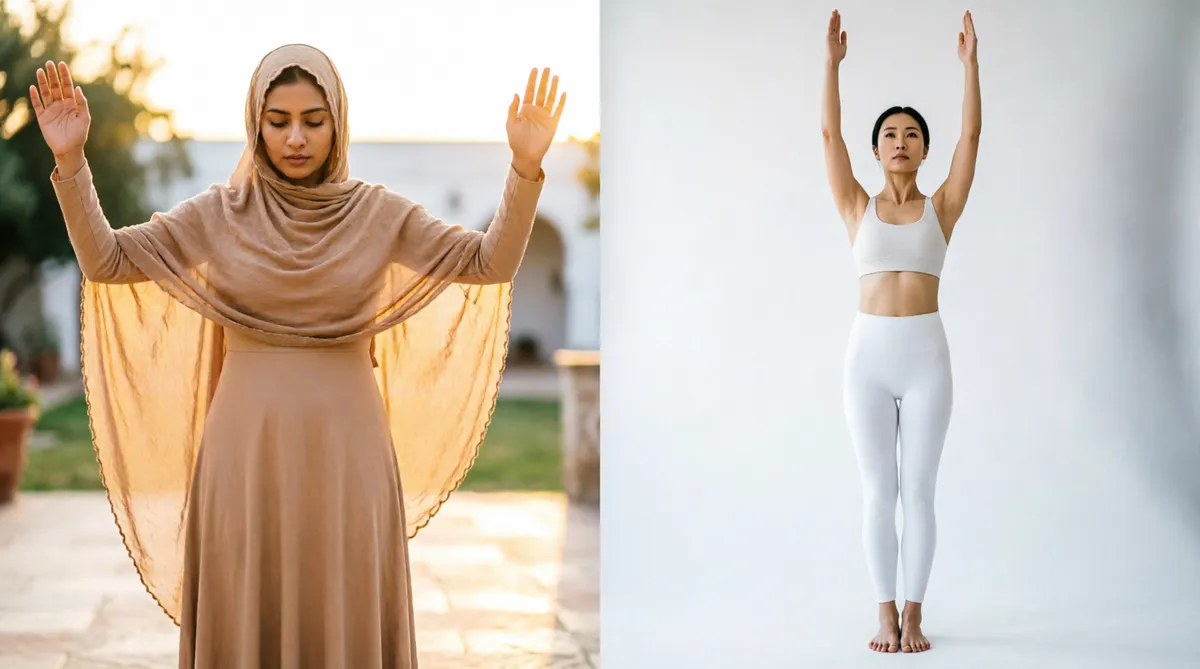
At the beginning of prayer, a person stands up straight, straightens the back, and raises both hands near the ears or shoulders. Most people who pray have done this thousands of times without ever thinking about it as a posture.
But pay attention to what actually happens in the body. When the arms lift up and the chest opens, breathing naturally becomes fuller and deeper. Compare this to how most of us breathe while sitting hunched over a phone or a desk all day, taking short shallow breaths without even noticing.
In yoga, there is a well known standing posture, a version of what is called mountain pose with an arm raise, that is taught for this exact reason, to open the chest and encourage deeper breathing. Nobody is saying one copied the other. What seems more likely is that both traditions, separately, discovered the same basic truth about the human body. Standing tall and breathing deeply helps calm the nervous system.
Folding the hands and standing still
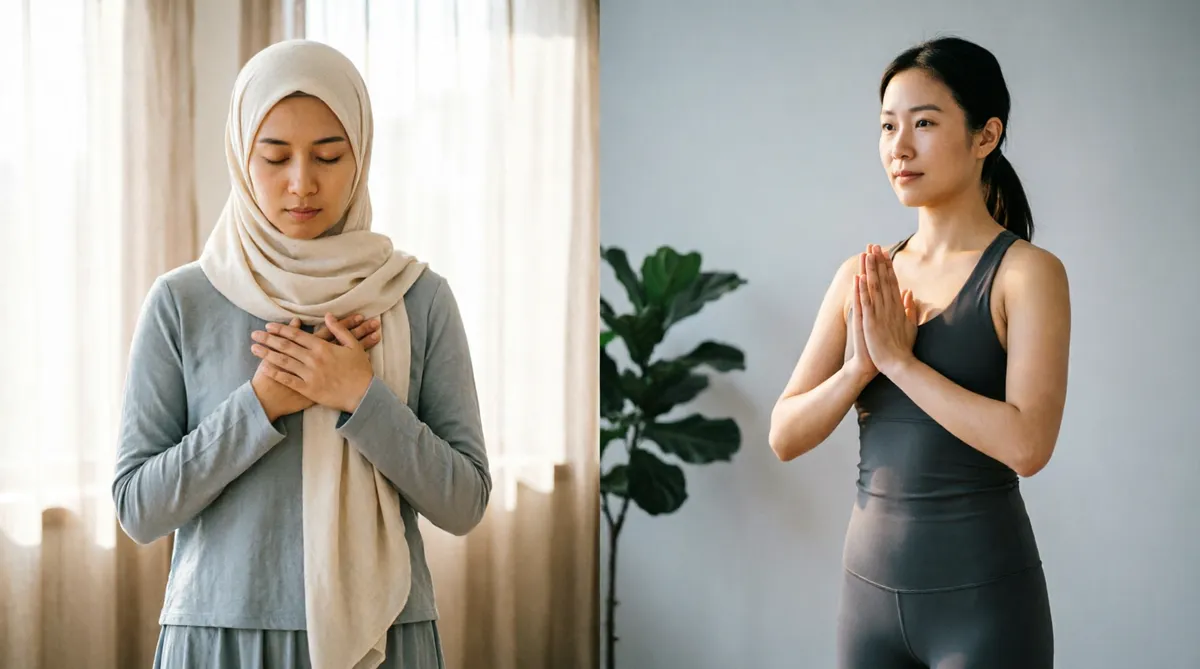
After that opening posture, the hands are folded gently over the chest or stomach, and the body stays still for a moment before any further movement begins.
This stillness is easy to overlook, but it matters. Holding a calm, still position lowers the urge to fidget and gives the mind a small window to settle down. In yoga, holding a still pose for a few breaths before moving into the next posture is used for a very similar purpose, to bring a wandering mind back to the present moment.
Neither tradition invented the idea of a pause before movement. It seems to be something the human mind simply responds well to, no matter what you call the practice.
Bending forward at the waist
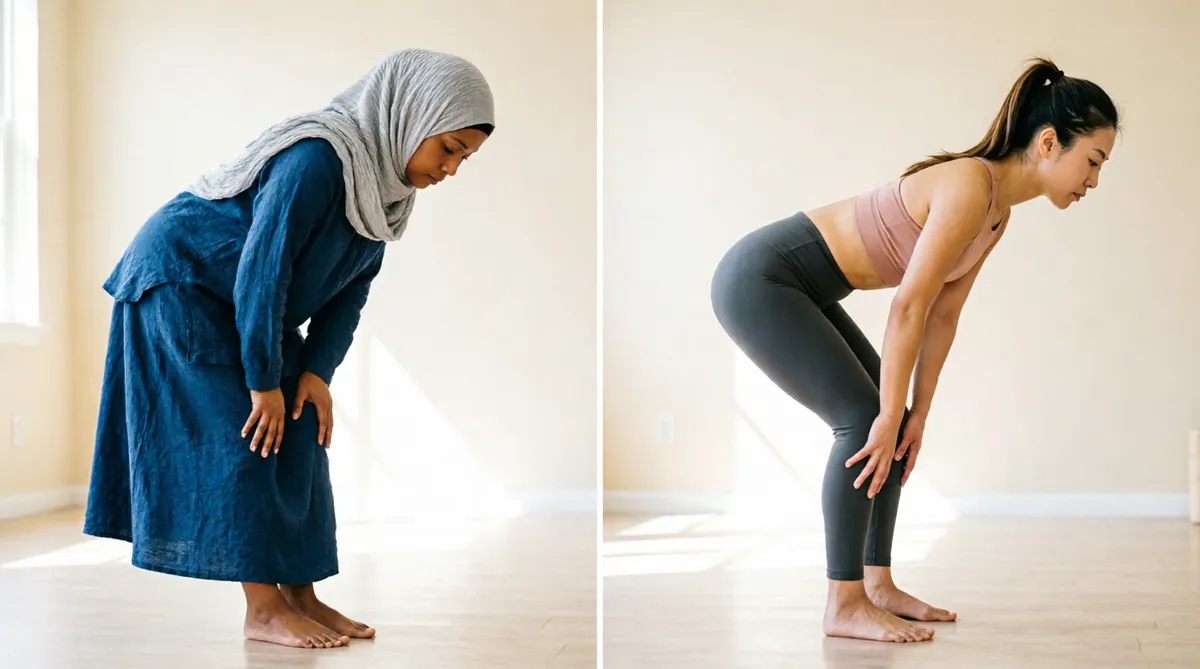
This is one of the clearest overlaps of all. When a person bends forward during prayer, keeping the back relatively flat and placing the hands on the knees, the shape of the body looks a lot like a common yoga posture, a standing forward fold with a flat back, sometimes called a half forward bend.
This kind of movement gently stretches the back of the legs and helps keep the lower spine mobile. Done slowly and without force, and repeated several times through the day, it is easy to see how this could help someone maintain flexibility in the back over many years.
Think about older people you may know who have prayed daily their whole lives and are still able to bend and move with surprising ease. It is worth wondering whether decades of this gentle, repeated bending played some quiet part in that.
Kneeling with the forehead lowered
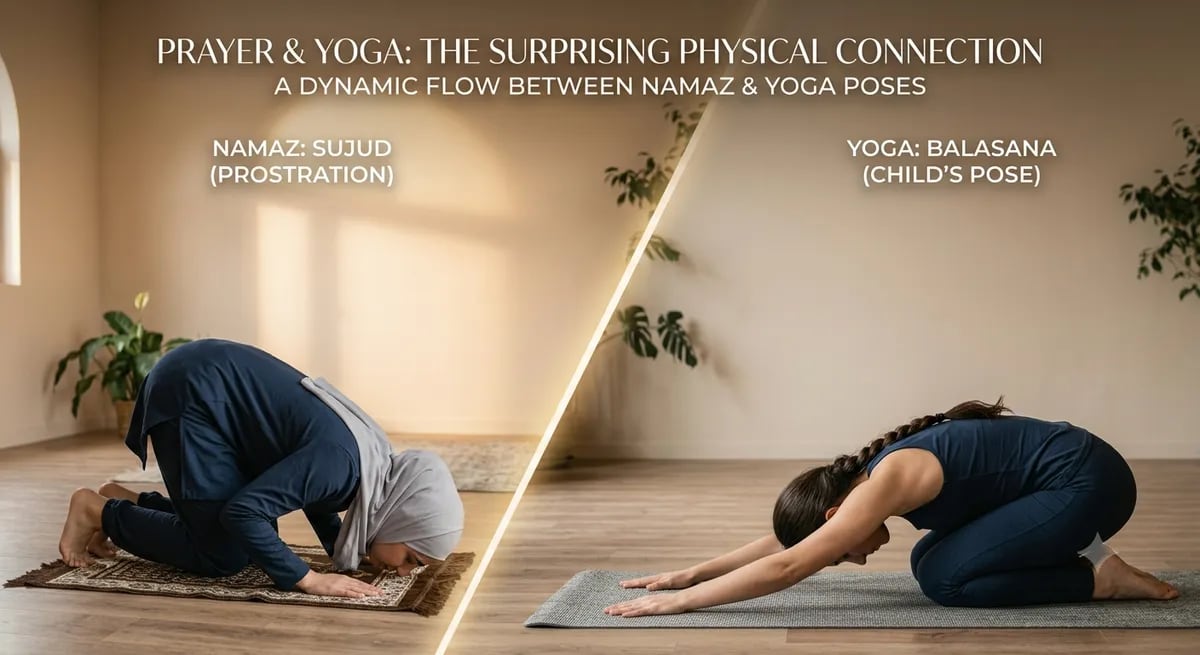
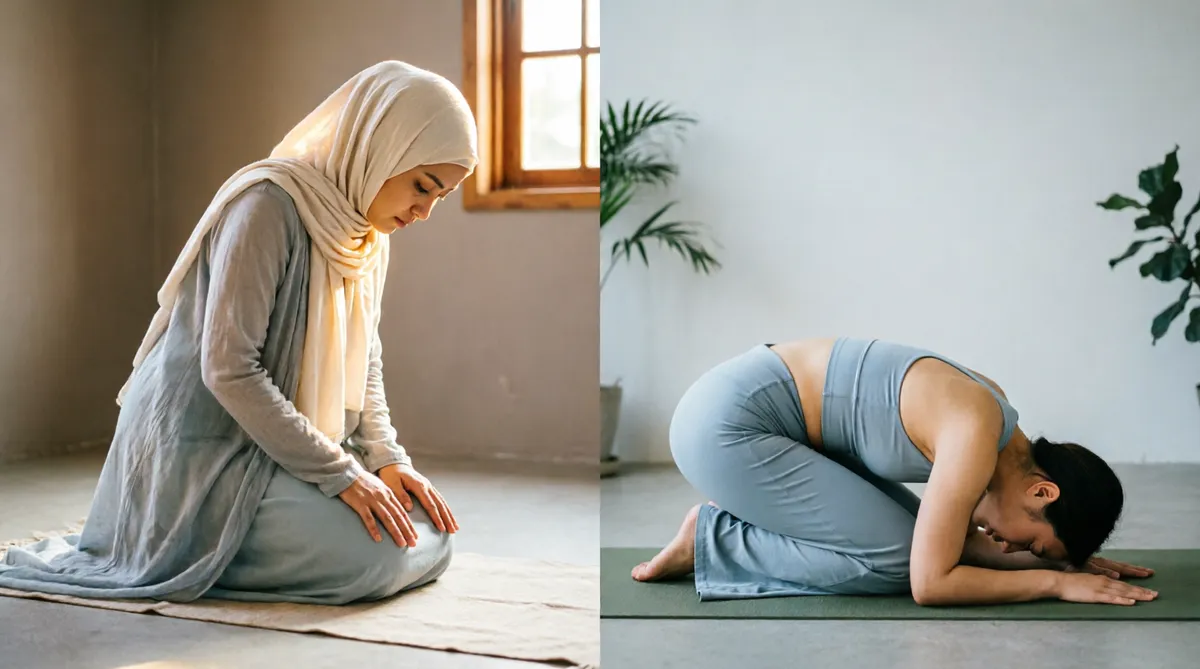
This posture, where a person kneels and lowers the forehead toward the ground, closely resembles a well known yoga posture called child's pose.
Both positions bring the head below the level of the heart for a short time, which changes blood flow to the upper body briefly. Many people describe a feeling of relief in the neck and shoulders, and a general sense of calm, after coming out of this posture. That feeling is real, even if we should be careful not to overstate the science behind it.
Here is the honest point worth remembering. Two different practices do not need to be scientifically identical to both genuinely be good for a person. Both encourage a gentle, brief head down position that a lot of people simply find soothing.
Sitting back on the heels
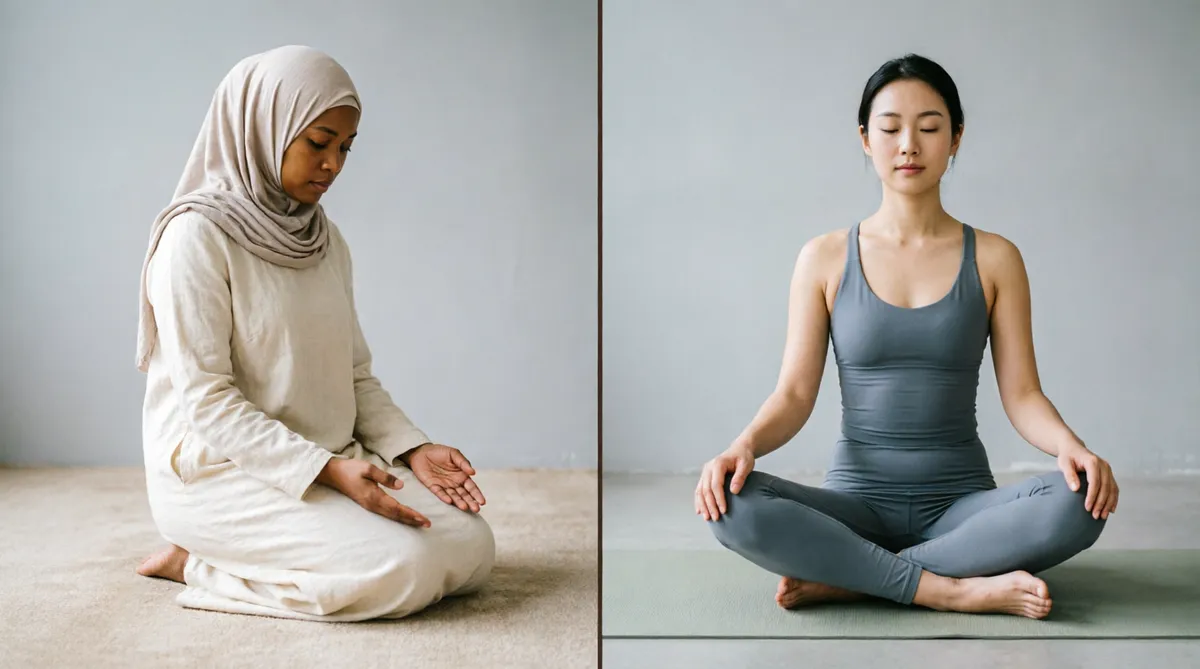
Near the end of prayer, a person often sits back with the legs folded underneath the body. This is close in shape to a seated yoga posture sometimes called thunderbolt pose.
Sitting this way for a few minutes, gently and without any pain, is often associated with easier digestion and light stretching around the ankles and knees. As with anything physical, this is not for everyone. Anyone with existing knee problems should be gentle and cautious with this kind of position, whether it happens during prayer or during yoga.
The part you cannot see in any photo
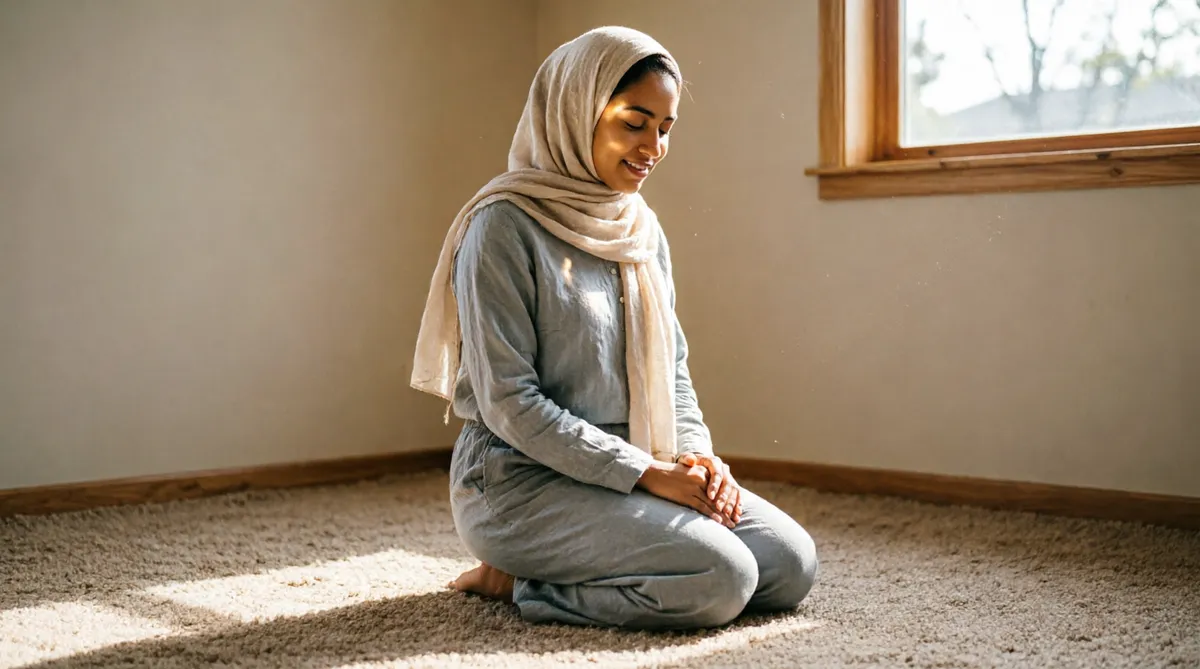
Beyond the individual postures, there is something quieter happening underneath all of this. Both prayer and yoga involve slow, repeated movement, paired with controlled or calm breathing, done at fixed times, often more than once a day.
This kind of repeated, mindful movement is widely understood to help lower everyday stress, mainly because it gives the mind something predictable and calm to return to, again and again, throughout a busy day. The benefit does not come from any single posture working like a magic cure. It comes from consistency. From doing something gentle and deliberate with the body, day after day, without skipping it.
Five times a day, a person who prays is pausing. Moving. Breathing. Being present, even if only for a few minutes at a time. That is not only worship. It is also, quietly, a kind of care for the body and the nervous system.
What this article is not trying to say
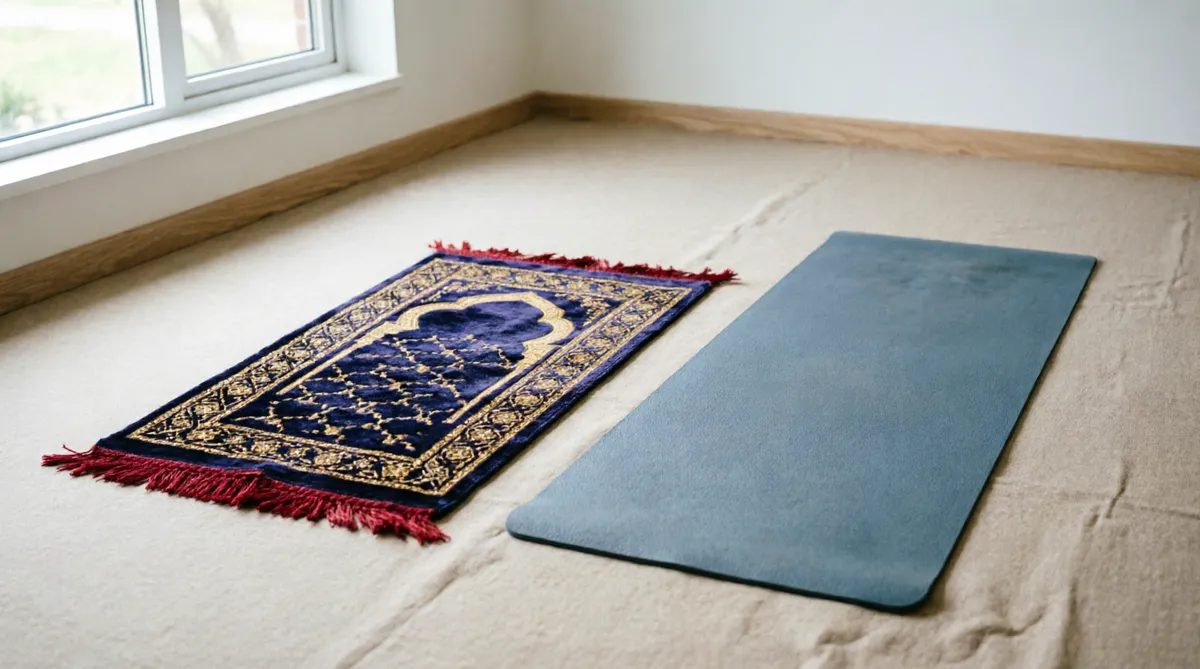
I want to say this clearly one more time, because it matters. This is not an attempt to turn prayer into a workout, or to reduce something sacred into a set of exercises. Prayer, for the people who practice it, is rooted in faith and devotion first. Its purpose is spiritual. Yoga has its own long and separate tradition, with its own depth and meaning for the people who practice it. Neither one needs to borrow importance from the other.
What can be honestly said is this. Both traditions, in their own separate ways, guide the human body toward standing tall, bending with control, breathing deeply, resting the head low for a moment, sitting quietly, and pausing a busy mind, several times across the day. That overlap is worth noticing and appreciating, without turning it into a bigger claim than it actually is.
For someone like Aisha, understanding this did not change what her prayer meant to her. It gave her one more reason to pay attention to something she was already doing, and to do it with a little more care and awareness.
What you can actually do with this
If you already pray daily, there is nothing extra you need to add for these physical benefits. You do not need new equipment or a new routine. What may help is simply paying closer attention.
Stand a little taller. Raise the hands a little more slowly. Let the breath go a little deeper. Bend with control instead of rushing. Sit for a moment with real awareness instead of letting the mind wander far away. Notice how the body feels before and after.
If you also practice yoga separately, there is no conflict at all in doing both. They can simply be two different, meaningful ways of caring for the same body and the same mind.
A closing thought
We often think that wellness has to be bought, learned from a class, or downloaded from an app. Sometimes it is already sitting quietly inside a habit we have had since childhood, one we never stopped to really look at.
Aisha did not discover anything new that day with her doctor. Muslims have prayed this way for over a thousand years. Yoga has existed for even longer. What she discovered was something personal, a new level of attention toward something old and familiar.
Maybe the same is true for many of us, in whatever daily practice we already have. The wisdom was often there all along. Sometimes all it takes is one honest question to notice it.