
The Life Reset Button: How Spirituality, Faith, and Science Can Help You Start Again.
Three years ago, I sat on my bathroom floor at 2 AM, staring at my phone, thinking one simple thought: *I wish life had a reset button.*
Not a big dramatic reset. Just a small one. A way to press "restart" and wake up without the weight I was carrying — the failed plans, the tired mind, the feeling that I was stuck in the same loop every single day.
I searched everywhere. Self-help videos. Motivational quotes. Even a few late-night Google searches like "how to fix my life fast." None of it worked. Not because the advice was bad, but because I was looking for something outside me to fix something inside me.
The real reset button, I found out later, was never missing. I just didn't know where to look.
This article is what I wish someone had told me that night. No fancy words. No fake positivity. Just simple, real ways people have used for thousands of years — through religion, yoga, meditation, and modern science — to press "reset" on their life.
Why We All Want a Reset Button.
Almost everyone, at some point, feels this way. A bad relationship. A job that drains you. A mistake you can't stop thinking about. The mind starts playing the same sad movie again and again.
Video games have reset buttons. Computers have restart options. But life doesn't come with an "undo" key. And honestly, that used to make me angry.
But here's what changed my thinking: humans have been solving this exact problem for thousands of years. Long before self-help books existed, monks, yogis, priests, and elders were already teaching people how to "reset" their mind and heart. We just forgot to look at the old wisdom because we were busy chasing new tricks.
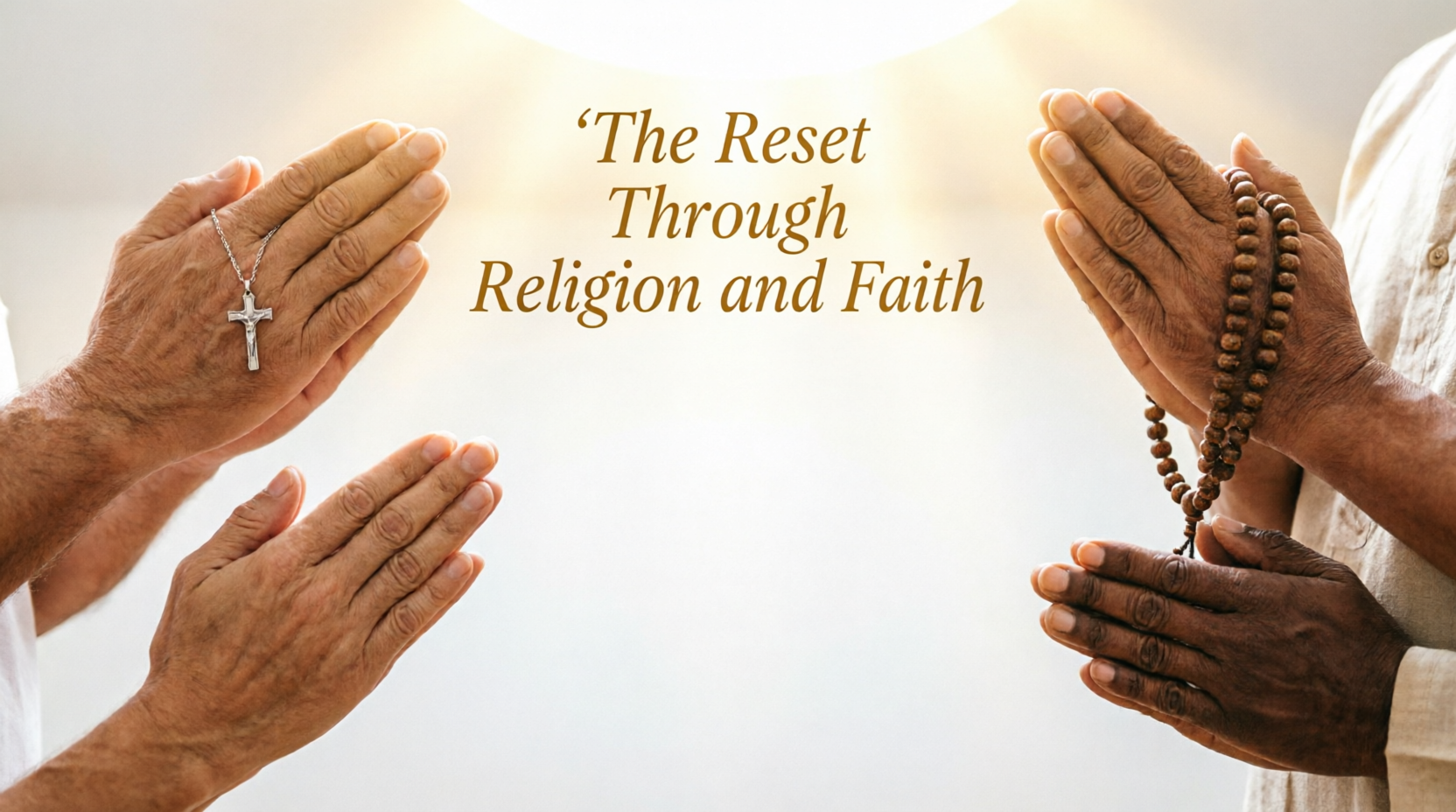
The Reset Through Religion and Faith.
I grew up watching my grandmother pray every single morning. As a kid, I thought it was just a routine. Now I understand it was her daily reset button.
In almost every religion, there is some form of confession, forgiveness, or surrender. In Christianity, there is confession and prayer for forgiveness. In Islam, there is Tawbah, the act of turning back to God with a clean heart. In Hinduism, there are rituals of purification, like bathing in sacred rivers or lighting a diya before starting something new. In Buddhism, there is the idea of letting go of attachment as a way to end suffering.
These are not just customs. Psychologically, they do something powerful: they give the mind permission to let go of guilt and start fresh. Research on forgiveness therapy, done by Dr. Robert Enright at the University of Wisconsin, found that people who practice forgiveness — toward others or themselves — show lower levels of anxiety, anger, and depression. That's not just a spiritual idea. That's proven science.
So if you follow a religion, don't underestimate your own prayer, confession, or ritual. It's not old-fashioned. It's one of the oldest reset buttons known to humans.
The Reset Through Meditation.
After that night on my bathroom floor, I started meditating. Just five minutes a day, sitting quietly, trying to watch my breath.
At first, it felt useless. My mind kept jumping everywhere. But slowly, something shifted. I wasn't trying to stop my thoughts. I was learning to watch them without getting pulled in. That small gap of noticing became my reset moment.
This isn't just a feeling I made up. Dr. Jon Kabat-Zinn, who created Mindfulness-Based Stress Reduction (MBSR) at the University of Massachusetts, has decades of research showing meditation lowers stress hormones like cortisol and helps rewire the brain toward calmness. Harvard neuroscientist Sara Lazar even found that regular meditation can physically change the brain, making the areas linked to stress smaller and the areas linked to focus and emotional control stronger.
You don't need to sit for hours like a monk on a mountain. Even five to ten minutes a day of quiet breathing can start to loosen the grip of stress.
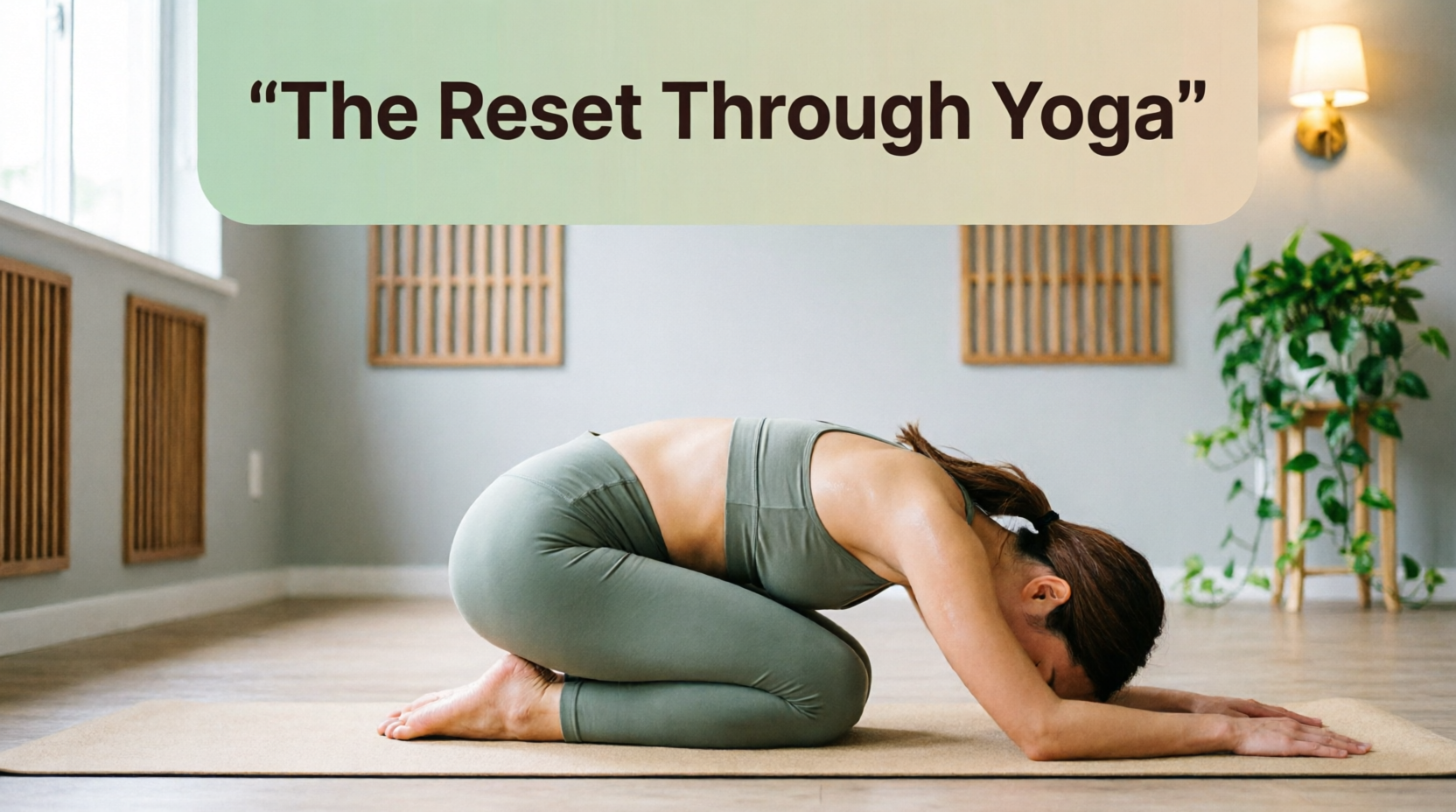
The Reset Through Yoga.
I used to think yoga was just stretching. Then I went through a really hard year — job loss, family tension, constant worry — and a friend dragged me to a yoga class.
I remember lying down at the end of the class, in what's called Savasana, and crying without even knowing why. It wasn't sadness. It was release. Something in my body had been holding tension for months, and it finally let go.
Yoga isn't only physical exercise. It's a practice that connects breath, movement, and awareness. Studies published in the Journal of Clinical Psychology have shown that yoga can reduce symptoms of anxiety and depression by calming the nervous system. It works directly on the vagus nerve, which controls our "rest and relax" response.
If your mind feels too noisy for meditation, start with your body instead. Ten minutes of slow stretching and deep breathing can be its own quiet reset button.
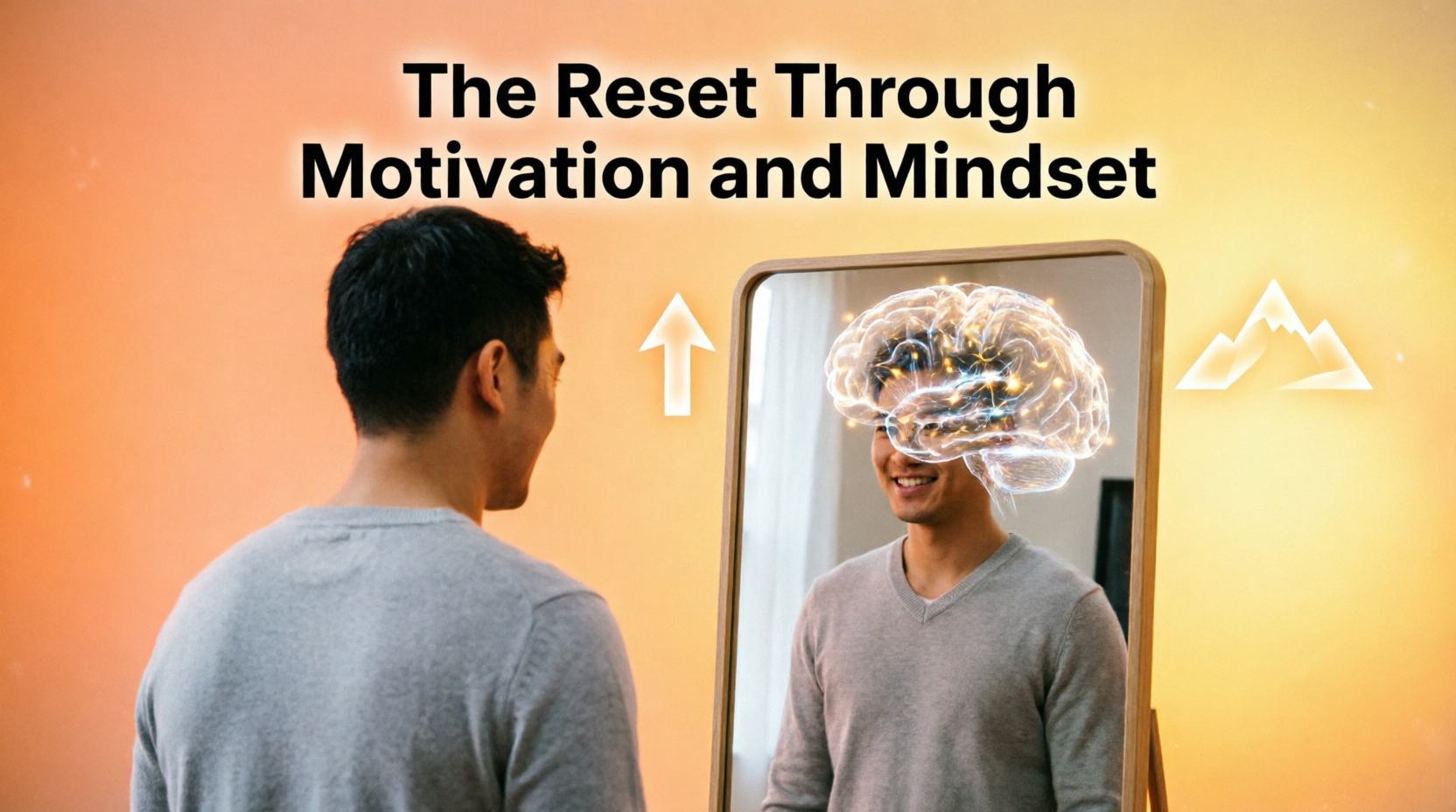
The Reset Through Motivation and Mindset.
Spiritual practices calm the mind. But sometimes, you also need a push to actually take action. This is where motivation and mindset work come in.
Psychologist Dr. Carol Dweck's research on "growth mindset" showed something simple but powerful: people who believe they can change and grow, actually do change and grow. Believing "I can start again" is not just a nice thought — it changes how your brain approaches challenges.
This is not about screaming positive quotes at yourself. It's about small, honest self-talk. Instead of saying "my life is a mess," try saying "my life is in a messy season, and seasons change." That one shift in language can be a mental reset.
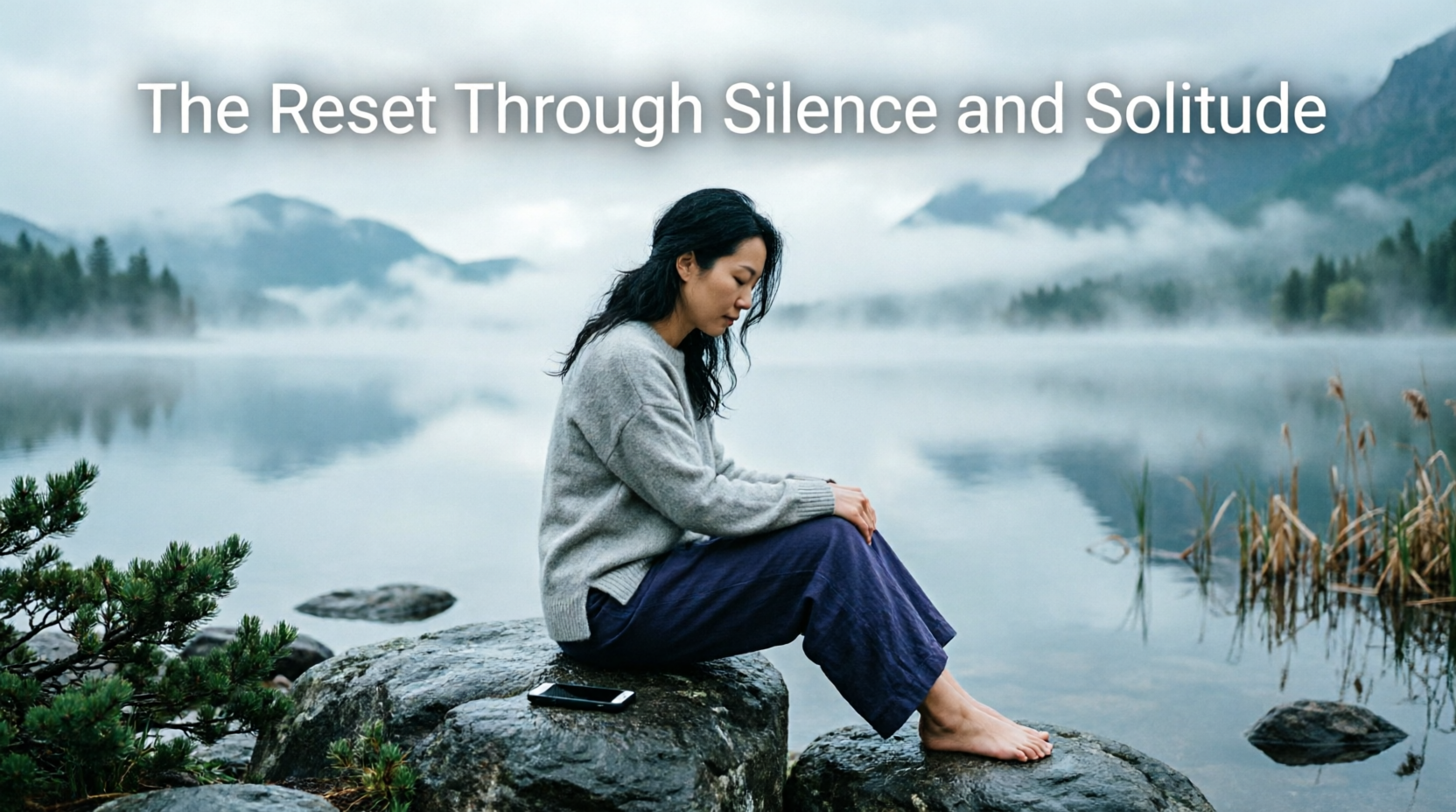
The Reset Through Silence and Solitude.
The most underrated reset, in my opinion, is simply being alone and quiet — without your phone, without noise, without distraction.
Many religions include this in different forms: a Sabbath day of rest, a retreat in nature, fasting periods, or quiet pilgrimage walks. Modern psychology backs this up too. Studies on "digital detox" have found that even short breaks from constant notifications lower stress and improve focus and mood.
You don't need a retreat in the mountains. Even one hour without your phone, sitting outside or just walking, can help your mind breathe again.
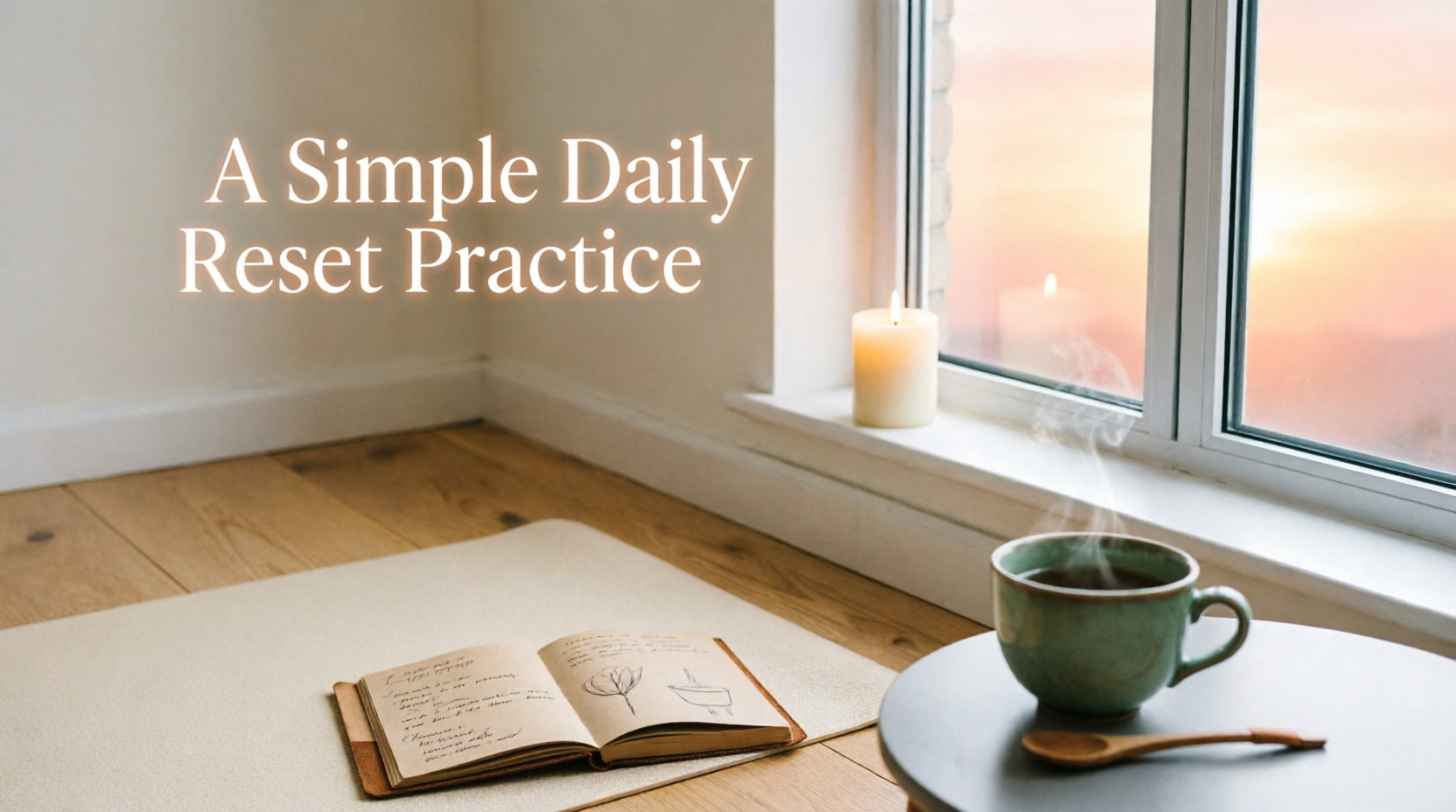
A Simple Daily Reset Practice.
Here is a small routine you can try, whether you are religious, spiritual, or neither:
1. Morning (2 minutes): Sit quietly and take five slow, deep breaths. If you pray, say a short prayer of gratitude or surrender.
2. Body (5 minutes): Do a few gentle stretches or simple yoga poses to release tension from your body.
3. Mind (3 minutes): Write down one thing you are letting go of today, and one thing you are starting fresh.
4. Evening (5 minutes):Sit in silence, no phone, and simply breathe before sleeping.
That's it. Ten to fifteen minutes a day. Small, but repeated daily, it becomes a real reset — not once, but again and again.
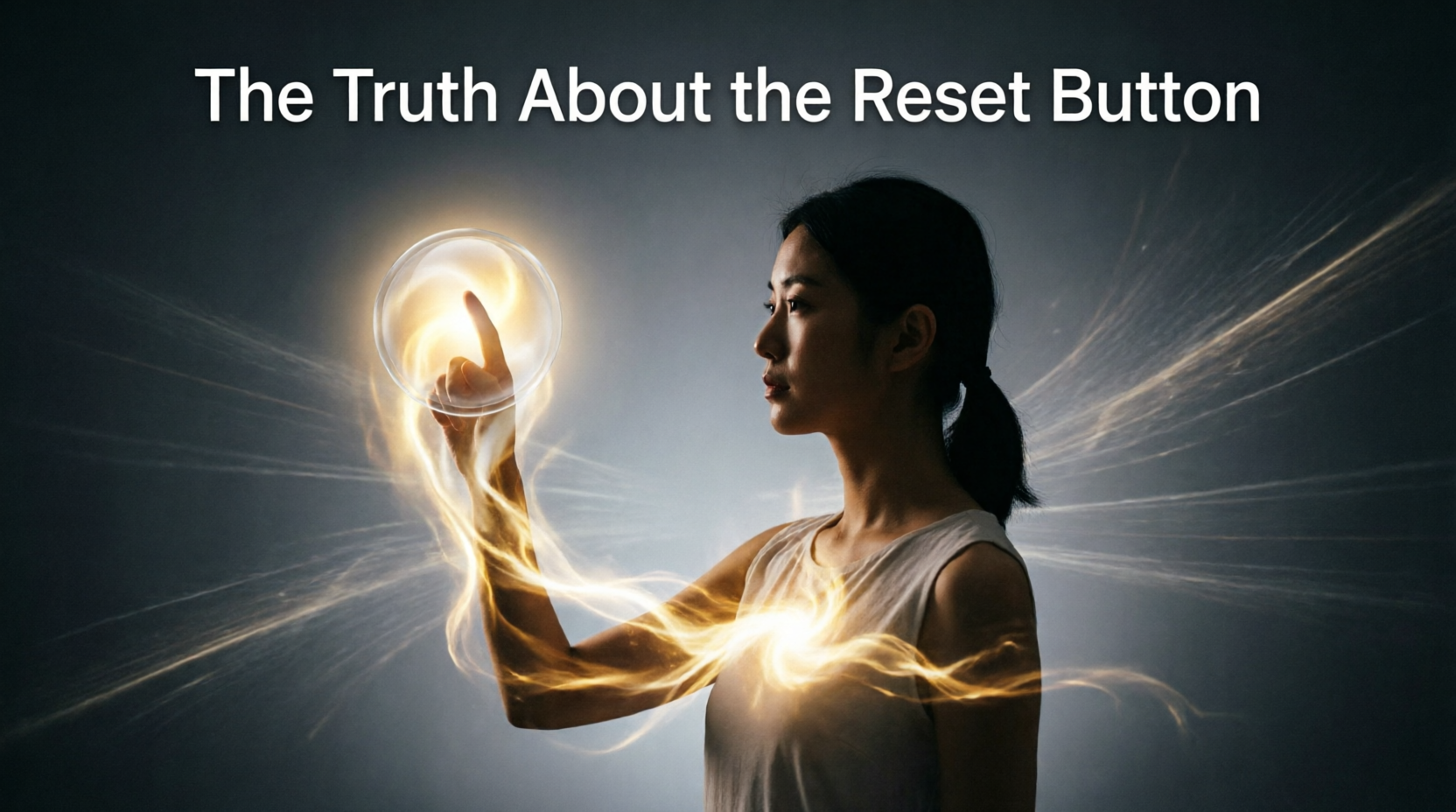
The Truth About the Reset Button.
Here's what I eventually understood, sitting on that same bathroom floor months later, but in a completely different state of mind: the reset button was never outside me. It wasn't a new job, a new city, or a new relationship.
It was a quiet breath. A moment of prayer. A stretch on a mat. A decision to speak to myself with more kindness. Small resets, done daily, build into a completely different life over time.
You don't need to wait for rock bottom to press reset. You can press it today, in the next five minutes, with one deep breath and one honest thought
I am allowed to start again
And that, more than any fantasy button, is real.
Comments (0)
Please sign in to join the conversation.
No comments yet. Be the first to join the discussion!