
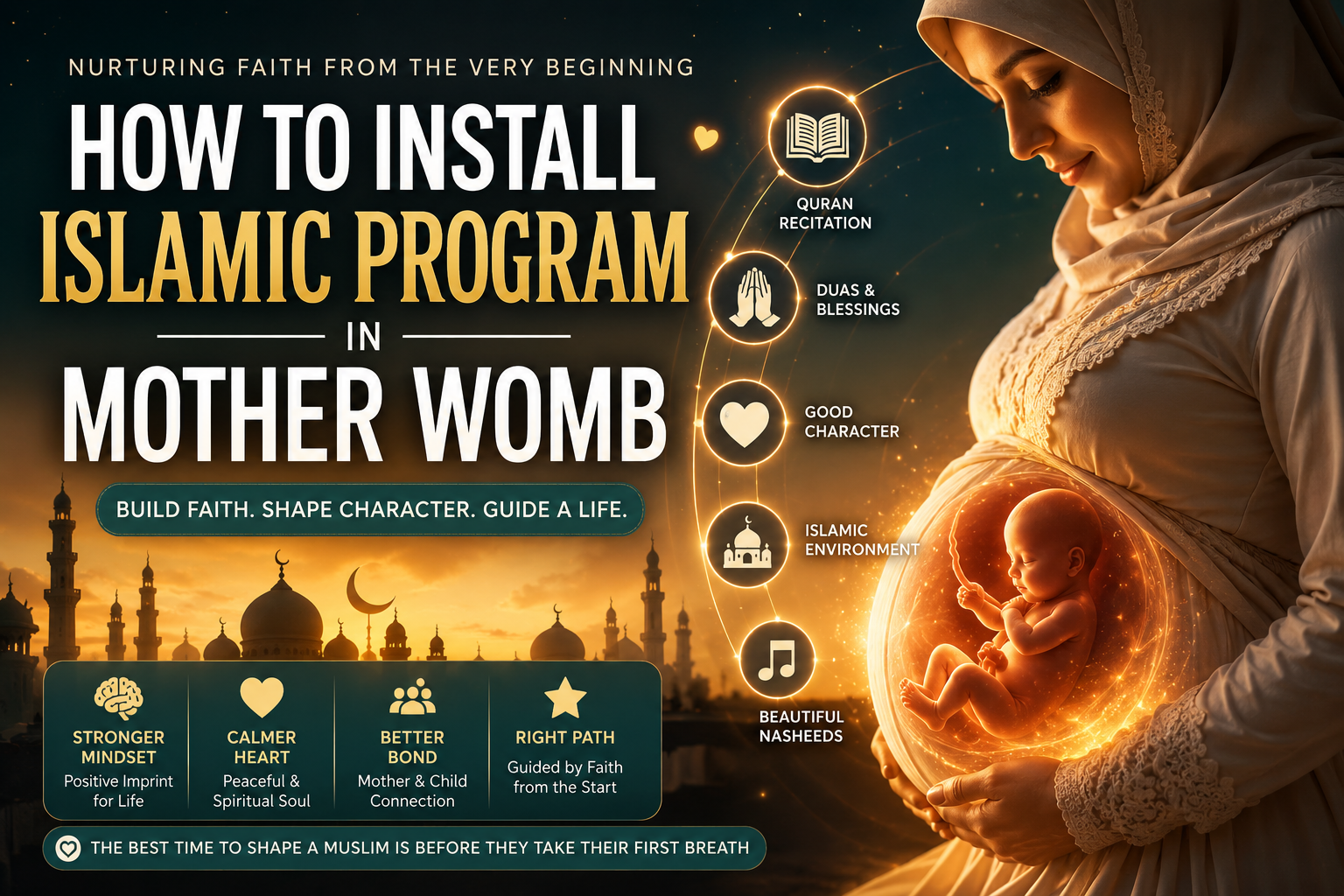
Islamic Spiritual Nurturing in the Womb: A Guide for Expecting Mothers.
A note before we begin: In Islam, there is a beautiful and old tradition called tarbiyah — spiritual nurturing that starts even before birth. This is not a scientific claim that a baby "learns" words in the womb like a computer chip. It is a faith practice: when a mother recites Quran, remembers Allah's names, and stays calm and connected to her Lord, her own heart fills with peace — and that peace, that noor, (light), naturally reaches the child. Scholars have always said the mother's spiritual state during pregnancy shapes the home the child is born into. That is the real "program" — a peaceful, faith-filled mother.
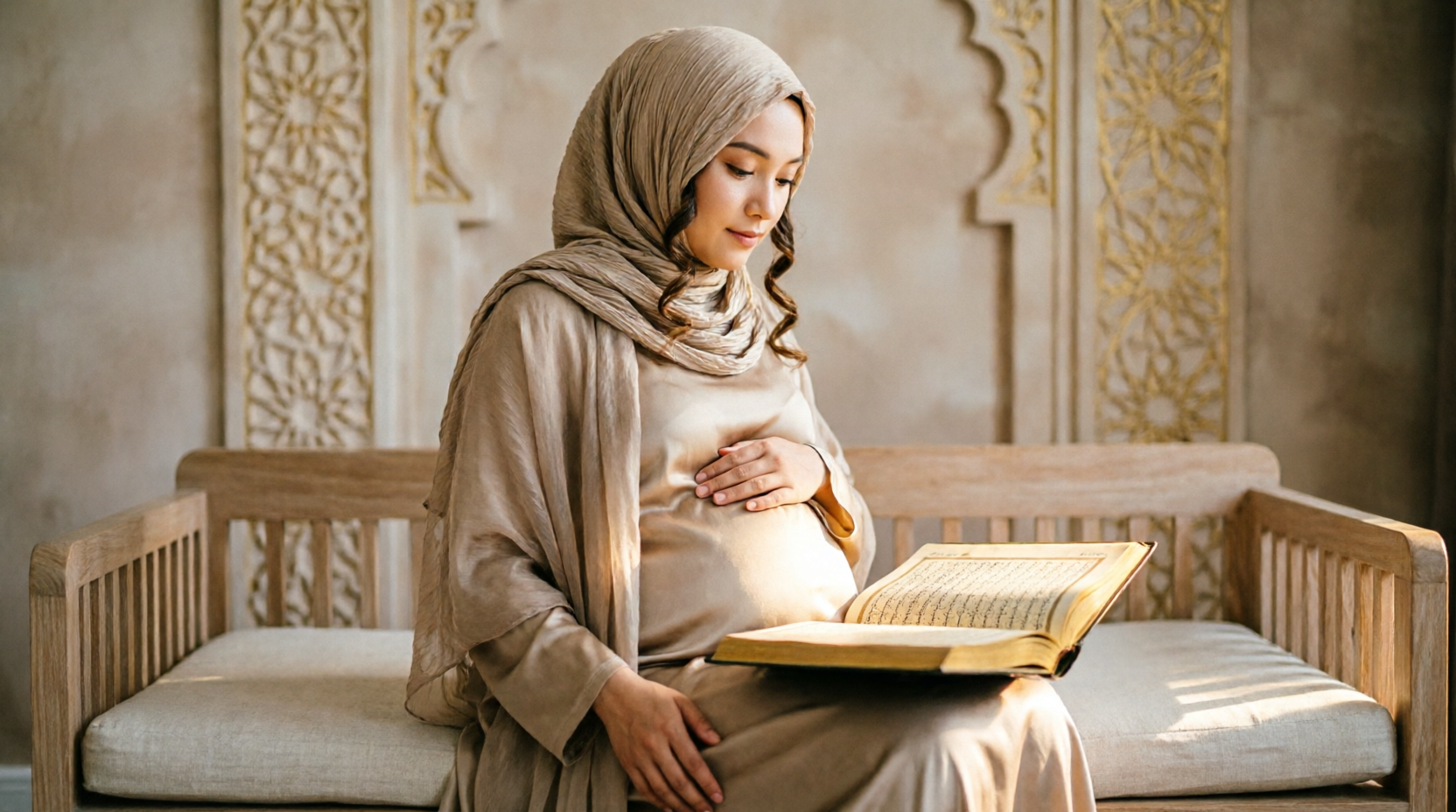
Part 1: Five Quranic Passages for Daily Recitation.
1. Surah Al-Fatiha.
Arabic: بِسْمِ اللَّهِ الرَّحْمَٰنِ الرَّحِيمِ ﴿١﴾ الْحَمْدُ لِلَّهِ رَبِّ الْعَالَمِينَ ﴿٢﴾
اللہ کے نام سے جو نہایت مہربان، رحم کرنے والا ہے۔ تمام تعریفیں اللہ کے لیے ہیں جو تمام جہانوں کا رب ہے۔
In the name of Allah, the Most Gracious, the Most Merciful. All praise belongs to Allah, Lord of all the worlds.
2. Ayat al-Kursi (2:255 – opening line).
اللَّهُ لَا إِلَٰهَ إِلَّا هُوَ الْحَيُّ الْقَيُّومُ
Urdu: اللہ، اس کے سوا کوئی معبود نہیں، وہ زندہ ہے، ہر چیز کو سنبھالنے والا ہے۔
Allah — there is no god but Him, the Ever-Living, the Sustainer of all existence.
3. Surah Yasin (opening).
يس ﴿١﴾ وَالْقُرْآنِ الْحَكِ٢﴾
یٰسٓ۔ قسم ہے حکمت والے قرآن کی۔
Ya-Sin. By the wise Qur'an.
4. Surah Luqman (31:14) – on parents' duty.
وَوَصَّيْنَا الْإِنسَانَ بِوَالِدَيْهِ
اور ہم نے انسان کو اس کے والدین کے بارے میں نصیحت کی۔
And We have enjoined upon man goodness to his parents.
5. Surah Maryam (19:4) – Zakariya's dua, an example of heartfelt prayer.
قَالَ رَبِّ إِنِّي وَهَنَ الْعَظْمُ مِنِّي
اس نے کہا: اے میرے رب! میری ہڈی کمزور ہو گئی ہے۔
He said, "My Lord, indeed my bones have weakened."
Monthly Plan (9 months):
Months 1–3, recite Al-Fatiha and Ayat al-Kursi daily after Fajr, softly, with hand on the belly. Months 4–6, add Yasin's opening verses in the evening. Months 7–9, recite all five passages once daily, slowly, focusing on meaning rather than speed.
Part 2: Ten Names of Allah (Asma-ul-Husna).
Ar-Rahman (The Most Merciful), Ar-Rahim (The Most Compassionate), Al-Hadi (The Guide), Al-Alim (The All-Knowing), As-Sabur (The Patient), Al-Wadud (The Loving), An-Nur (The Light), Al-Hafiz (The Protector), Al-Latif (The Subtle, Gentle One), Al-Wali (The Protecting Friend).
Monthly Plan:
Month 1 – Ar-Rahman, Ar-Rahim (settling in, seeking mercy). Month 2 – Al-Hafiz, Al-Wali (protection). Month 3 – An-Nur (light for the growing child). Month 4 – Al-Latif (Allah's gentle, unseen care). Month 5 – Al-Alim, Al-Hadi (seeking guidance for the child's future). Month 6 – As-Sabur (patience through pregnancy's harder days). Month 7 – Al-Wadud (love in the home). Month 8–9 – repeat all ten together, slowly, once a day, each with a short personal dua after it.
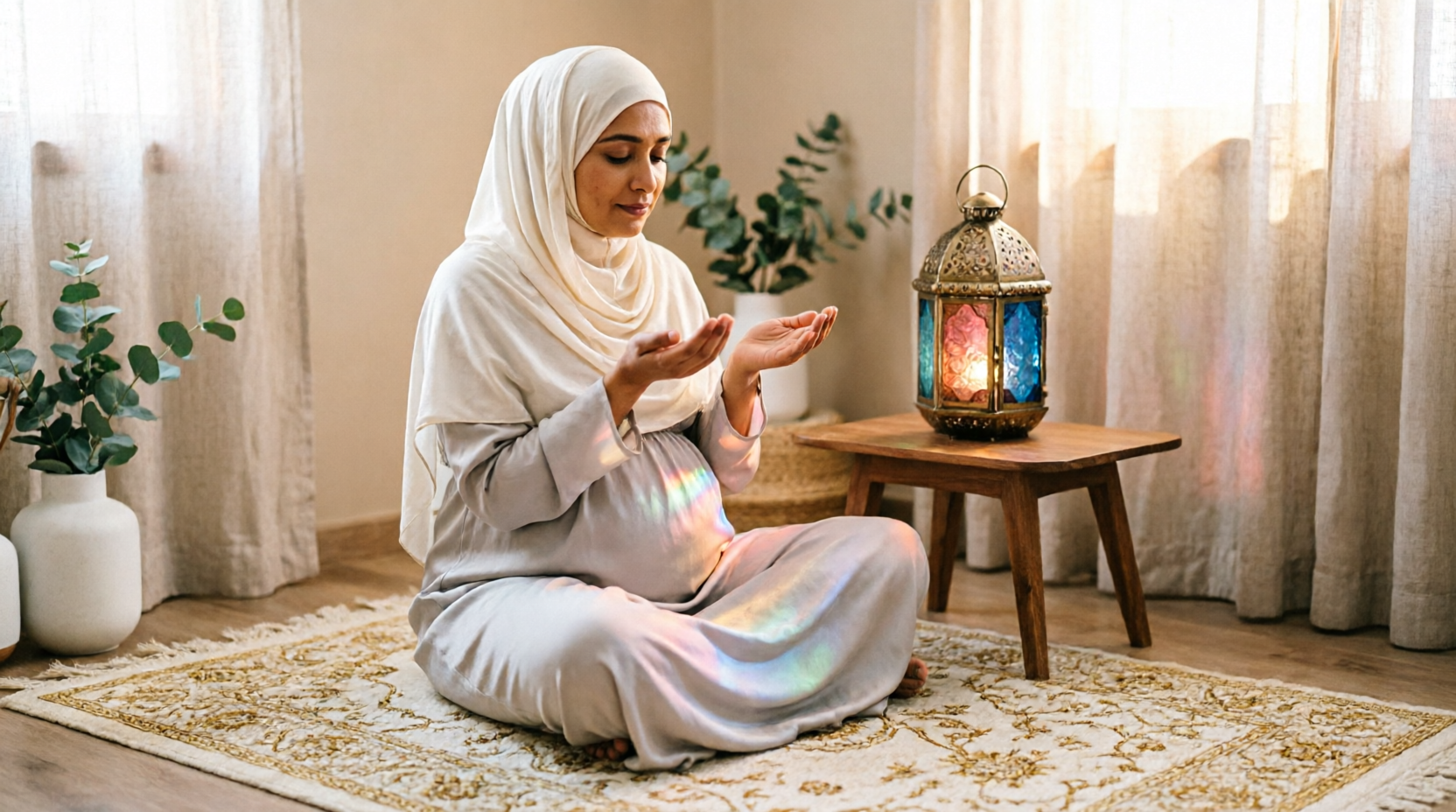
Part 3: Ten Duas from the Prophet's ﷺ Sunnah.
General duas the Prophet ﷺ taught for protection, ease, and righteous offspring — such as seeking refuge for the child, asking for ease in delivery, gratitude duas, and the well-known dua of Ibrahim (AS) asking for righteous children (Surah Ibrahim 14:40). Rather than listing exact wording from memory (since precision matters greatly with Prophetic narrations), it's best a local imam or a verified app like Hisnul Muslim be used to pick ten authentic duas — this protects against misquoting the Prophet's ﷺ words, which is taken very seriously in Islam.
Monthly Plan:
One new dua learned by heart each month, recited after each of the five daily prayers, alongside personal dua in the mother's own words — this personal, sincere dua is considered especially powerful.
Part 4: Islamic Diet Guidance.
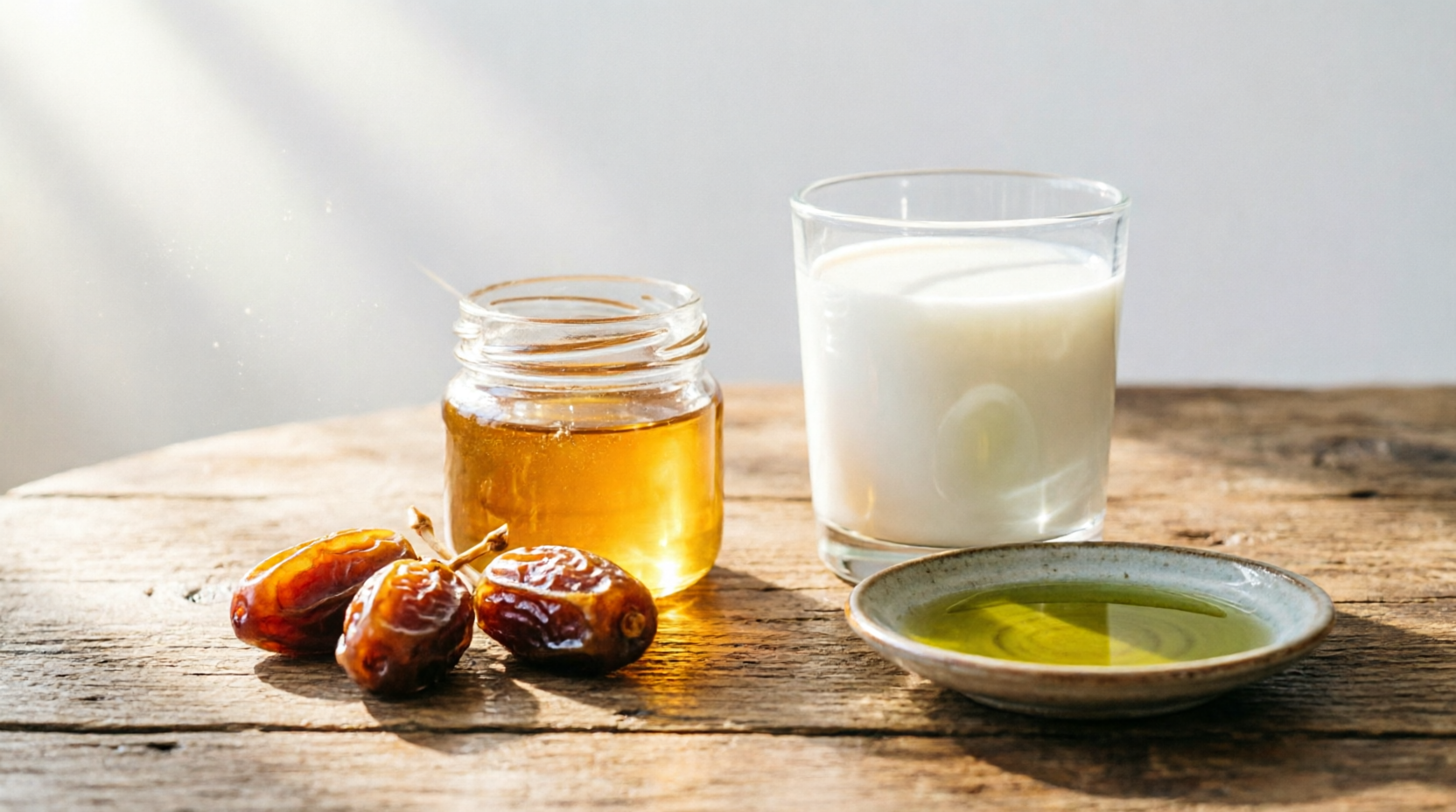
Islam encourages halal, clean, and moderate eating. Traditionally recommended during pregnancy: dates (mentioned in Surah Maryam as nourishment during labor), honey, milk, olive oil, and simple home-cooked food, eaten in moderation ("fill one-third stomach with food, one-third with water, one-third with air" — a well-known Prophetic principle). Avoid excess, and eat with ,Bismillah, before and ,Alhamdulillah , after. For actual nutrition needs, quantities, and any medical concerns, this should always be discussed with a qualified doctor — faith and medical care work together, not against each other.

Part 5: A Simple Sufi-Style Meditation (Muraqaba).
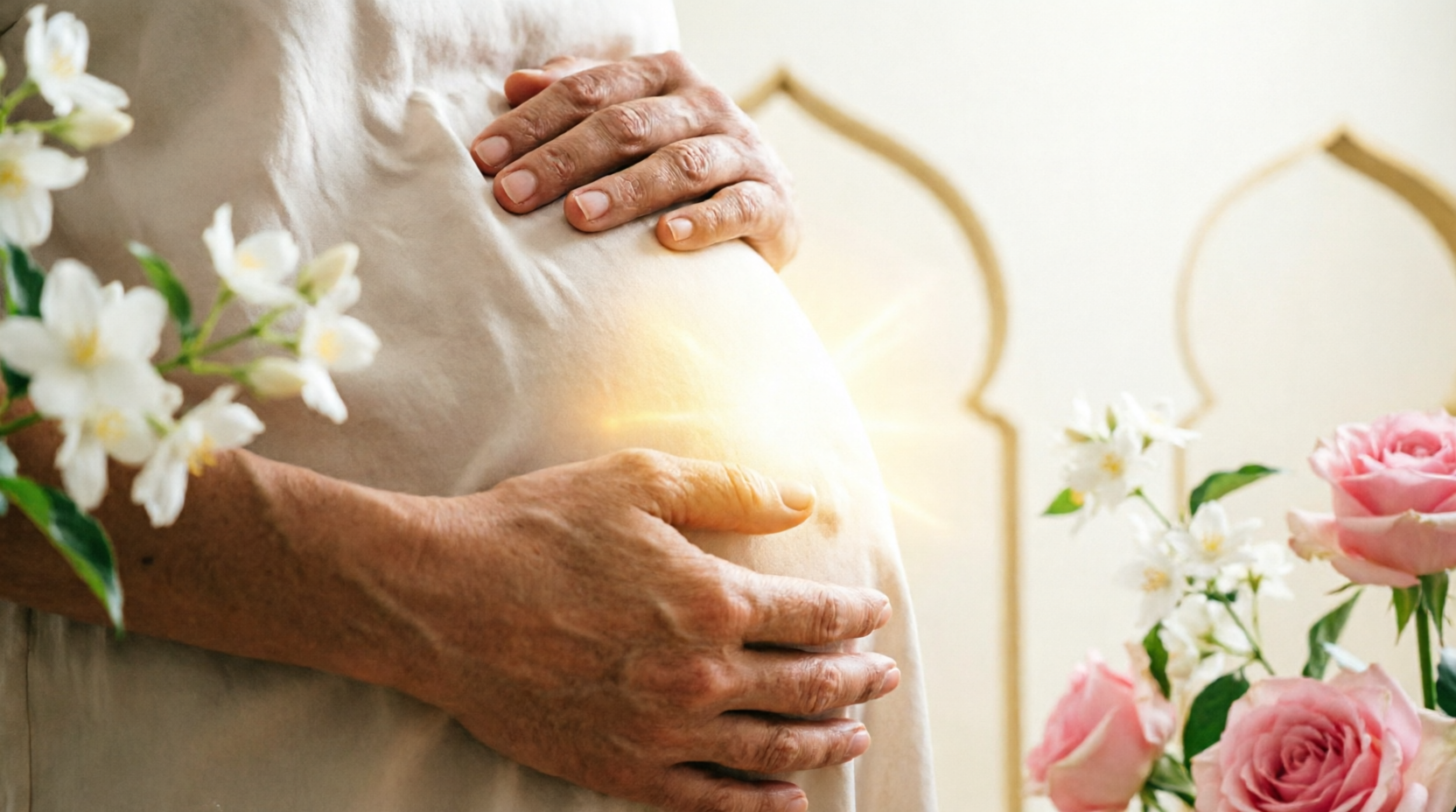
Sit quietly after Fajr or before sleeping. Close your eyes. Breathe in slowly saying inwardly "Allah," breathe out saying "Hu." Repeat for 5–10 minutes, resting a hand gently on the belly, imagining calm light spreading from your heart. Sufi tradition holds that a mother's inner stillness during dhikr becomes part of the child's first environment — not magic, but the natural calm a peaceful, prayerful mother carries into her body and voice.
Bringing It Together.
Across nine months, a mother is not "installing a program" — she is building a home of remembrance, patience, and love before her child even opens their eyes. The Quran recited softly, Allah's names whispered in gratitude, duas made from the heart, halal food, and quiet moments of dhikr — together these shape a mother's spirit, and through her, the very first world her child will know. This is the real, time-honored Islamic practice: not engineering a mind, but preparing a heart to receive one.
( For exact wording of Prophetic duas, please verify with a qualified scholar or a trusted source like Hisnul Muslim before use, and consult
a doctor for all matters of diet and pregnancy health).
Regard
Shoaib Nasir
Comments (0)
Please sign in to join the conversation.
No comments yet. Be the first to join the discussion!