
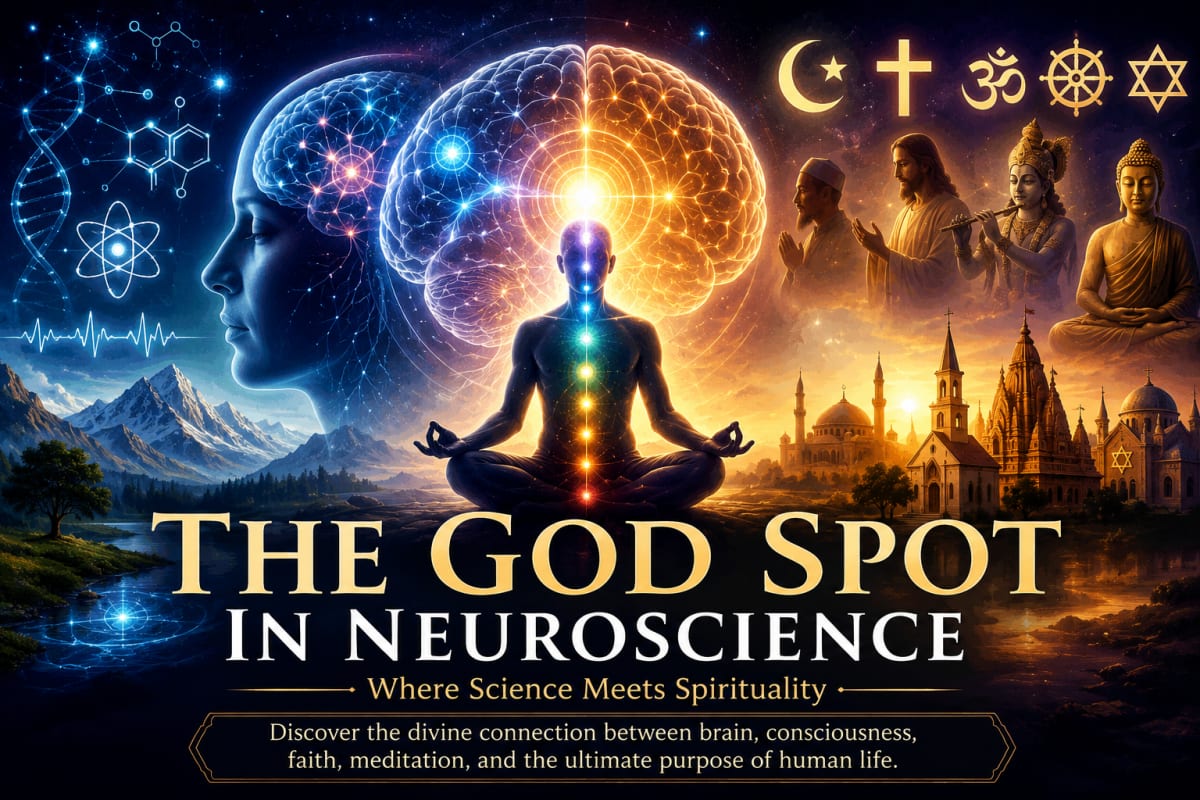
The God Spot in Neuroscience: Understanding the Connection Between the Brain, Spirituality, and Religion
Introduction.
For thousands of years, humans have wondered about their connection to God or a higher power. People from different religions have described spiritual experiences such as feeling God’s presence, seeing visions, or feeling deeply connected to the universe. But where do these experiences come from? Are they a gift from God, or do they come from the brain?
Neuroscientists, who study the brain and nervous system, have been trying to answer this question. Some scientists believe that there may be a special part of the brain responsible for religious and spiritual experiences. This idea is sometimes called the "God Spot."
In this article, we will explore what the "God Spot" is, what science has discovered about spirituality and the brain, and how different religions view this topic. We will also discuss whether science and religion can exist together in our understanding of spirituality.
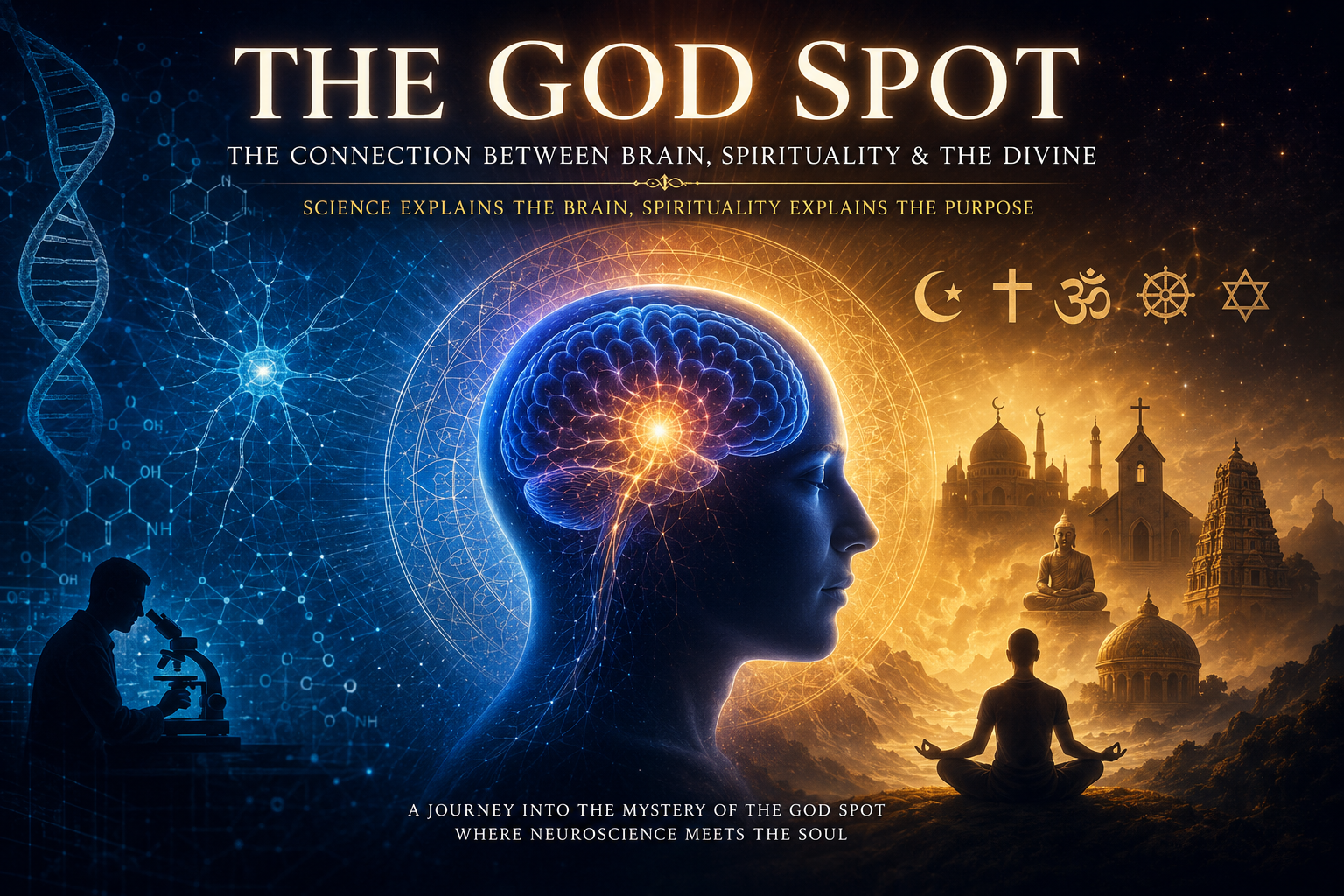
What is the "God Spot"?
The "God Spot" is the idea that there is a specific part of the brain that makes people feel spiritual or religious. Some early studies suggested that the temporal lobes, especially the right temporal lobe, might be responsible for mystical experiences, religious visions, and deep feelings of connection to God.
However, recent research shows that spirituality is not controlled by just one part of the brain. Instead, multiple areas of the brain work together when a person has a religious experience. These areas include:
1. Temporal Lobes
The temporal lobes are responsible for processing emotions, memories, and sensory experiences.
Some people with temporal lobe epilepsy report religious visions, out-of-body experiences, or a sense of divine presence.
Scientists believe this part of the brain helps us process spiritual experiences.
2. Frontal Lobe
The frontal lobe is responsible for decision-making, focus, and emotions.
Studies show that prayer and meditation activate this part of the brain, leading to calmness and deep focus.
This explains why religious practices like meditation and prayer can help people feel peaceful and spiritually connected.
3. Parietal Lobe
The parietal lobe helps us understand our sense of self and our place in the world.
During deep meditation and prayer, this part of the brain becomes less active, which may explain why some people feel "one with the universe" or as if they are losing their sense of self.
Neuroscientists now believe that spirituality is not controlled by one "God Spot" but by a network of brain regions working together.
Scientific Discoveries in Spiritual Neuroscience
Over the years, scientists have conducted many experiments to understand the relationship between the brain and spirituality. Some of the most important discoveries include:
1. The "God Helmet" Experiment
Dr. Michael Persinger designed a device called the "God Helmet." This helmet sent weak magnetic signals to the temporal lobes. Some people who wore the helmet reported feeling a divine presence, hearing voices, or experiencing deep peace. Others did not feel anything.
This experiment suggested that the brain can create religious experiences under certain conditions. However, not everyone had the same experience, which means that faith and personal beliefs also play a role in spirituality.
2. Meditation and Brain Activity
Scientists have studied Buddhist monks and Christian nuns to see what happens in the brain during meditation and deep prayer.
Studies found that meditation increases activity in the frontal lobe, which is linked to focus and emotional control.
At the same time, the parietal lobe becomes less active, which may explain why people feel as if they are transcending themselves or becoming one with a higher power.
Long-term meditation and prayer can change brain structure, making people feel calmer, happier, and more compassionate.
3. The Effect of Psychedelics on Spirituality
Some researchers have studied how substances like psilocybin (found in magic mushrooms) affect spiritual experiences.
People who took these substances often reported feeling connected to God, the universe, or a greater force.
Brain scans showed that these substances changed activity in brain areas related to self-awareness and consciousness.
This suggests that certain chemicals in the brain, like dopamine and serotonin, play a role in spiritual and mystical states.
These findings show that spirituality is not just about personal belief—it also has a biological and neurological basis.
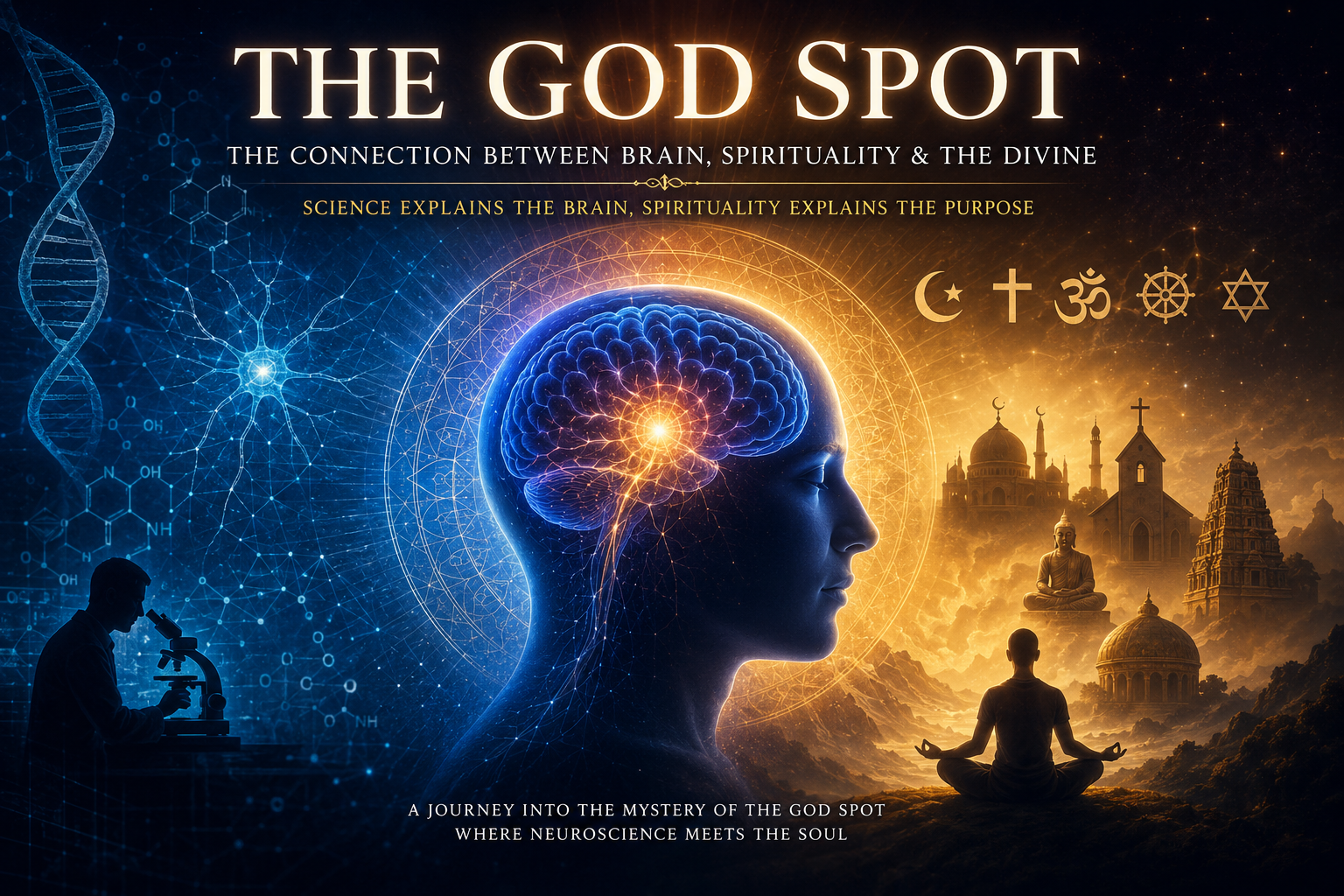
What Different Religions Say About the God Spot
Many religious traditions have their own views on the connection between the brain and spirituality. Here is how some of the world’s major religions understand this relationship.
Islamic Perspective
In Islam, faith and spirituality come from the heart and soul, not just the brain. The Quran says:
"Indeed, in the remembrance of Allah do hearts find peace." (Quran 13:28)
Muslims believe that while science can explain how the brain processes religious experiences, true faith is a gift from Allah. Practices like Salah (prayer) and Dhikr (remembrance of God) are known to create deep peace, which neuroscience has also confirmed.
Christianity
Christianity teaches that faith is a deep connection with God, not just brain activity. The Bible says:
"Be transformed by the renewing of your mind." (Romans 12:2)
Some Christians believe that the "God Spot" could be part of God’s design, allowing humans to seek Him. Others believe that faith comes from the soul and not just the brain. Neuroscience confirms that prayer and worship bring comfort, peace, and happiness.
Hinduism
Hinduism has explored spirituality and the mind for thousands of years. Practices like yoga, meditation, and chanting are known to change brain activity.
The Ajna (third eye) chakra is believed to control spiritual awakening, similar to the frontal lobe’s role in deep focus and meditation.
Meditation is believed to awaken deeper consciousness, which neuroscience also suggests happens through changes in brain activity.
Buddhism
Buddhism teaches that enlightenment (Nirvana) happens when a person transcends the self.
Neuroscience shows that deep meditation reduces activity in the parietal lobe, which is responsible for self-awareness.
This matches Buddhist teachings that say letting go of the "self" leads to enlightenment and inner peace.
Judaism
Judaism teaches that the mind and soul work together. Jewish mysticism, like Kabbalah, explores deep spiritual experiences.
The Torah teaches that wisdom and understanding come from God.
Many Jewish scholars believe that studying both science and religion can help us understand spirituality.
Does Neuroscience Disprove Religion?
Some people believe that if scientists can explain religious experiences using the brain, then God must not be real. However, this is not necessarily true.
Think about music: when we listen to a song, our brain processes sound waves and emotions. But that does not mean the music itself is not real. Similarly, just because the brain processes spirituality does not mean that God or a higher power does not exist.
Many scientists and religious scholars agree that science and spirituality can exist together. Neuroscience explains how the brain reacts to spirituality, but faith explains why people feel connected to God.
Conclusion: Science, Faith, and Spirituality
The idea of a "God Spot" in the brain is fascinating, but scientists now know that spiritual experiences come from multiple brain areas working together. Neuroscience shows that prayer, meditation, and religious experiences create real changes in brain activity, leading to peace, connection, and happiness.
However, science alone cannot fully explain why people believe in God. Faith, culture, and personal experiences also play a role in spirituality.
For believers, spirituality is more than just brain activity—it is about the soul, faith, and a deep connection to something greater. Whether through science or religion, the search for meaning continues, bringing together the worlds of neuroscience and spirituality.
Comments (0)
Please sign in to join the conversation.
No comments yet. Be the first to join the discussion!