
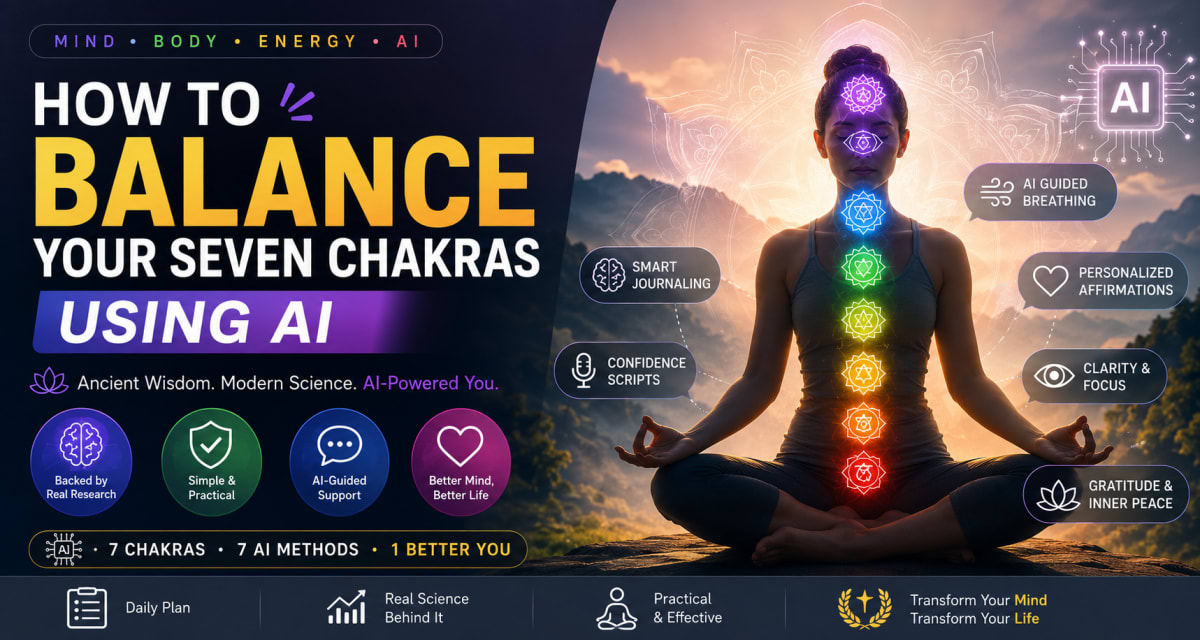
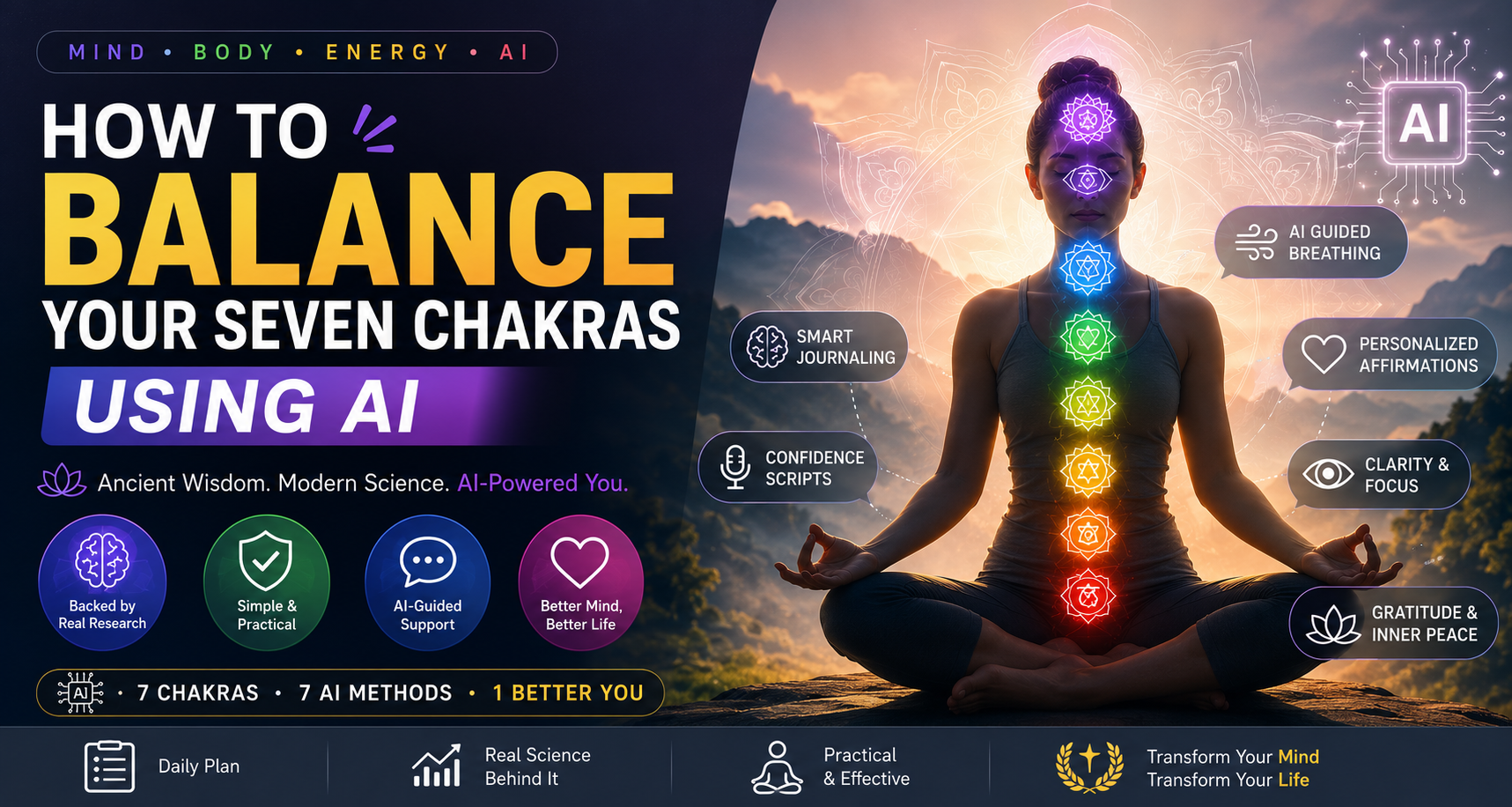
How To Balance Your Seven Chakras Using AI (Simple Steps, With Real Research Behind Them).
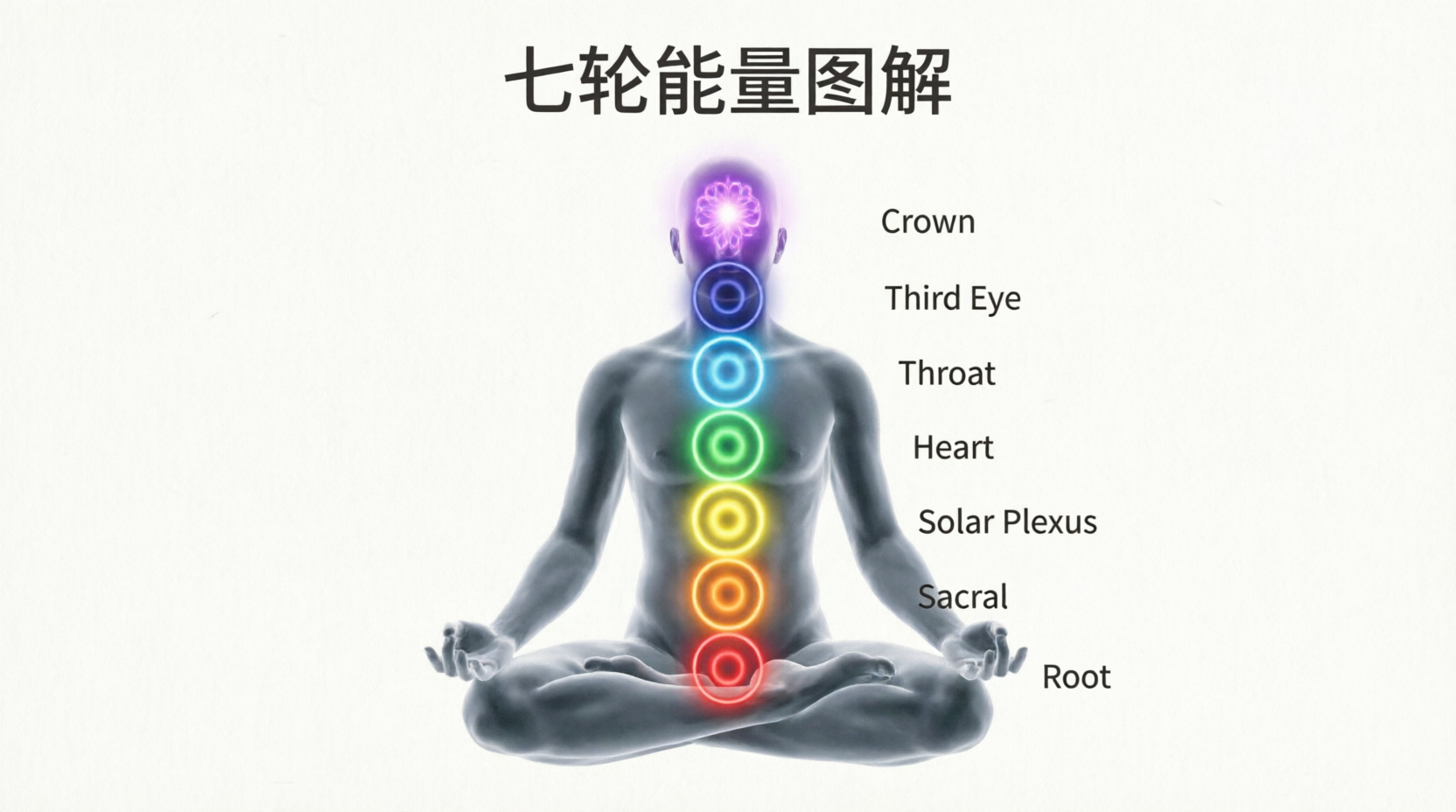
People have talked about seven chakras for thousands of years. These are seven energy points said to run through the body. Old teachers used chanting, breathing, and meditation to balance them.
Today we have a new tool sitting in our pocket: AI. This article shows you, step by step, how to use AI to work on each chakra. But before we start, let's be honest about something.
Let's Be Honest First
Chakras come from old spiritual traditions. Science has not fully proven that chakras exist as real energy points in the body. Researchers have tried to link chakra locations to nerve plexuses in the body, but real evidence is still limited. So this article will not lie to you and call chakras "100% scientific fact." That would be wrong.
But here is the good news. The methods in this article are real and tested. Breathing, gratitude, writing about your feelings, and self-talk are studied again and again in real research labs, with real numbers. So even if chakras themselves stay a matter of belief, these AI-guided methods will still help your mind and body. That is the honest, solution-based promise of this article.
Now let's go chakra by chakra.
Step 1: Root Chakra — AI-Guided Slow Breathing.
The Root Chakra is linked to safety and calm. When you feel anxious or shaky, people often point to this one.
The AI method:
Every morning, tell an AI chat app how you feel in 2-3 lines. Ask it to guide you through a slow breathing pattern — for example, 5 seconds in, 5 seconds out, for 5 minutes.
The real science:
This breathing speed is close to what researchers call resonance frequency breathing, usually around 6 breaths per minute. In one study, 42 healthy people did 30 minutes of deep breathing, and every single heart-rate-variability marker improved afterward, with key markers rising between 21 and 46 percent. A large review of over 200 studies also found that slow breathing reliably increases markers linked to vagus nerve activity, which is the body's main calming system. In simple words: slow breathing is one of the most proven, fastest ways to calm your nervous system.
Step 2: Sacral Chakra — Personal Affirmations From AI.
The Sacral Chakra is linked to emotion and creativity. When it feels blocked, people feel numb or emotionally stuck.
The AI method:
Tell AI about something that feels emotionally stuck for you right now. Ask it to write 5 short, personal affirmation lines based on your exact situation — not generic ones.
The real science:
Self-affirmation research shows that writing about your own values and strengths can lower stress responses and help people handle threats to their self-image better. The key detail researchers point to is that affirmations work best when they feel personal and true to you, not when they are generic phrases copied from somewhere else. This is exactly where AI is useful — it can build affirmations around your real situation instead of a one-size-fits-all script.
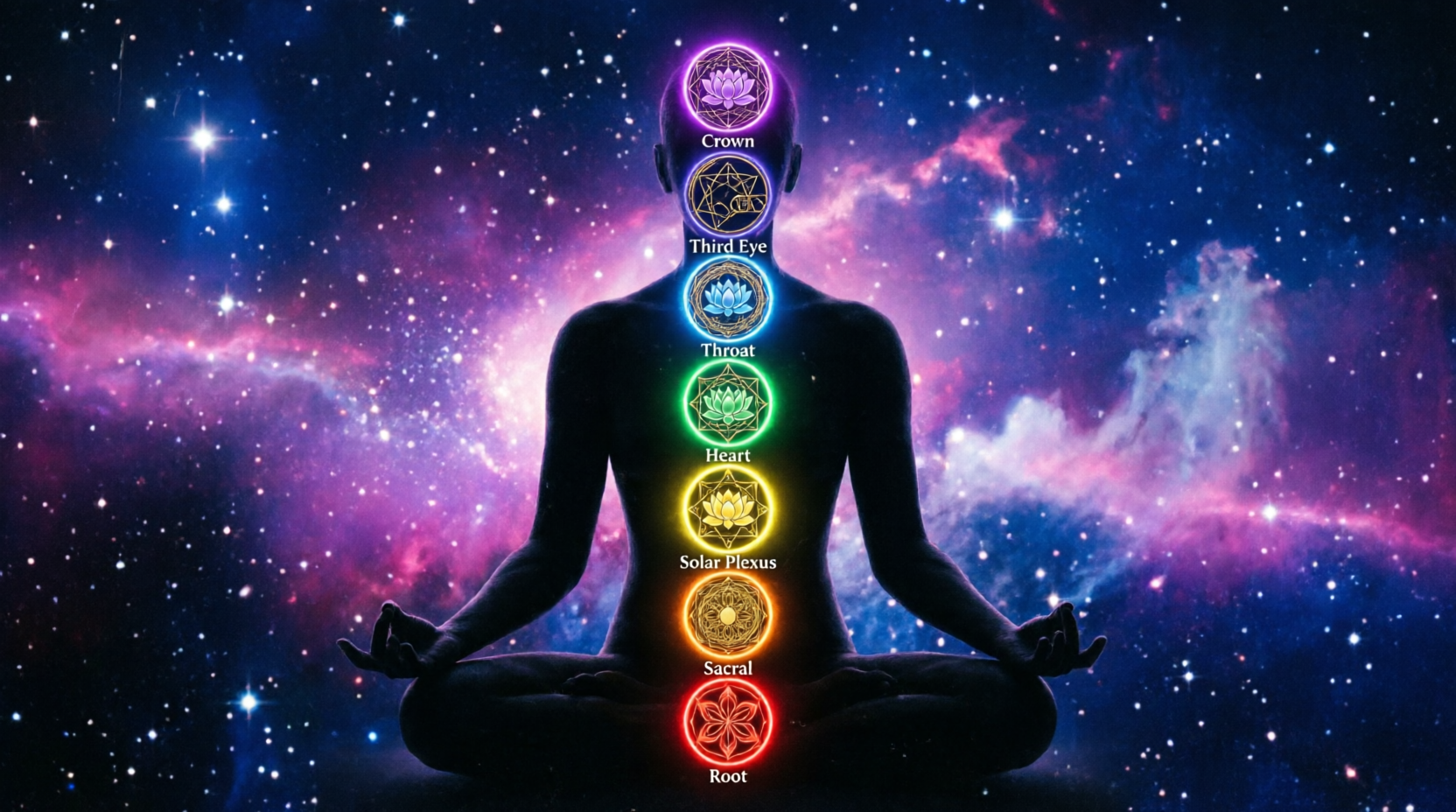
Step 3: Solar Plexus Chakra — Confidence Script Through Mental Rehearsal.
This chakra is linked to willpower and confidence. A weak Solar Plexus often shows up as self-doubt or fear of speaking up.
The AI method:
Tell AI about one moment this week when you felt small or powerless. Ask it to help you write the confident version of that moment — what you wish you had said or done. Turn that into 3 short lines you repeat before a hard moment.
The real science:
This is based on mental rehearsal, also called mental imagery or visualization, a method used widely in sports psychology. Athletes who mentally rehearse a movement or moment before performing it show real improvements in performance and confidence, because the brain partly "practices" the action in advance. Using AI to script this rehearsal in your own words makes the practice specific to your real life, not a generic pep talk.
Step 4: Heart Chakra — AI As A Private Journal.
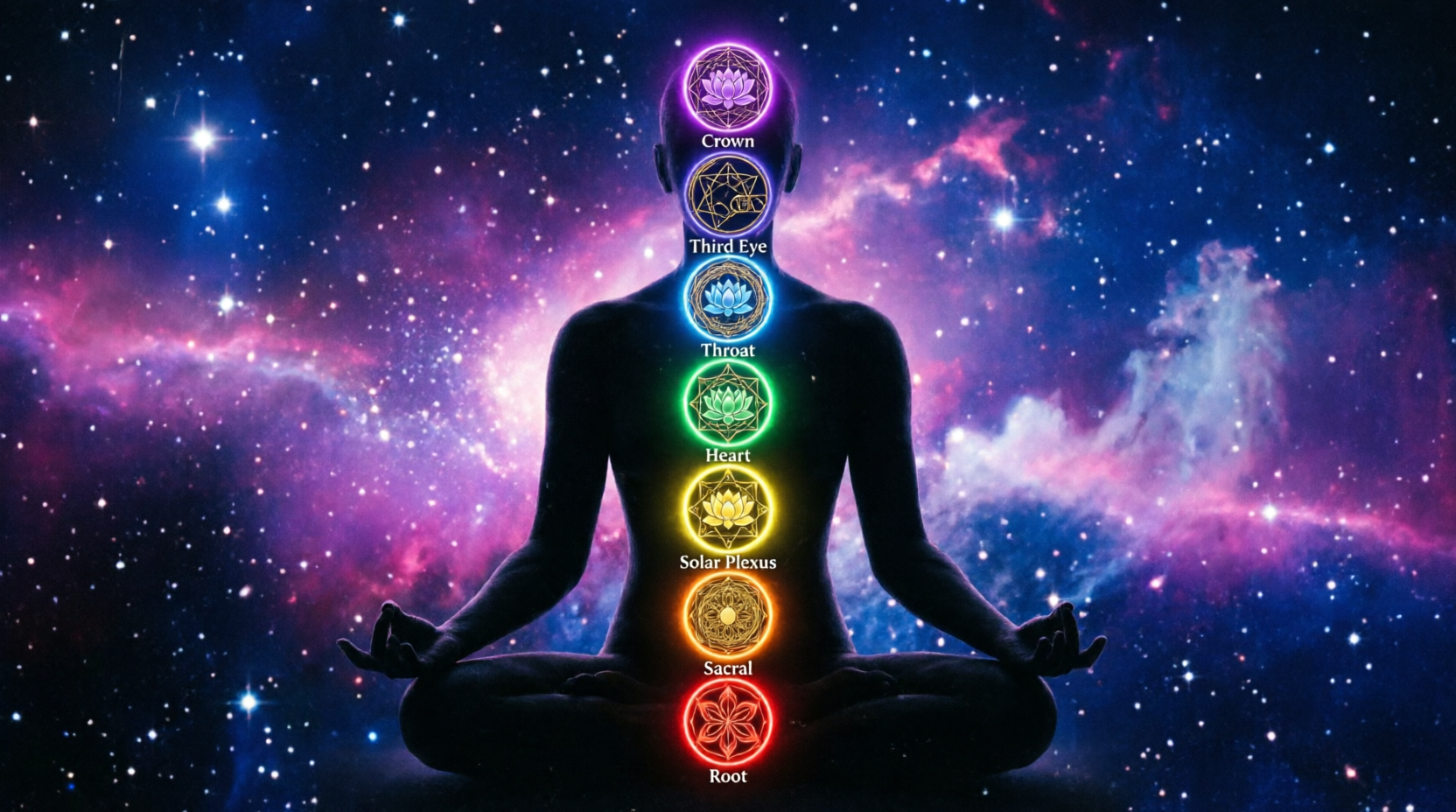
The Heart Chakra is linked to love and connection. Old emotional pain often sits here.
The AI method:
Write to AI about a relationship that hurts you, past or present. Let it reflect your feelings back in simple words. Then ask for one small action, like writing a letter you never send.
The real science:
This step is based on expressive writing, a method first studied by psychologist James Pennebaker. In his early research, people who wrote about emotional experiences made far fewer doctor visits in the months that followed, compared to a control group. Follow-up studies across many researchers found that expressive writing was linked to decreased anxiety, lower blood pressure, less depression, less muscle tension, and reduced pain and stress. Even writing sessions as short as two minutes, done over two days, have shown real health benefits. AI cannot replace a therapist, but as a private writing partner that asks good follow-up questions, it can help you start this well-tested process.
Step 5: Throat Chakra — Practice Speaking With AI First.
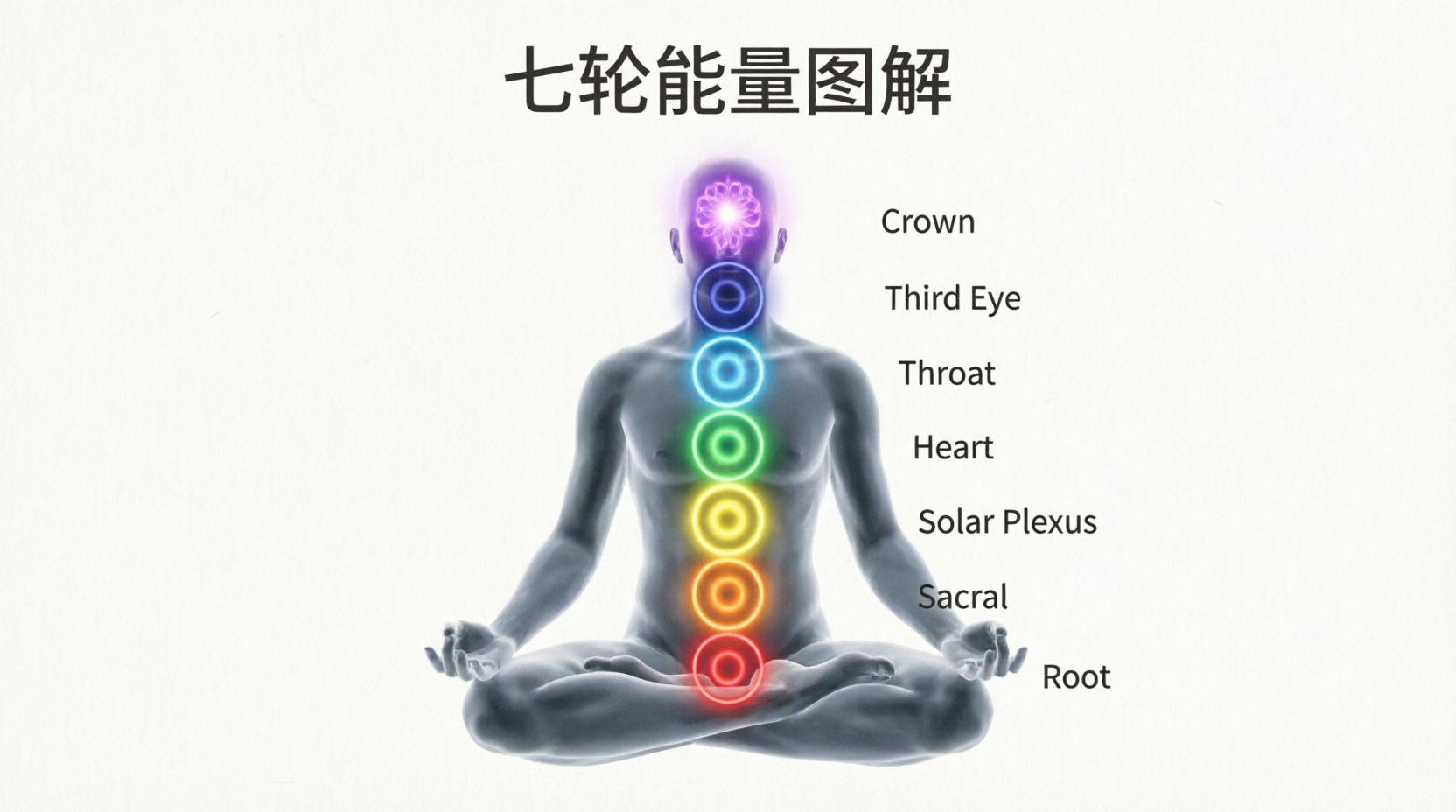
The Throat Chakra is linked to speaking your truth. People with a weak Throat Chakra often stay silent in important moments.
The AI method:
Type out the thing you are scared to say to someone. Ask AI to help you say it clearly and kindly, without losing your point. Read it out loud three times before the real conversation.
The real science:
This is a form of rehearsal and role-play, both common tools in communication and exposure-based therapy training. Practicing a hard conversation out loud, even alone, lowers the anxiety attached to it and helps people speak more clearly when the real moment arrives, because the brain treats a well-rehearsed script as familiar rather than threatening.
Step 6: Third Eye Chakra — Let AI Sort Your Thoughts.
The Third Eye Chakra is linked to focus and clear thinking. A blocked Third Eye feels like a foggy, overloaded mind.
The AI method:
When your mind feels too full, write all your messy thoughts to AI in one big paragraph. Ask it to sort them into three groups: do today, can wait, and just noise.
The real science:
This is based on a well-known idea in cognitive psychology called cognitive offloading. Your working memory — the part of your brain holding "active" thoughts — has limited space. Moving thoughts out of your head and onto a screen frees up that space, which is why a written-out brain-dump reliably lowers mental load and improves focus immediately afterward. AI simply makes the sorting step faster.
Step 7: Crown Chakra — Nightly Gratitude With AI.
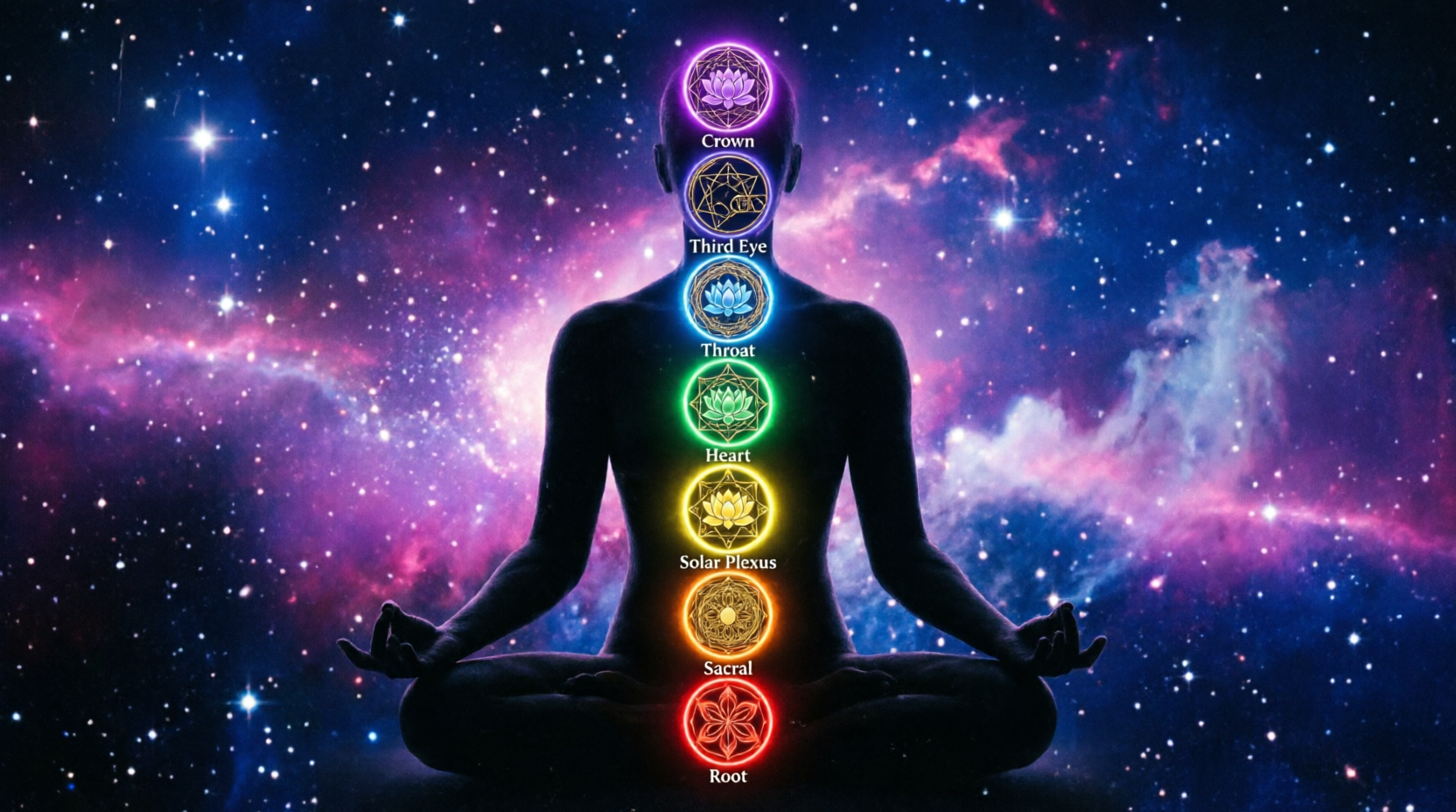
The Crown Chakra is linked to peace and a sense of meaning. It is opened through stillness, not effort.
The AI method:
Before bed, ask AI one question: "What is one thing I am grateful for today, and what did today teach me?" Let it ask one or two gentle follow-up questions.
The real science:
Gratitude is one of the most studied habits in positive psychology. In the original Emmons and McCullough study, people who wrote weekly about things they were grateful for reported higher optimism, exercised more, and felt better about their lives than people who wrote about daily annoyances. Brain-scan research at Indiana University found that people who practiced gratitude writing showed increased activity in a brain region tied to positive emotion, and this effect was still visible three months later. Gratitude practice has also been linked in multiple studies to better sleep and lower anxiety and depression symptoms. This is one of the strongest, most evidence-backed habits on this entire list.
Your Full Daily Solution Plan.
You don't need all seven every day. Pick the one or two that feel weakest for you right now and start there.
| Time | Action | Chakra |
|------|--------|--------|
| Morning | Quick check-in + slow breathing with AI | Root |
| Afternoon | Read your AI-made affirmations | Sacral |
| Before a hard task | Repeat your confidence script | Solar Plexus |
| Evening | Journal your feelings with AI | Heart |
| Before a hard conversation | Practice it out loud with AI | Throat |
| When mind feels foggy | Brain-dump and sort with AI | Third Eye |
| Before bed | Gratitude question with AI | Crown |
Try this for two weeks. Keep a simple daily note of your mood, before and after. Let your own results be the real proof — not belief, and not this article either.
Final Word
AI is not a guru, and it cannot replace real therapy, trained breathing coaches, or years of meditation practice. But it is an always-available, highly personalized tool. Used honestly — clear about what is proven science and what is still spiritual belief — AI can become a real bridge between ancient energy wisdom and modern, evidence-based self-care. Try it
For one week and notice how your mind actually feels, not just how it's supposed to feel.
Comments (0)
Please sign in to join the conversation.
No comments yet. Be the first to join the discussion!