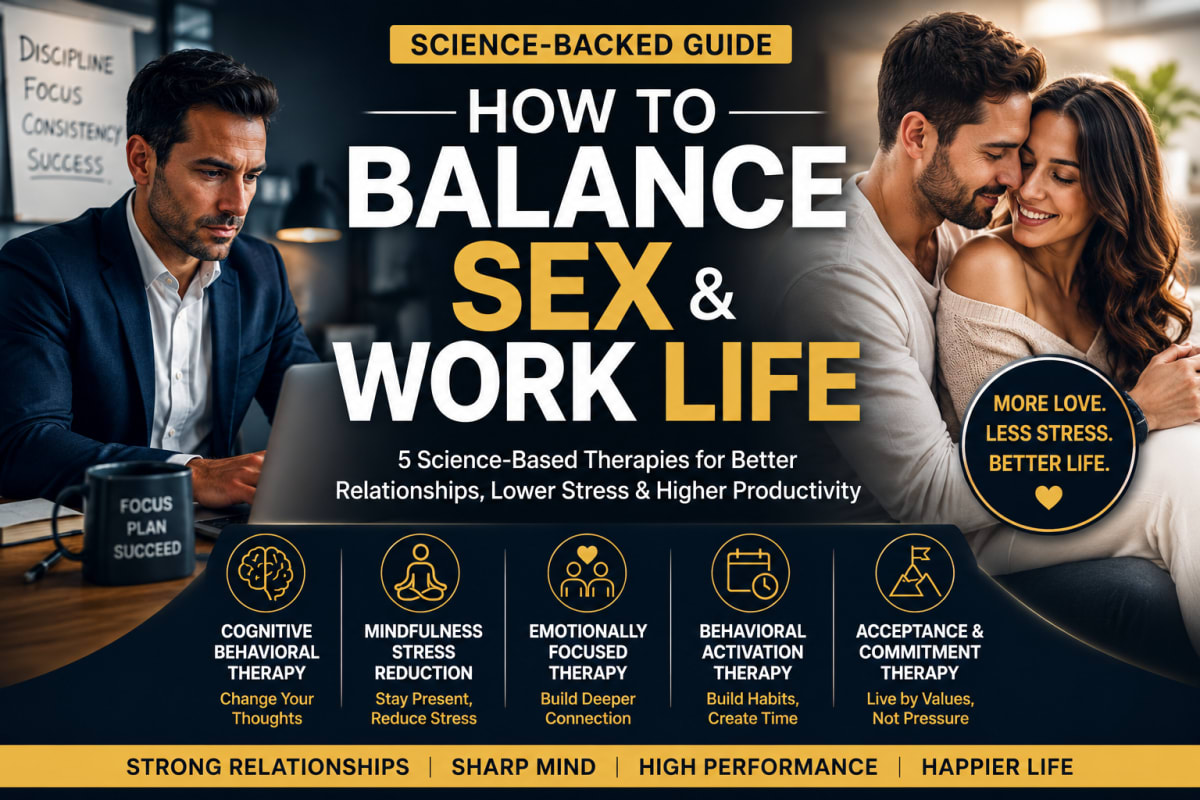
How to Balance Sex and Work Life: 5 Science-Based Therapies That Really Work
Introduction
Many people think work and sex life are two different parts of life. In reality, they are deeply connected.
When work becomes stressful, the mind stays busy all day. Stress hormones increase, sleep becomes poor, and energy goes down. After a few weeks or months, the first thing many people notice is a drop in their desire for intimacy. They may still love their partner, but they simply do not feel emotionally or physically available.
The opposite can also happen. When someone is emotionally struggling in their relationship or thinking about sex all the time, it becomes difficult to focus on work. Productivity falls, mistakes increase, and frustration grows.
The real goal is not to choose work over sex or sex over work. The goal is to build a life where both support each other.
Modern psychology, neuroscience, and relationship medicine have shown that balance is possible. Researchers have found several therapies that improve both relationship satisfaction and professional performance at the same time.
Here are five evidence-based therapies that are being used around the world today.

1. Cognitive Behavioral Therapy (CBT)
CBT is one of the most researched psychological therapies in the world. It helps people recognize unhealthy thinking patterns and replace them with healthier ones.
Many successful business owners unknowingly carry thoughts like:
"I must work all the time."
"If I relax, I will fall behind."
"My partner should understand because I am busy."
These thoughts slowly damage both work and relationships.
How to Apply CBT
Step 1
For one week, write down every stressful thought related to work and your relationship.
Step 2
Ask yourself:
- Is this thought completely true?
- What evidence supports it?
- What evidence goes against it?
Step 3
Replace extreme thoughts with balanced ones.
Instead of saying,
"I never have time."
Say,
"I can create thirty quality minutes every day."
Step 4
Repeat this process daily for four weeks.
Over time, the brain becomes better at managing stress instead of reacting to it.
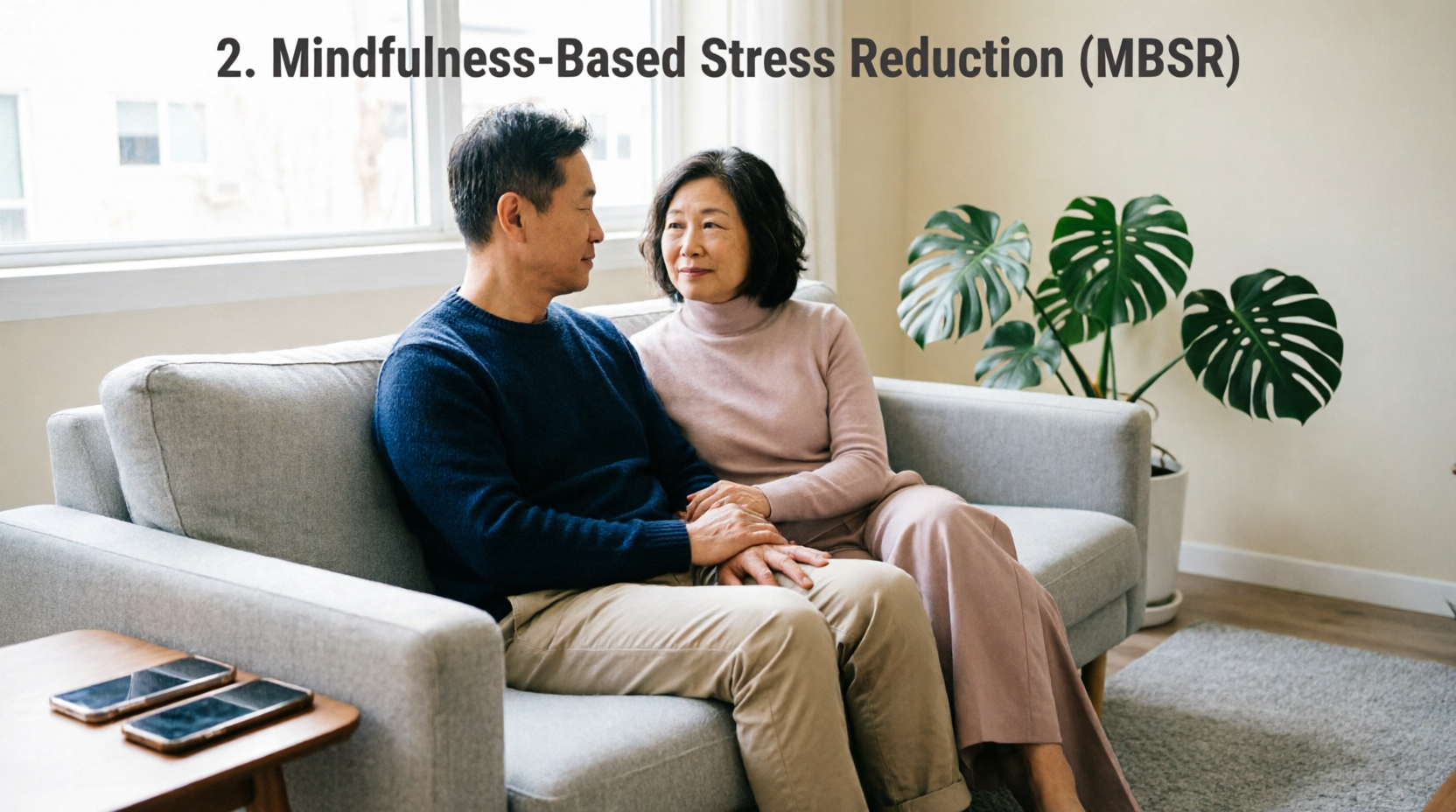
2. Mindfulness-Based Stress Reduction (MBSR)
One of the biggest problems today is not lack of time.
It is lack of presence.
Many people sit with their partner while mentally answering emails.
Others are at work but keep thinking about relationship problems.
Mindfulness teaches the brain to stay where the body already is.
Research has shown that mindfulness reduces stress, improves emotional regulation, and increases relationship satisfaction.
How to Practice
Step 1
Spend ten minutes every morning focusing only on your breathing.
Step 2
When your mind wanders, gently bring it back.
Do not judge yourself.
Simply return your attention.
Step 3
During work, take a one-minute breathing break every two hours.
Step 4
When spending time with your partner, keep your phone away.
Give complete attention.
Even twenty focused minutes are better than two distracted hours.
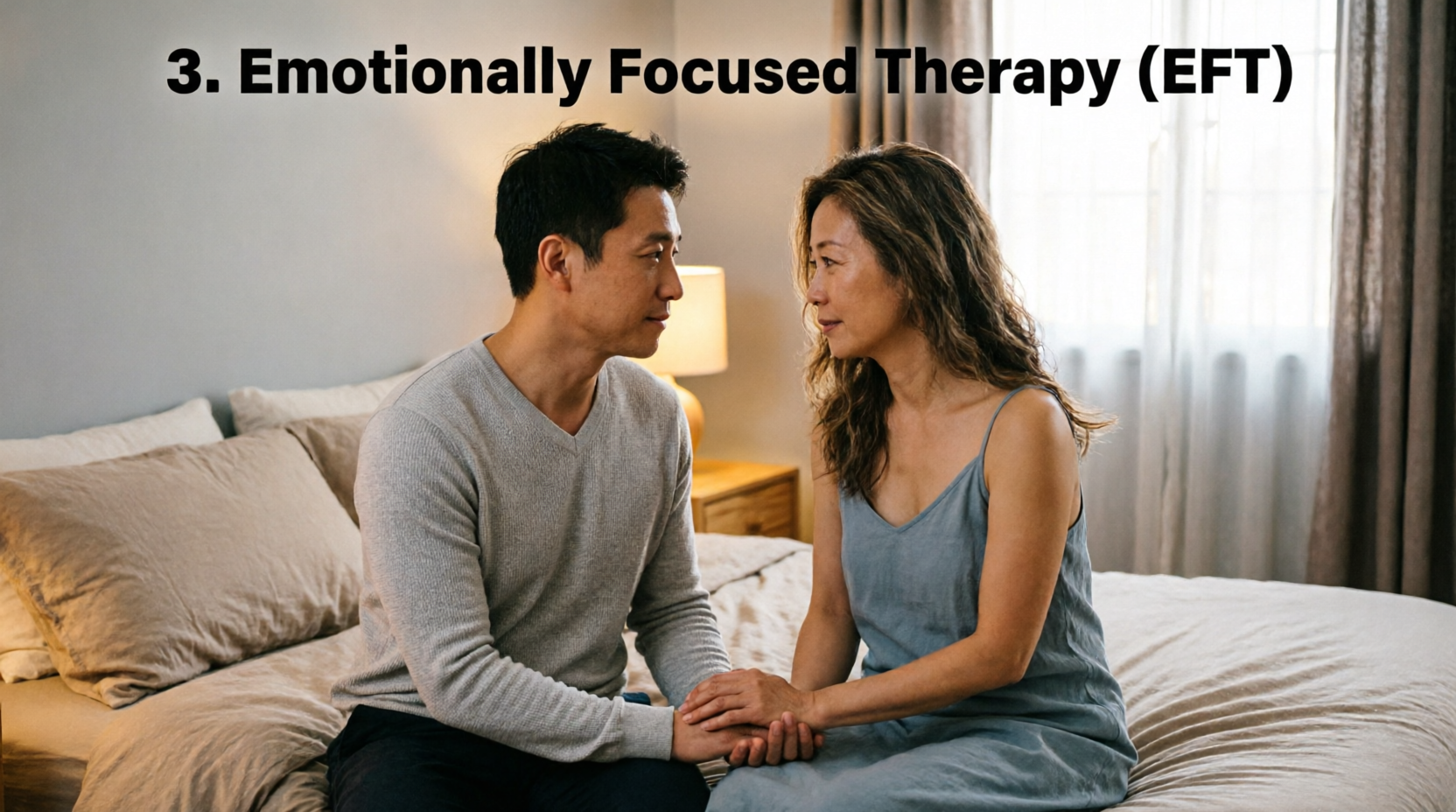
3. Emotionally Focused Therapy (EFT)
People often think healthy relationships depend on romance.
Actually, they depend more on emotional safety.
Emotionally Focused Therapy helps couples understand the emotions hiding behind arguments.
Many fights are not really about money, work, or sex.
They are about feeling ignored, lonely, or unimportant.
When emotional connection improves, physical intimacy usually improves as well.
How to Apply
Step 1
Choose one evening every week for honest conversation.
No television.
No phones.
No interruptions.
Step 2
Instead of blaming, explain your feelings.
Say,
"I miss spending time with you."
Not,
"You never care about me."
Step 3
Listen without interrupting.
Your goal is understanding, not winning.
Step 4
End every conversation by appreciating one thing your partner did during the week.
Small appreciation creates emotional security.

4. Behavioral Activation Therapy
Busy professionals often wait until they "feel like" spending quality time together.
Science suggests doing the opposite.
Behavioral Activation teaches people to schedule positive behaviors before motivation appears.
Action creates motivation.
Not the other way around.
How to Apply
Step 1
Open your calendar.
Schedule relationship time exactly like business meetings.
Protect it.
Step 2
Plan simple activities.
Walk together.
Cook dinner.
Drink tea.
Watch the sunset.
The activity matters less than the consistency.
Step 3
Create one daily ritual.
For example,
A fifteen-minute evening walk.
Or breakfast together.
These small habits build long-term intimacy.

5. Acceptance and Commitment Therapy (ACT)
ACT teaches an important lesson.
You cannot remove every stressful thought.
But you can choose actions that match your values.
Many entrepreneurs believe success requires sacrificing family.
Years later, they discover they achieved financial success but lost emotional connection.
ACT encourages people to define what truly matters.
How to Practice
Step 1
Write your five biggest life values.
Examples:
Health.
Family.
Love.
Business.
Growth.
Step 2
Rank them honestly.
Step 3
Ask yourself every evening,
"Did today's actions match my values?"
If not, make one small correction tomorrow.
Step 4
Remember that perfection is impossible.
Consistency matters much more.
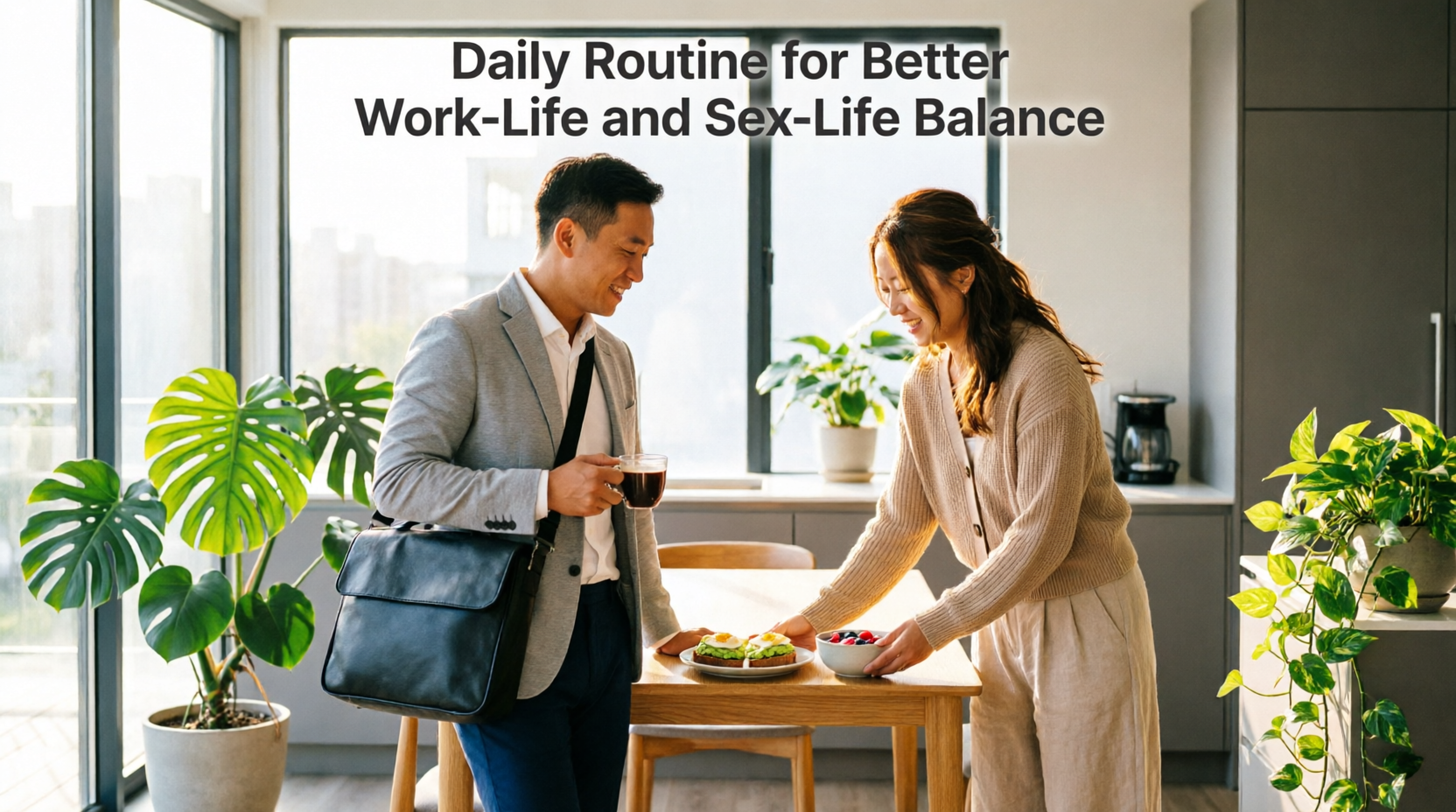
Daily Routine for Better Work-Life and Sex-Life Balance
Here is one practical routine.
Morning
Ten minutes of mindfulness.
Healthy breakfast.
Plan the day's priorities.
During Work
Work in focused blocks.
Take short breaks every two hours.
Avoid checking personal messages every few minutes.
Evening
Finish work at a fixed time whenever possible.
Give your partner full attention.
No multitasking.
Night
Avoid work emails before sleeping.
Sleep seven to nine hours.
Good sleep improves hormone balance, mood, energy, and sexual health.

Common Mistakes
Many people unknowingly damage both careers and relationships.
Working every weekend.
Ignoring sleep.
Skipping exercise.
Using alcohol to manage stress.
Keeping problems inside instead of talking.
Waiting until the relationship becomes serious before asking for help.
Small daily habits create either healthy relationships or unhealthy ones.
Choose wisely.

Final Thoughts
There is no perfect balance.
Some weeks work needs more attention.
Some weeks your relationship needs more care.
The secret is not dividing time equally.
The secret is giving full attention to whatever matters in that moment.
Science continues to show that people who manage stress, communicate openly, stay emotionally connected, and protect their health perform better at work and enjoy happier relationships.
Success is not measured only by income.
A successful life is one where your career grows without sacrificing your peace, your health, or the person waiting for you at home.
When work and love support each other instead of competing, both become stronger.
That is real balance.
Comments (0)
Please sign in to join the conversation.
No comments yet. Be the first to join the discussion!