

How Governments Can Double Tax Revenue Using Artificial Intelligence: A Complete Blueprint

Every government in the world faces the same big problem. They need money to build roads, run schools, build hospitals, and keep the country safe. The main source of this money is tax. But collecting tax is extremely hard. Many people and businesses hide their income. Some make honest mistakes, while others intentionally cheat the system. The result is a massive loss of national revenue.
For decades, governments have tried to solve this by hiring more tax officers, making stricter laws, and running fear campaigns. But these old methods are not working well. Human officers get tired. They can only check a few files a day. They make mistakes. Sometimes, the system is so slow and confusing that honest people give up and stop trying to pay correctly.
There is a new solution that is changing the world. It is Artificial Intelligence, or AI. AI is not just a buzzword or a futuristic dream. It is a practical tool that can completely change how a country collects taxes. If used correctly, AI can help a government double its tax revenue in a few years. This article will explain exactly how AI works in tax collection, how top developed countries are already using it to make billions, and a simple step-by-step guide for any government to start using it today.

Why the Old Tax System is Failing
To understand why AI is so important, we first need to understand why the old system fails. The traditional tax system relies on humans checking paper forms or basic digital files. Imagine a country with ten million taxpayers. It is impossible for human officers to check every single file. They have to pick a few files randomly to audit. This means many clever tax evaders slip through the cracks because they were never checked.
Also, tax evaders are getting smarter. They use complex digital tricks to hide money in offshore accounts, use fake invoices, or hide cash businesses. Human brains simply cannot process the massive amount of data needed to catch these modern tricks. The data is too big, too fast, and too complex. This is exactly where AI steps in as the ultimate game-changer.

How AI Acts as a Game-Changer in Tax Collection
AI is basically a very smart computer program that can read, understand, and find patterns in massive amounts of data in seconds. What would take a human tax officer ten years to read, an AI system can read in one minute.
AI does not get tired. It does not sleep. It does not take bribes. It looks at a taxpayer's bank transactions, property purchases, vehicle registrations, and social media activity all at the same time. If a person declares a very low income on their tax form, but the AI sees that they just bought a luxury car and a large house, the AI instantly flags it as suspicious. It finds the hidden connections that a human would never see. AI turns tax collection from a game of blind guessing into a system of smart, targeted action.

How Developed Countries are Using AI to Boost Revenue
We do not have to guess if this works. The most developed countries in the world are already using AI to increase their tax revenue massively. Let us look at how they are doing it.
In the United States, the Internal Revenue Service (IRS) handles millions of tax returns. In the past, they audited returns randomly or based on simple rules. Now, they use advanced AI to predict which tax returns are most likely to have errors or fraud. The AI looks at past successful audits and learns what a cheating tax return looks like. It then scores every new tax return. The IRS only sends their human officers to check the files with the highest risk scores. This saves millions of dollars in wasted time and catches much more hidden money. They also use AI to track large corporate tax evasion by analyzing complex global financial data.
In the United Kingdom, His Majesty's Revenue and Customs (HMRC) uses a powerful AI system called Connect. This system connects data from over thirty different sources, including banks, land registries, customs, and even online marketplaces. If a person claims they have no income, but the Connect system sees they are selling thousands of pounds worth of goods online and receiving bank transfers, it flags them. The UK also uses AI to send smart, personalized letters to taxpayers who are likely to owe money. These AI-written letters use behavioral psychology to gently remind people to pay, which has increased voluntary tax payments by millions of pounds.
In Australia and Singapore, the tax authorities have used AI to completely change how citizens file their taxes. They use AI to automatically pre-fill tax returns. The government's AI already knows your salary from your employer, your bank interest, and your property details. When you log in to file your tax, the form is already filled out for you. You just check it and click submit. This makes it incredibly easy for honest people to pay, and it makes it almost impossible for them to lie about their income because the AI already knows the truth. This simple AI step has drastically reduced the tax gap and saved the government huge amounts of money in collection costs.

The Solution Blueprint: How Your Government Can Use AI to Double Revenue
Reading about other countries is great, but how can your government actually do this? Here is a simple, five-step solution blueprint for any government to implement AI and double its tax revenue.
Step One: Connect All Government Data.
AI is like a chef. A chef cannot cook a good meal without ingredients. For AI to work, it needs data. Right now, government data is stuck in separate departments. The bank data is in one place, land registry in another, and vehicle registration in a third. The first step is to break these walls down. The government must create a central data lake where all departments share information securely. Once the AI has access to all the puzzle pieces, it can easily see the full financial picture of every citizen and business.
Step Two: Start Predictive Auditing.
Stop wasting time on random tax audits. The government should train an AI model using the last ten years of successful tax audits. The AI will learn the exact signs of tax evasion. Once trained, the AI should scan every single tax return filed in the country and give it a risk score from one to one hundred. Human tax officers should only be assigned to investigate files that score above eighty. This means every hour spent by a tax officer will result in catching real fraud, massively increasing the recovered tax money.
Step Three: Automate and Pre-fill Tax Returns.
Make paying taxes as easy as buying something online. The government should use AI to gather data from banks, employers, and investment firms to pre-fill the tax forms for citizens and small businesses. When the taxpayer logs in, they just need to verify the details. This removes the confusion of filling out complex forms. When paying taxes is easy, compliance goes up. Furthermore, because the AI already filled in the correct numbers, people cannot easily hide their real income.
Step Four: Use AI Chatbots for Taxpayer Support.
Many people do not pay taxes because they do not understand the rules. They find tax offices confusing and intimidating. The government should build smart AI chatbots that can talk to taxpayers in simple, local languages through WhatsApp or the tax website. These chatbots can answer questions twenty-four hours a day, help people calculate their taxes, and guide them on how to pay. When people understand the system and get quick help, they are much more likely to pay their taxes on time without needing a human officer to chase them.
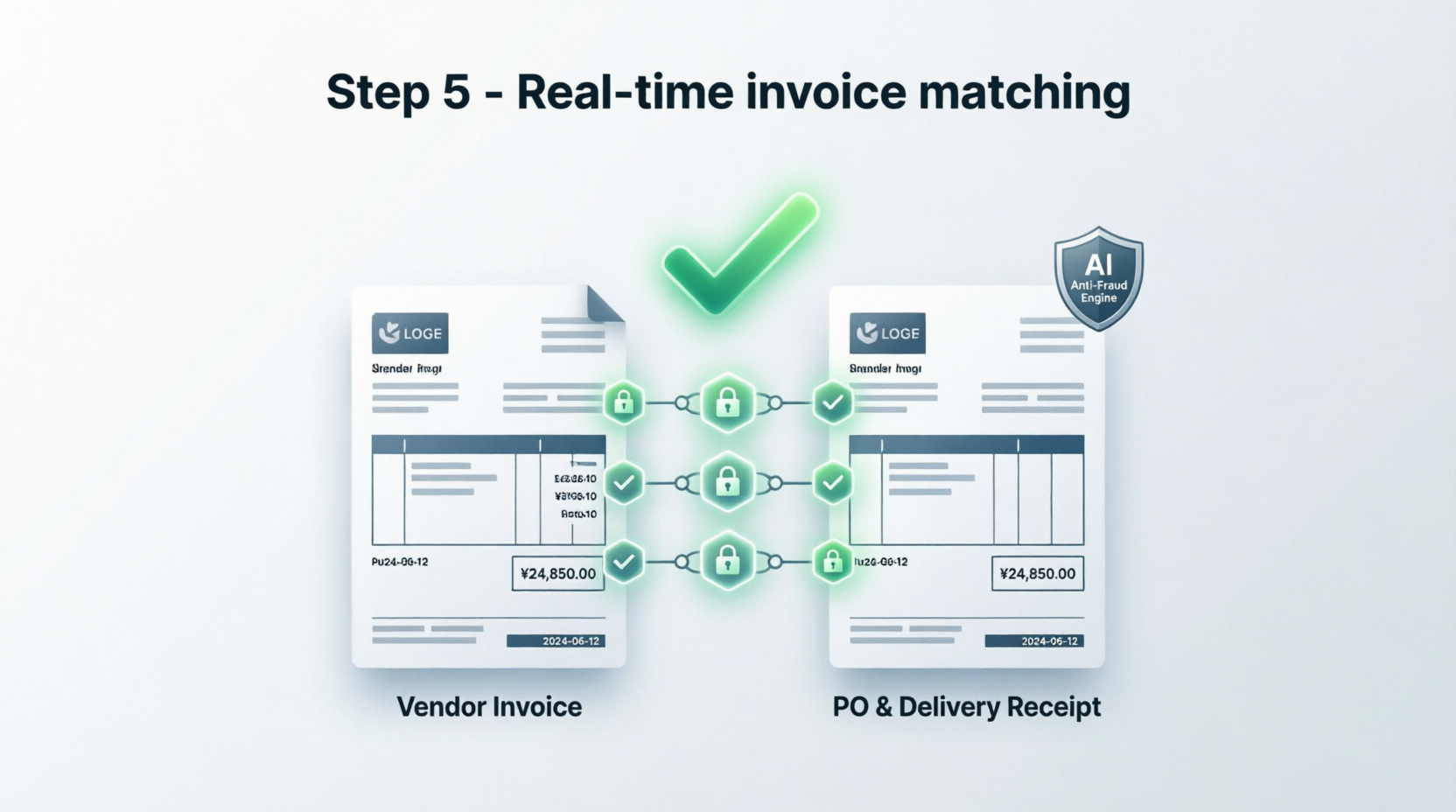
Step Five: Real-Time Invoice Matching for Businesses.
Business tax evasion often happens through fake invoices. A business might claim they bought expensive goods to reduce their profit and pay less tax, but the invoice is fake. The government should implement an AI system that matches sales and purchase invoices in real-time. When Business A claims they sold goods to Business B, the AI instantly checks if Business B has recorded the purchase. If the invoices do not match, the AI blocks the fake tax claim immediately. This stops billions of dollars in corporate tax evasion before the money is even lost.
How to Start Implementing This Tomorrow
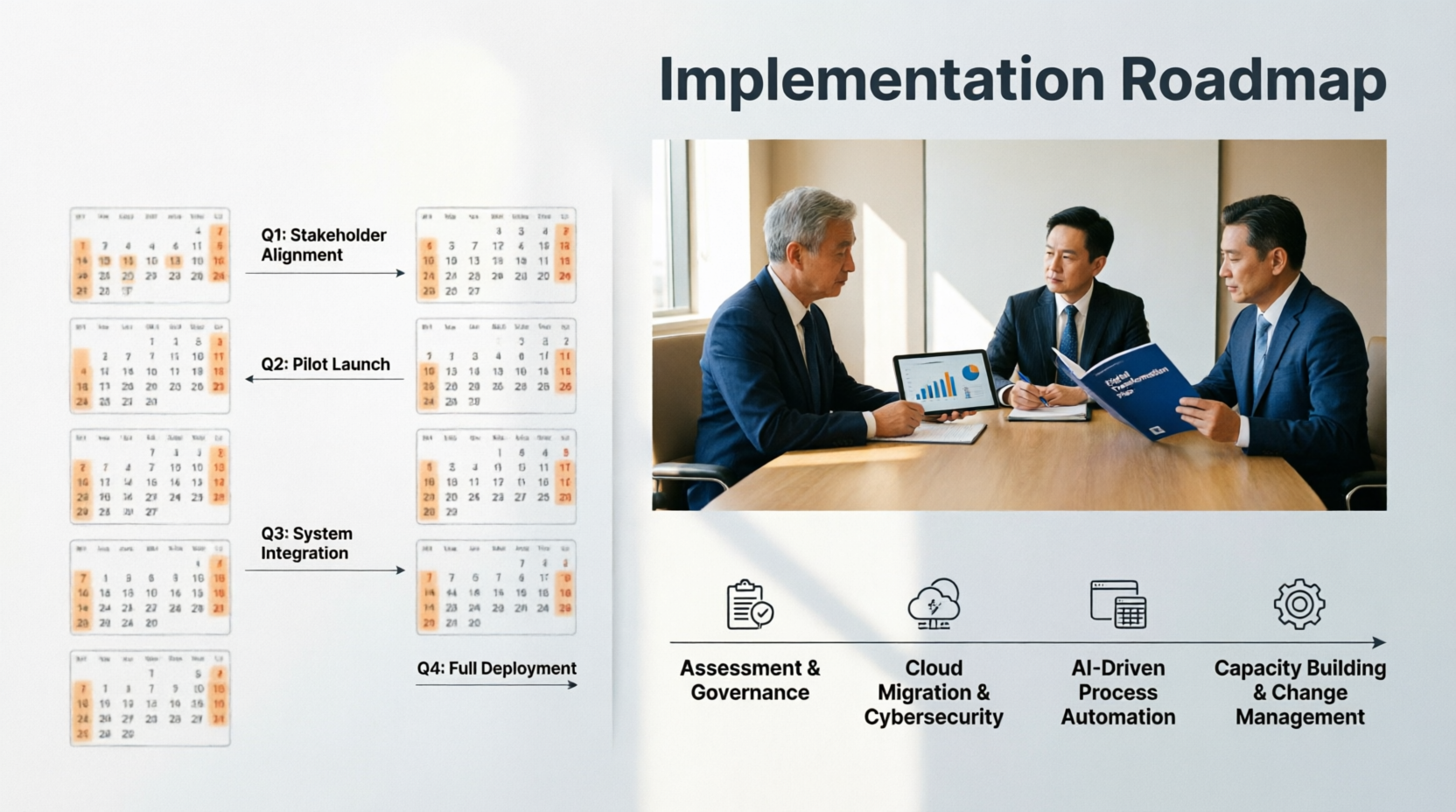
Government leaders might feel that building an AI system is too expensive or too hard. It is not. You do not need to build the technology from scratch. The government can partner with existing global tech companies that already have these AI tax solutions ready.
Start small. Do not try to change the whole country on day one. Pick one specific area, like large corporate taxes, or pick one specific city as a pilot project. Let the AI run alongside the human officers for six months. Show the public and the politicians how much extra money was collected. Once the success is proven, scale it up to the whole country.
It is also very important to train the human tax officers. They should not fear that AI will take their jobs. AI is their new super-assistant. The AI will do the boring data reading, and the human officers will do the complex investigations and negotiations.

Conclusion
The world is changing fast. The old ways of collecting taxes with paper files, random checks, and slow human processes are no longer enough. Tax evaders are using modern technology to hide their money, so the government must use modern technology to find it.
Artificial Intelligence is the ultimate tool to fix the tax system. As we have seen from the United States, the UK, Australia, and Singapore, AI can find hidden money, make paying taxes easier for citizens, and stop fraud before it happens. It is a proven method to increase national revenue significantly.
It is time for government leaders to wake up and take action. By connecting data, using predictive audits, pre-filling forms, and tracking invoices in real-time, any country can transform its tax system. AI is not just a new technology; it is the key to building a richer, stronger, and more developed nation. The blueprint is here. The solutions are clear. Now, it is time to implement them and double the tax revenue for the betterment of the country.
Comments (0)
Please sign in to join the conversation.
No comments yet. Be the first to join the discussion!