
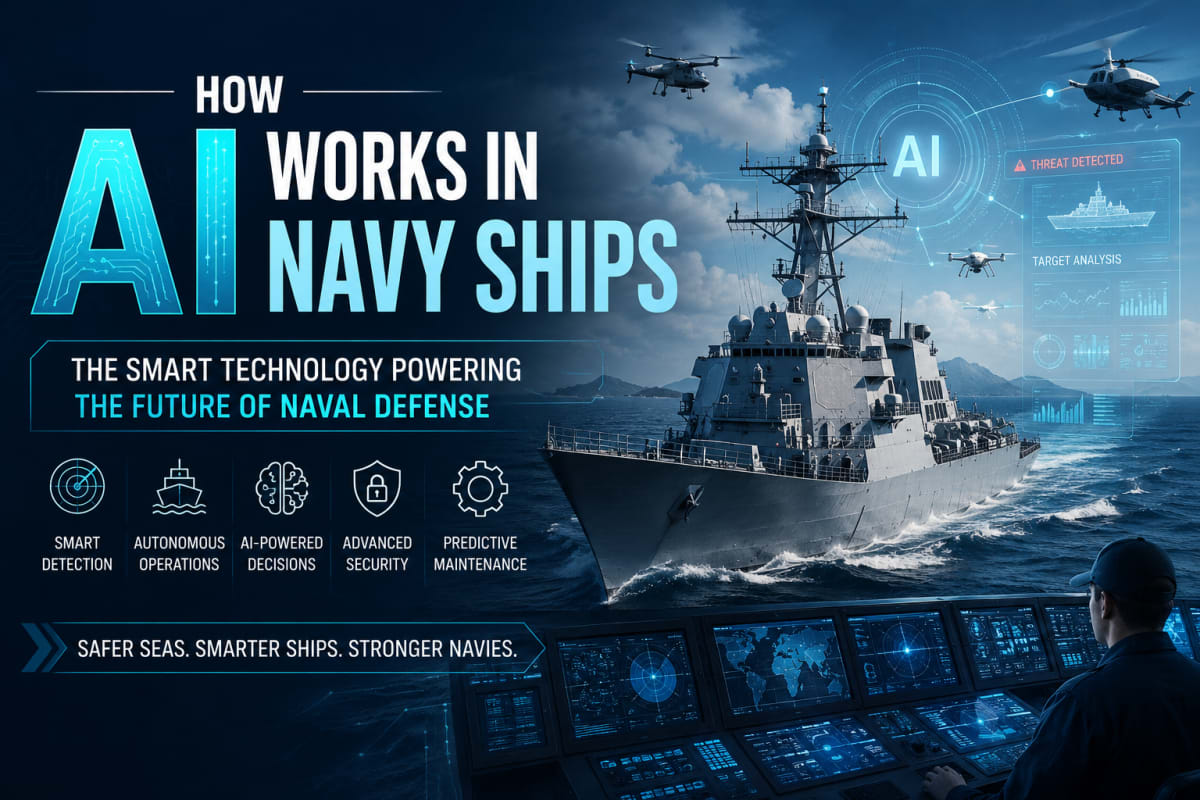
How AI Works in Navy Ships: A Simple Guide to the Future of Naval Defense
Introduction.
The modern Navy is no longer powered only by engines, weapons, and skilled sailors. Today, Artificial Intelligence (AI) has become one of the most valuable technologies inside military ships. It helps commanders make faster decisions, protects ships from threats, improves navigation, and even reduces the workload of sailors.
Many people think AI is only about robots or chatbots. In reality, AI is quietly working behind the scenes in some of the world's most advanced naval fleets. It collects information from hundreds of sensors, studies the data in real time, and helps officers respond to dangerous situations within seconds.
Countries with strong naval forces understand that future wars will not only depend on powerful missiles or large ships. They will also depend on smart technology that can think, analyze, and react faster than humans.
In this article, you will learn step by step how AI works inside Navy ships, why it is becoming essential, and how leading military powers are using it to strengthen their naval defense.
Step 1: AI Collects Information from Every Part of the Ship
Everything starts with data.
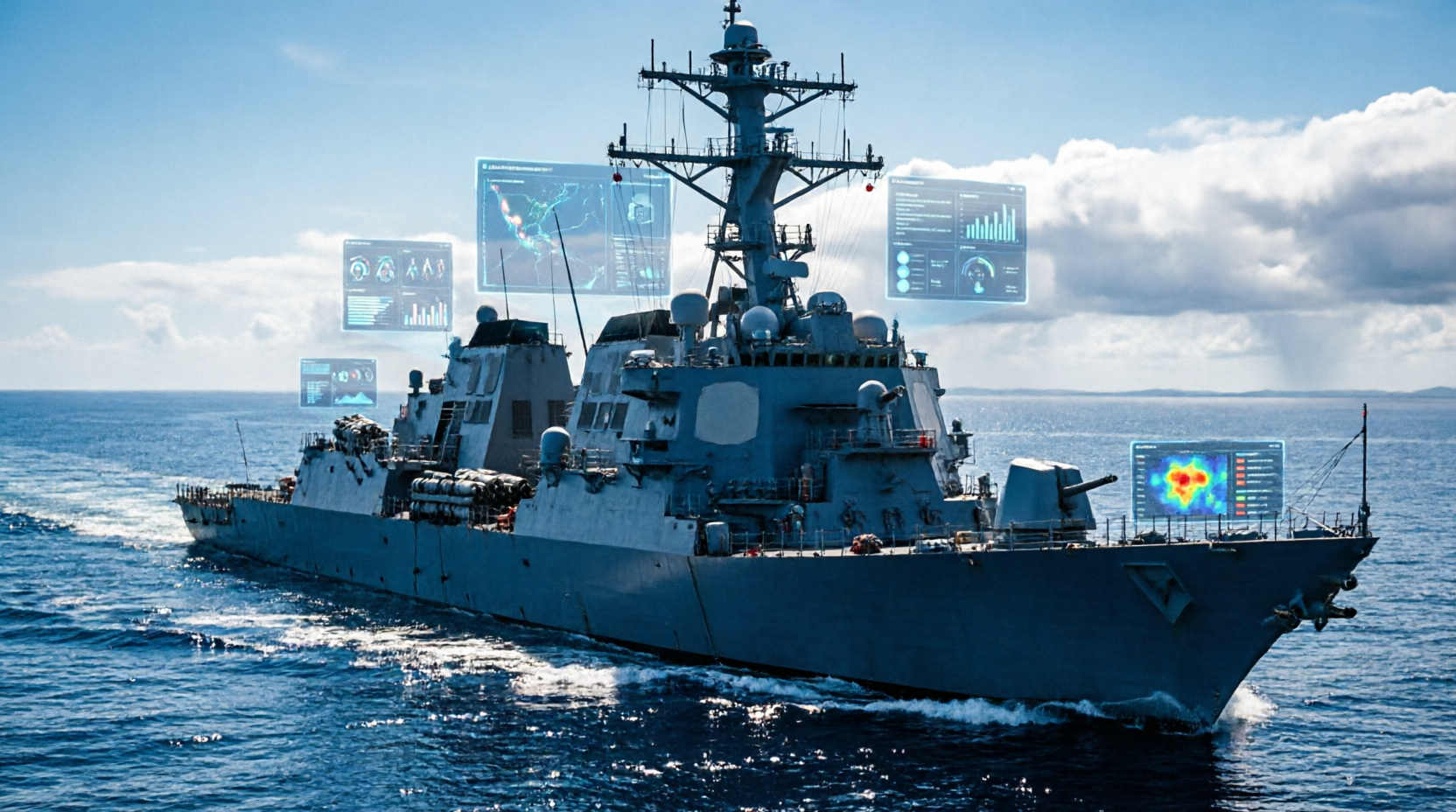
A modern Navy ship contains thousands of sensors. These sensors constantly collect information about the ship, the sea, the weather, nearby vessels, underwater movement, engine performance, fuel usage, and possible enemy activity.
Instead of asking sailors to study every screen separately, AI gathers all this information into one intelligent system.
It removes unnecessary data, highlights important events, and helps officers focus only on what truly matters.
Think of AI as a highly trained assistant that never gets tired and never stops watching.
Step 2: AI Understands What Is Happening
Collecting data is not enough.
The real strength of AI is its ability to understand patterns.
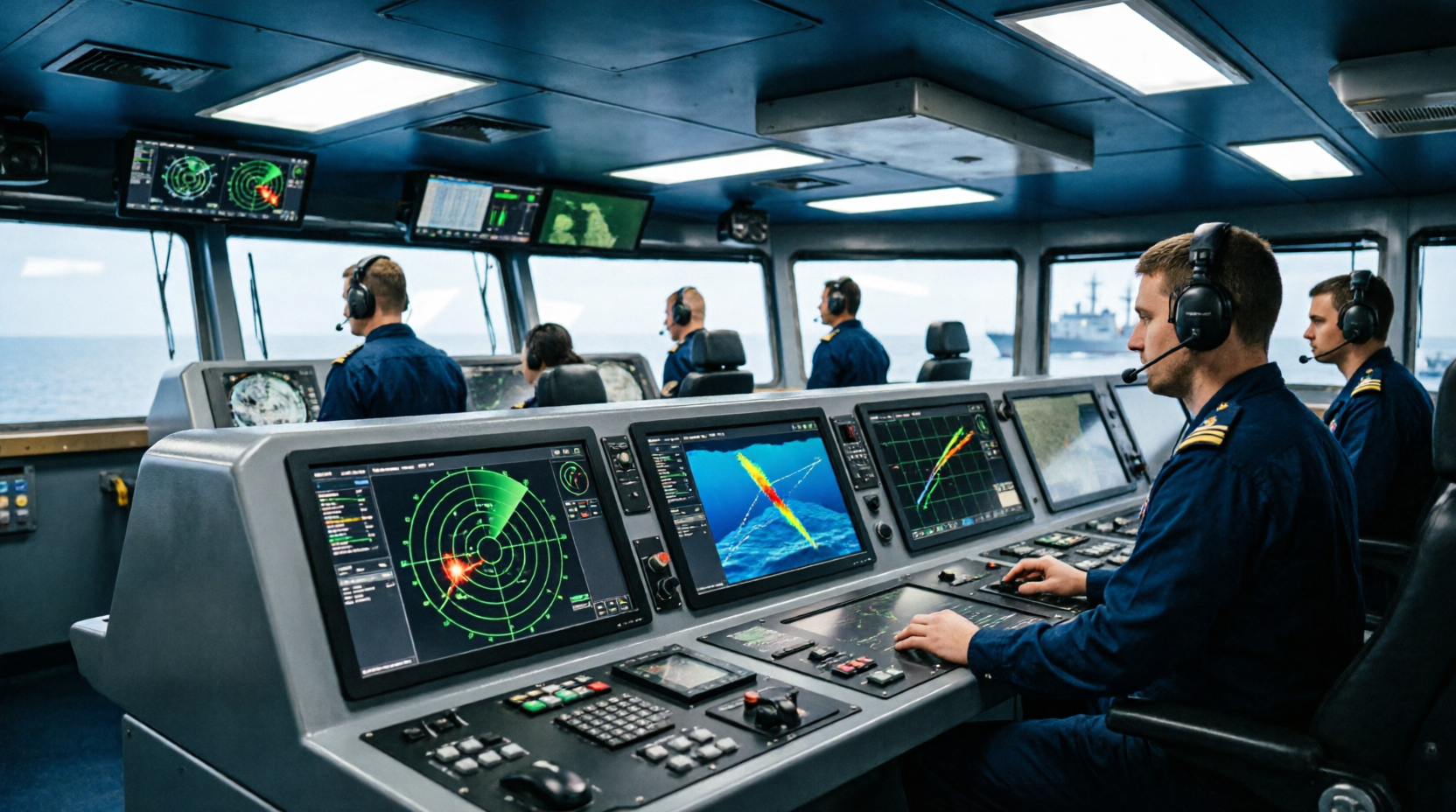
For example, if a radar suddenly detects an unknown object moving toward the ship, AI immediately compares that object's speed, direction, size, and movement with thousands of previous examples.
Within seconds, it can estimate whether the object is:
- A friendly ship
- A commercial vessel
- A fishing boat
- A drone
- A missile
- A possible enemy warship
This saves valuable time because commanders receive useful information instead of raw data.
Step 3: AI Supports Navigation
Navigation is one of the most important jobs on any Navy ship.
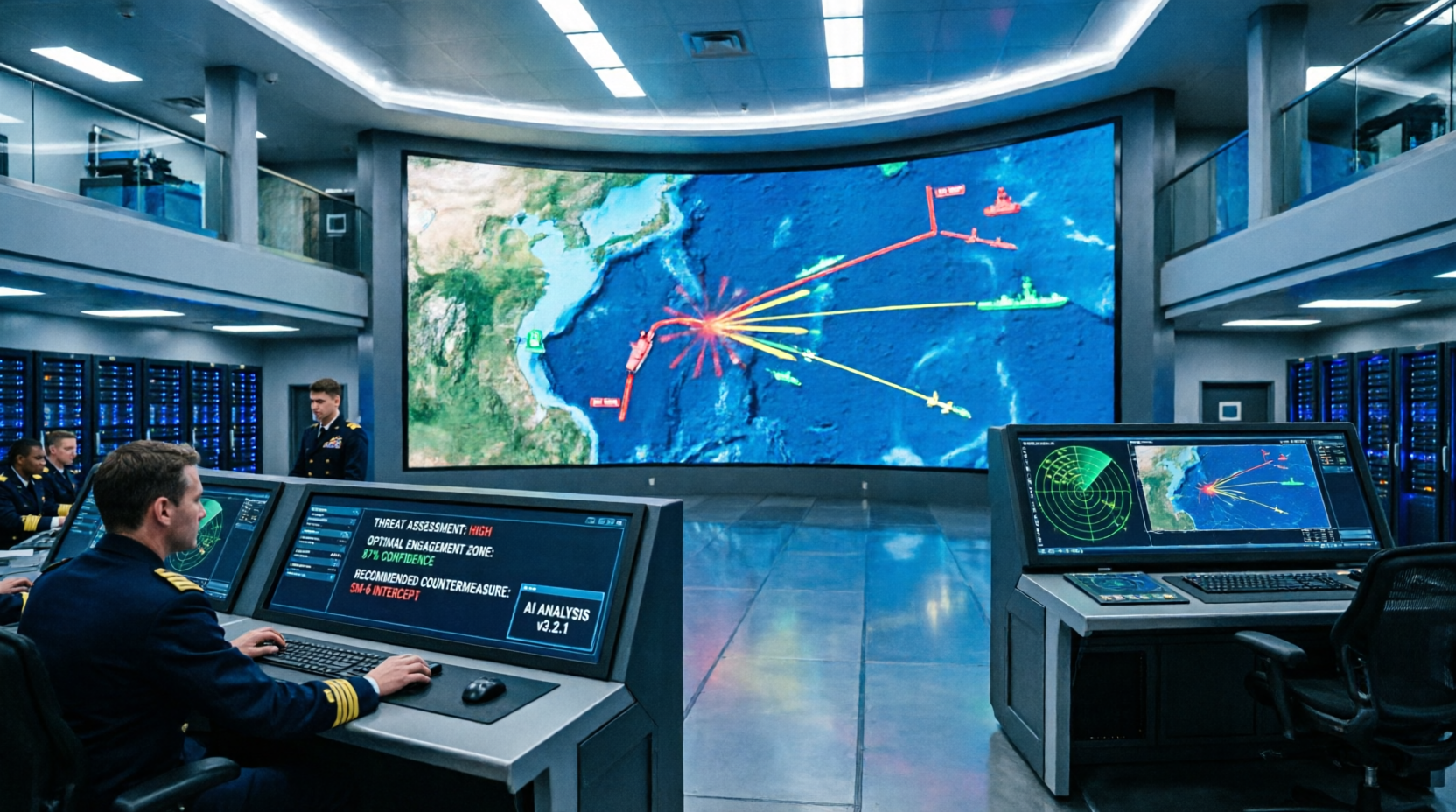
AI studies weather reports, ocean currents, underwater maps, satellite information, and nearby ship traffic.
It can recommend safer routes that avoid storms, dangerous waters, or crowded shipping lanes.
If another vessel suddenly changes direction, AI quickly alerts the bridge crew before a collision becomes possible.
This makes navigation faster, safer, and more efficient.
Step 4: AI Detects Threats Earlier
Modern naval warfare often depends on detecting danger before the enemy attacks.
AI continuously watches information from:
- Radar
- Sonar
- Thermal cameras
- Electronic signals
- Satellite communication
Instead of waiting for a human operator to notice something unusual, AI automatically identifies suspicious activity.
For example, if an enemy submarine makes a small movement underwater, AI can compare sound patterns with thousands of known submarine signatures.
This allows officers to react much earlier than traditional systems.
Early warning often makes the difference between safety and disaster.
Step 5: AI Helps During Combat
During combat, commanders must make hundreds of decisions within minutes.
AI does not replace military leaders.
Instead, it provides decision support.
It quickly answers questions like:
- Which target is the biggest threat?
- Which defensive weapon should respond first?
- Which missile has the highest chance of success?
- Which direction offers the safest escape?
The final decision always belongs to trained military officers.
AI simply helps them make smarter decisions under pressure.
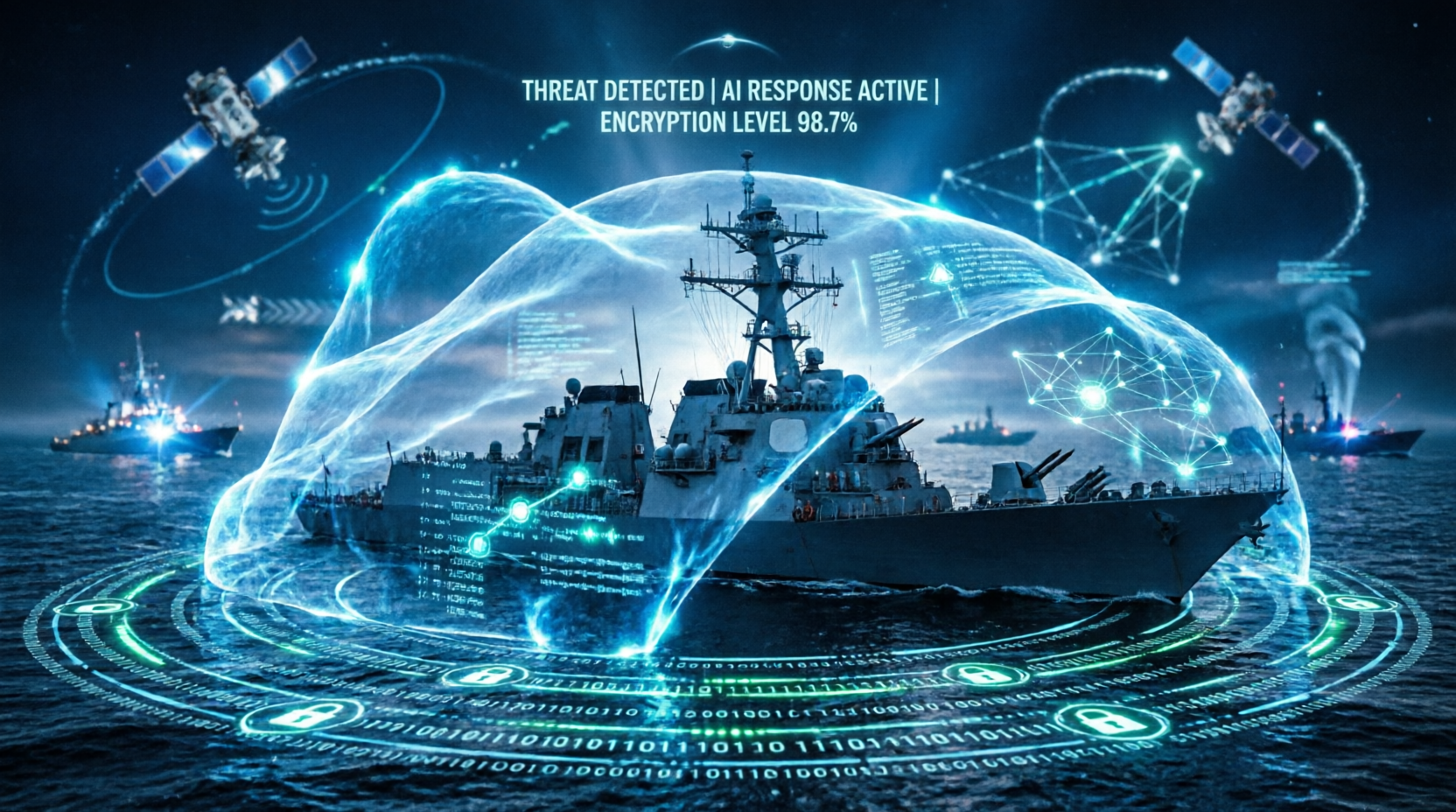
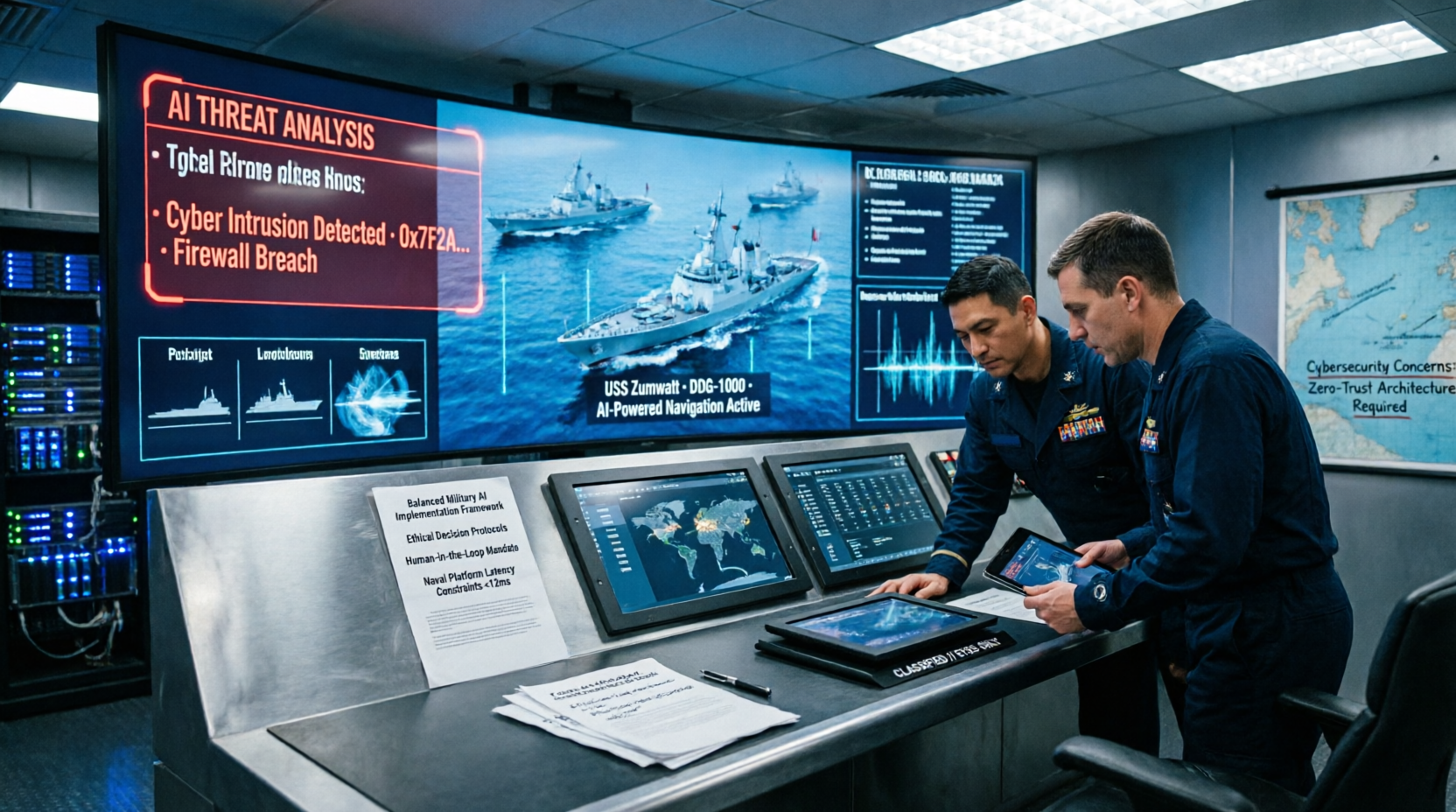
Step 6: AI Protects the Ship from Cyber Attacks
Modern war is not fought only with guns and missiles.
Hackers also target military networks.
AI constantly watches the ship's computer systems.
If someone attempts to enter the network illegally, AI can detect unusual activity within seconds.
It may isolate infected systems, block suspicious traffic, and alert cybersecurity teams before serious damage occurs.
This digital protection is becoming as important as physical armor.
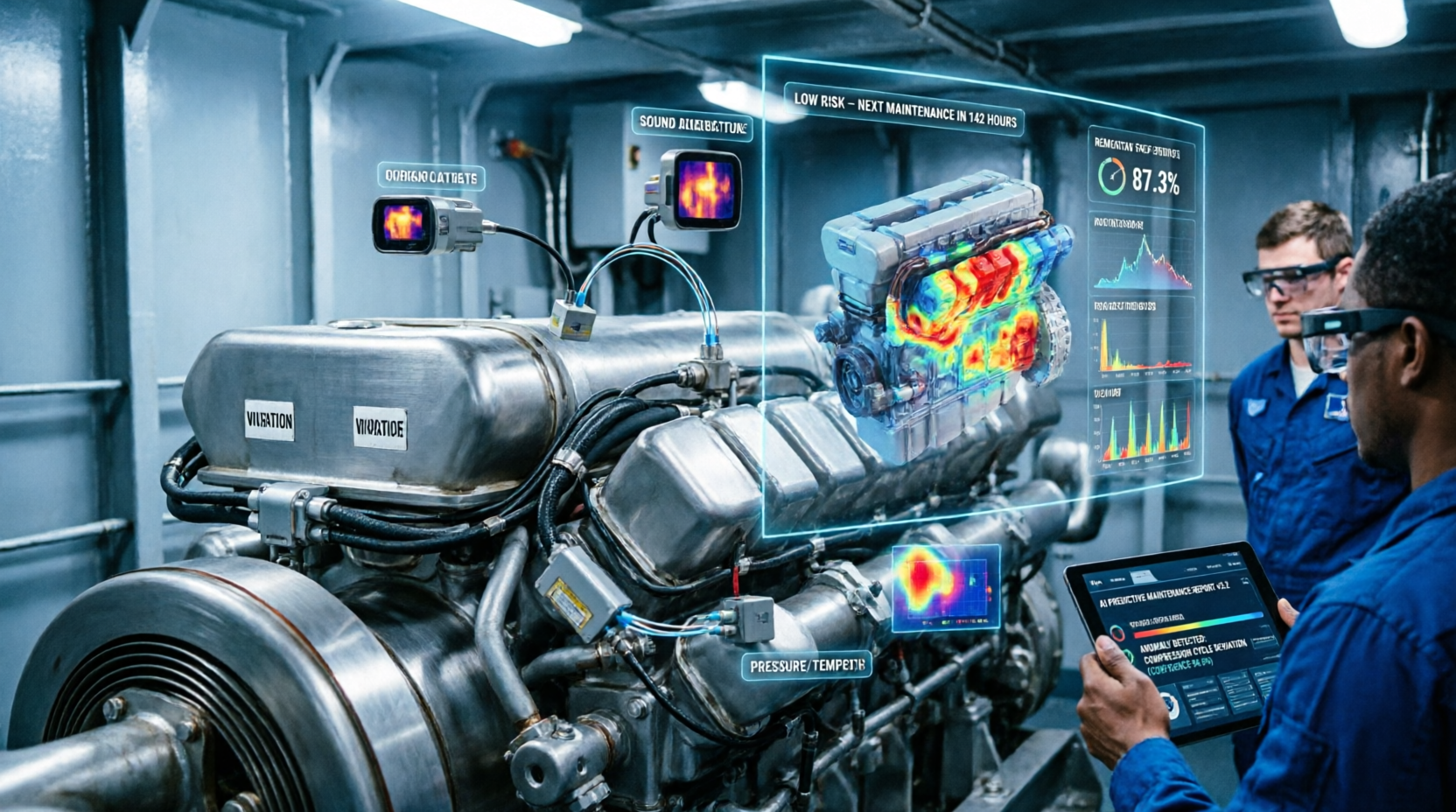
Step 7: AI Predicts Equipment Failures.
Every Navy ship contains thousands of expensive machines.
Engines, generators, pumps, cooling systems, communication devices, and weapons all require regular maintenance.
Instead of waiting for a machine to break, AI studies temperature, vibration, pressure, and operating history.
If it notices early signs of failure, it warns engineers before the problem becomes serious.
This is called predictive maintenance.
It reduces repair costs, prevents unexpected breakdowns, and keeps ships ready for missions.
Step 8: AI Improves Fuel Efficiency.
Fuel is one of the biggest operating costs for any naval fleet.
AI studies engine performance, ship speed, weather conditions, and sea currents.
It recommends the most efficient operating settings.
Even a small improvement in fuel efficiency can save millions of dollars over the lifetime of a fleet.
This also allows ships to travel longer distances without refueling.
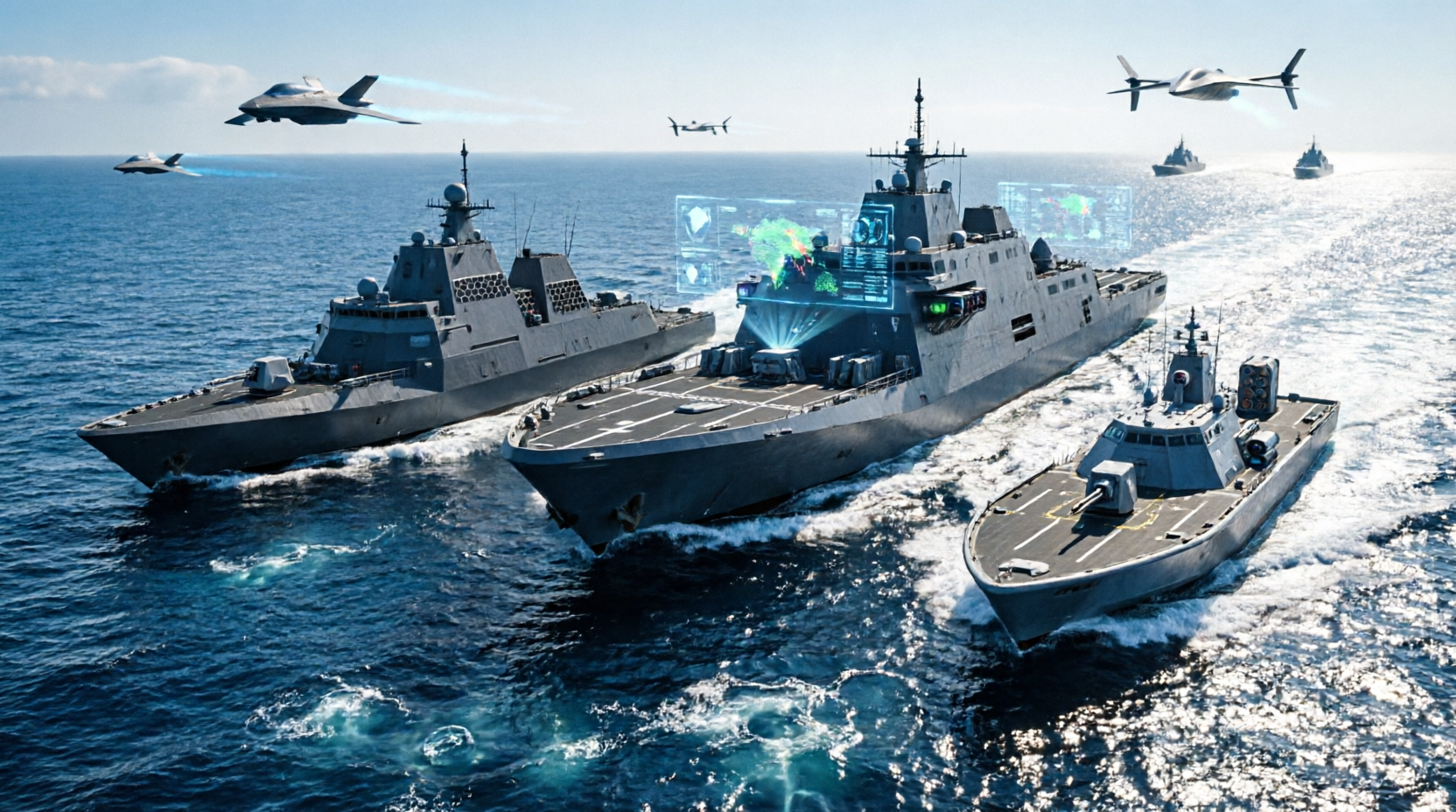
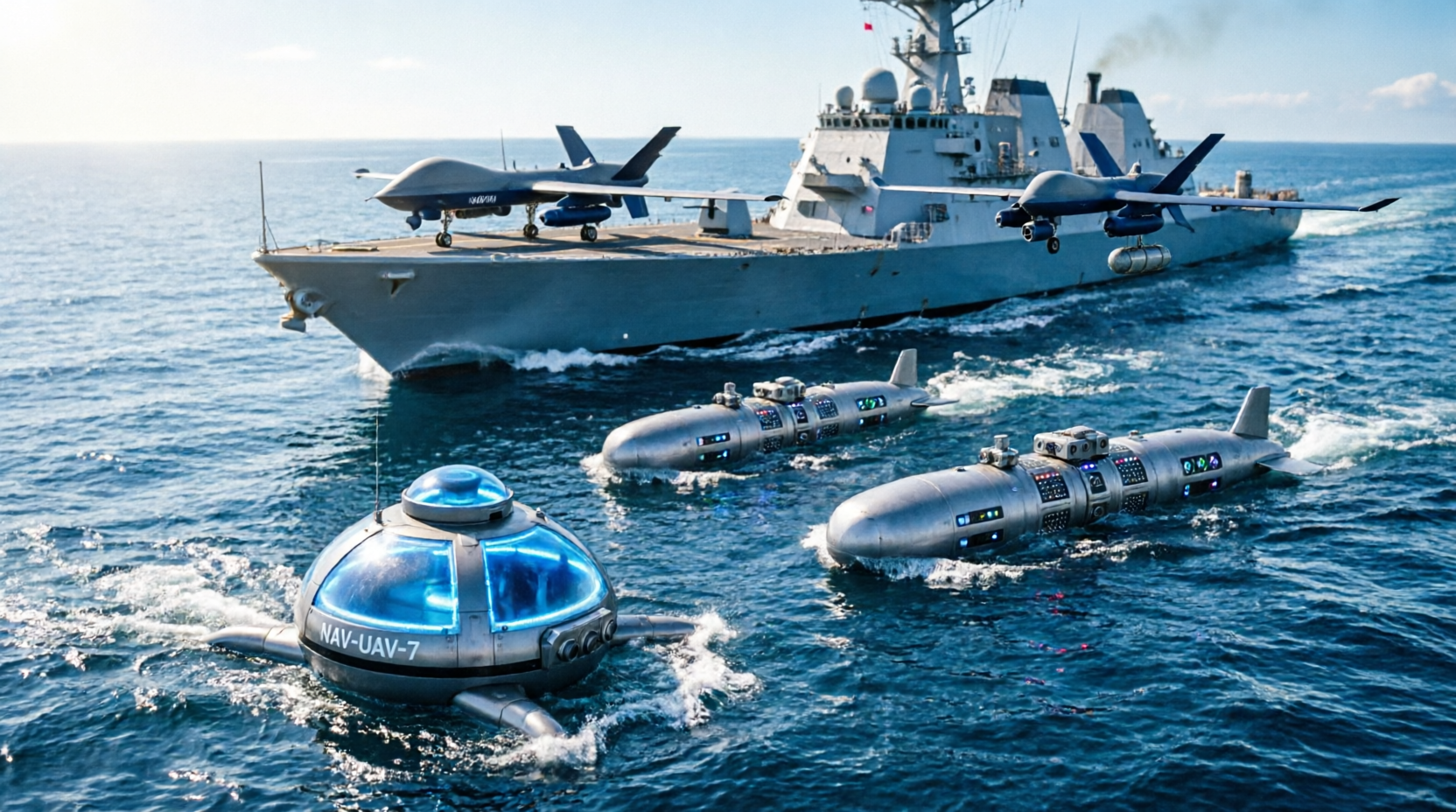
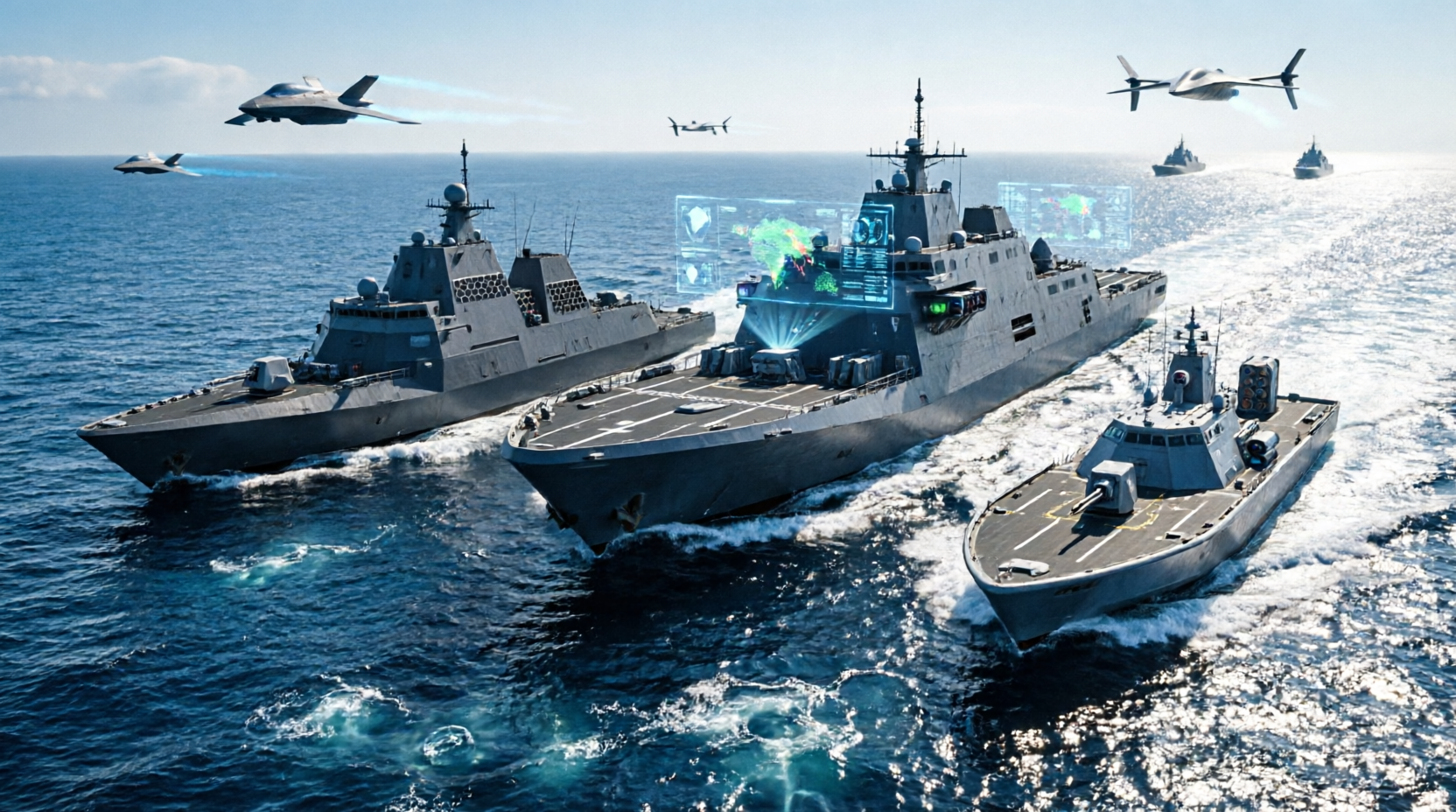
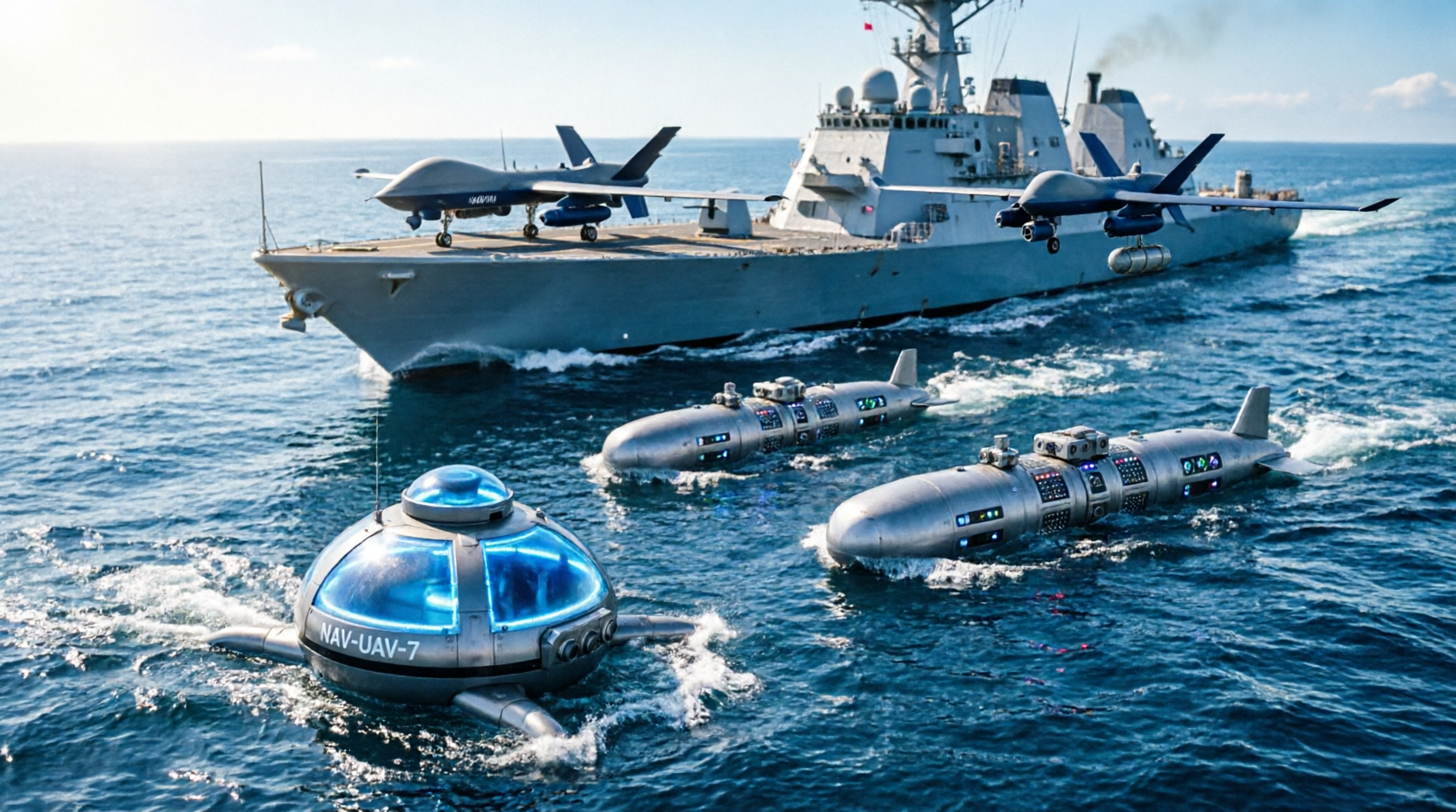
Step 9: AI Works with Unmanned Systems
Many modern navies now use unmanned surface vessels and underwater drones.
These systems can perform dangerous missions without placing sailors at risk.
AI helps these vehicles:
- Navigate independently
- Avoid obstacles
- Search underwater
- Monitor enemy activity
- Collect intelligence
- Return safely to their ships
This expands the Navy's operational capabilities while reducing human risk.
Step 10: AI Learns from Every Mission
One of AI's greatest strengths is continuous learning.
After every mission, AI analyzes what happened.
It studies successful operations, mistakes, equipment performance, weather conditions, and crew responses.
This information improves future missions.
Unlike traditional software that follows fixed rules, AI becomes more effective as it processes more data.
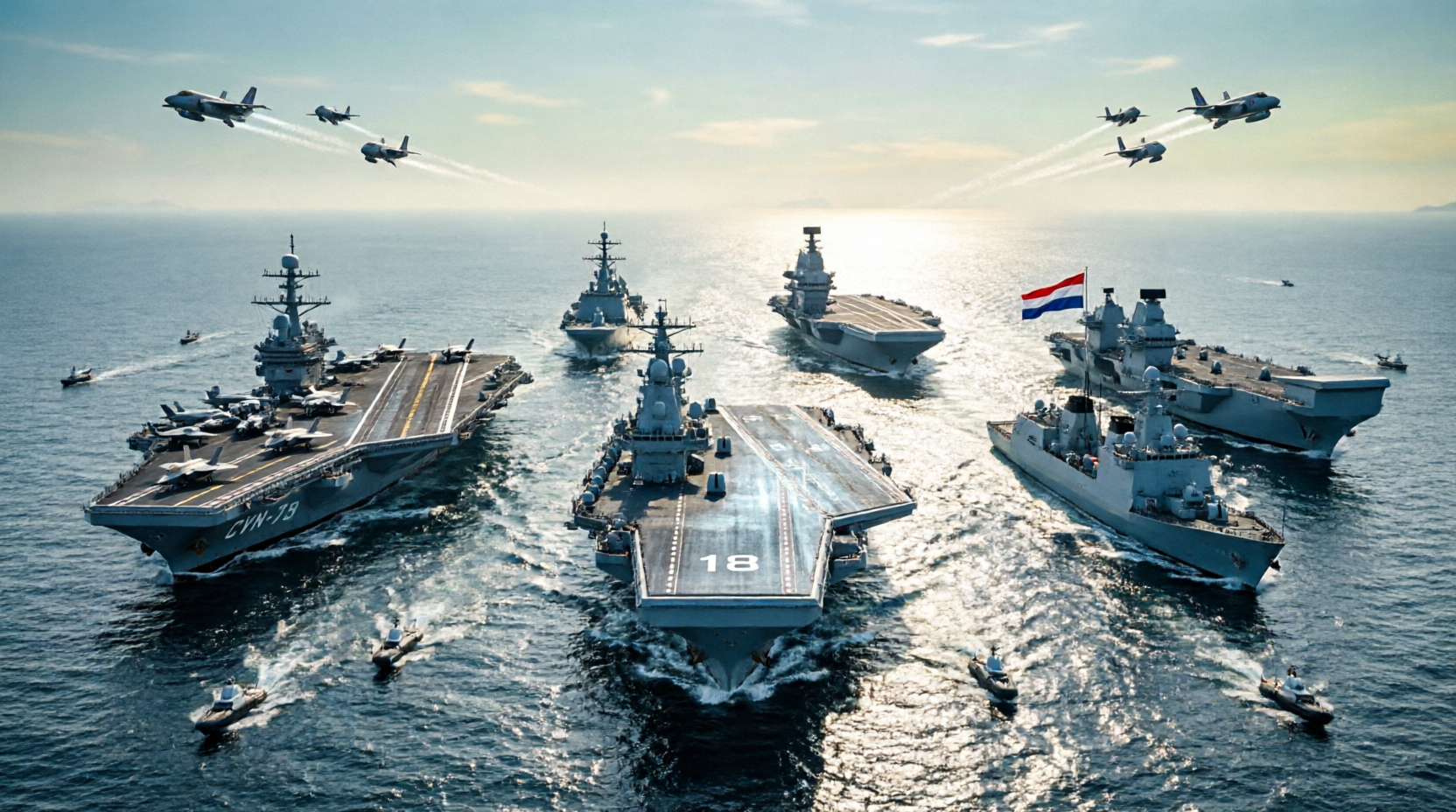
How Leading Naval Powers Use AI
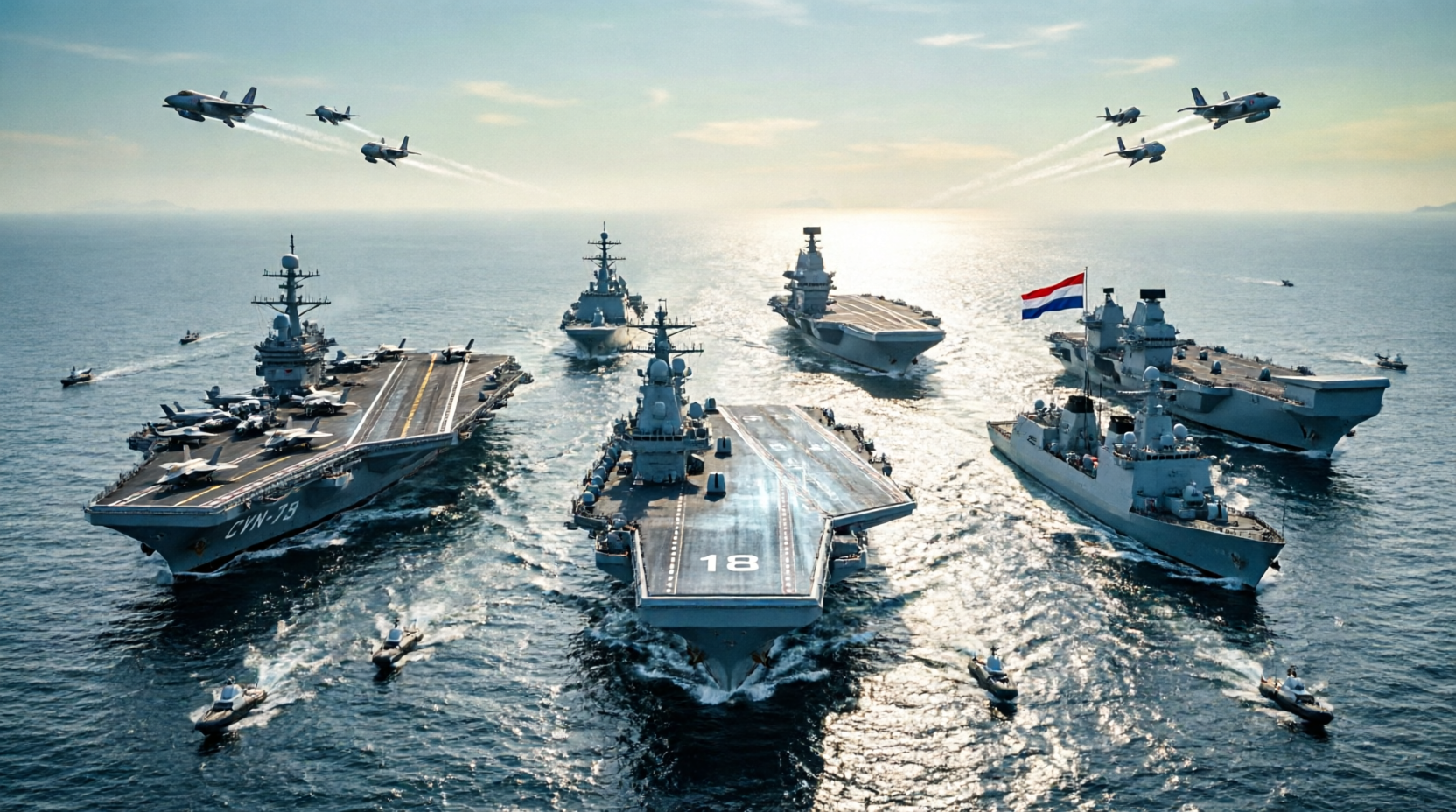
Several countries are investing heavily in AI to strengthen their naval forces.
The United States uses AI to improve decision support, predictive maintenance, autonomous vessels, cybersecurity, and intelligence analysis across different naval operations.
The United Kingdom focuses on intelligent surveillance, autonomous mine-hunting systems, and advanced underwater technologies.
Japan is developing AI systems that improve maritime awareness, submarine detection, and fleet coordination.
South Korea combines AI with smart shipbuilding and naval automation to improve operational efficiency.
Australia is investing in AI-supported underwater surveillance, autonomous maritime systems, and advanced defense research.
France is expanding AI for naval intelligence, command systems, and future autonomous platforms.
These countries understand that future naval strength depends not only on powerful ships but also on intelligent systems that process information faster than any human team.
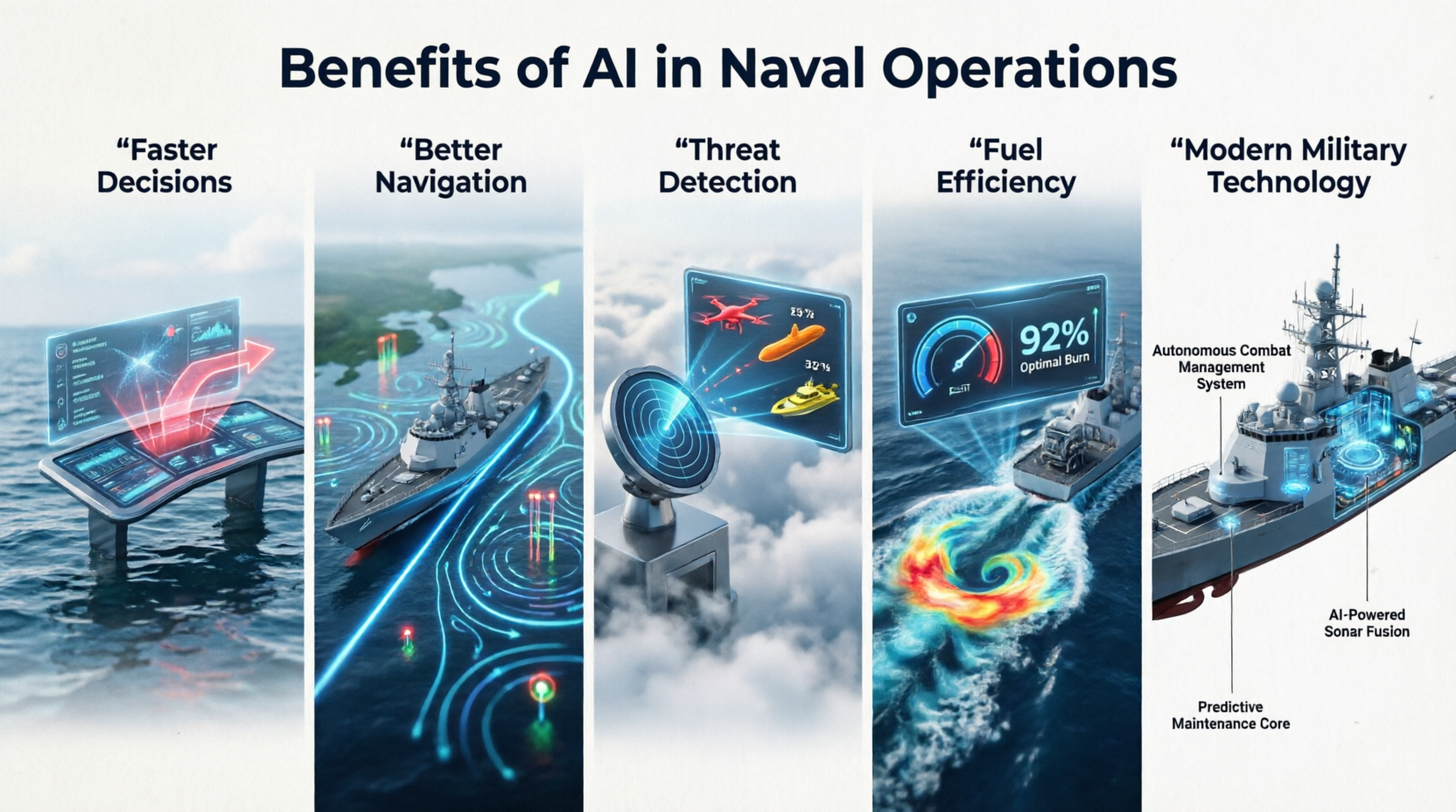
Benefits of AI in Navy Ships
AI offers many practical advantages:
- Faster decision-making
- Better navigation
- Improved threat detection
- Lower maintenance costs
- Stronger cybersecurity
- Better fuel efficiency
- Reduced workload for sailors
- Higher mission success rates
- Safer operations
- Better coordination between ships
Each of these improvements increases the overall strength of a naval fleet.
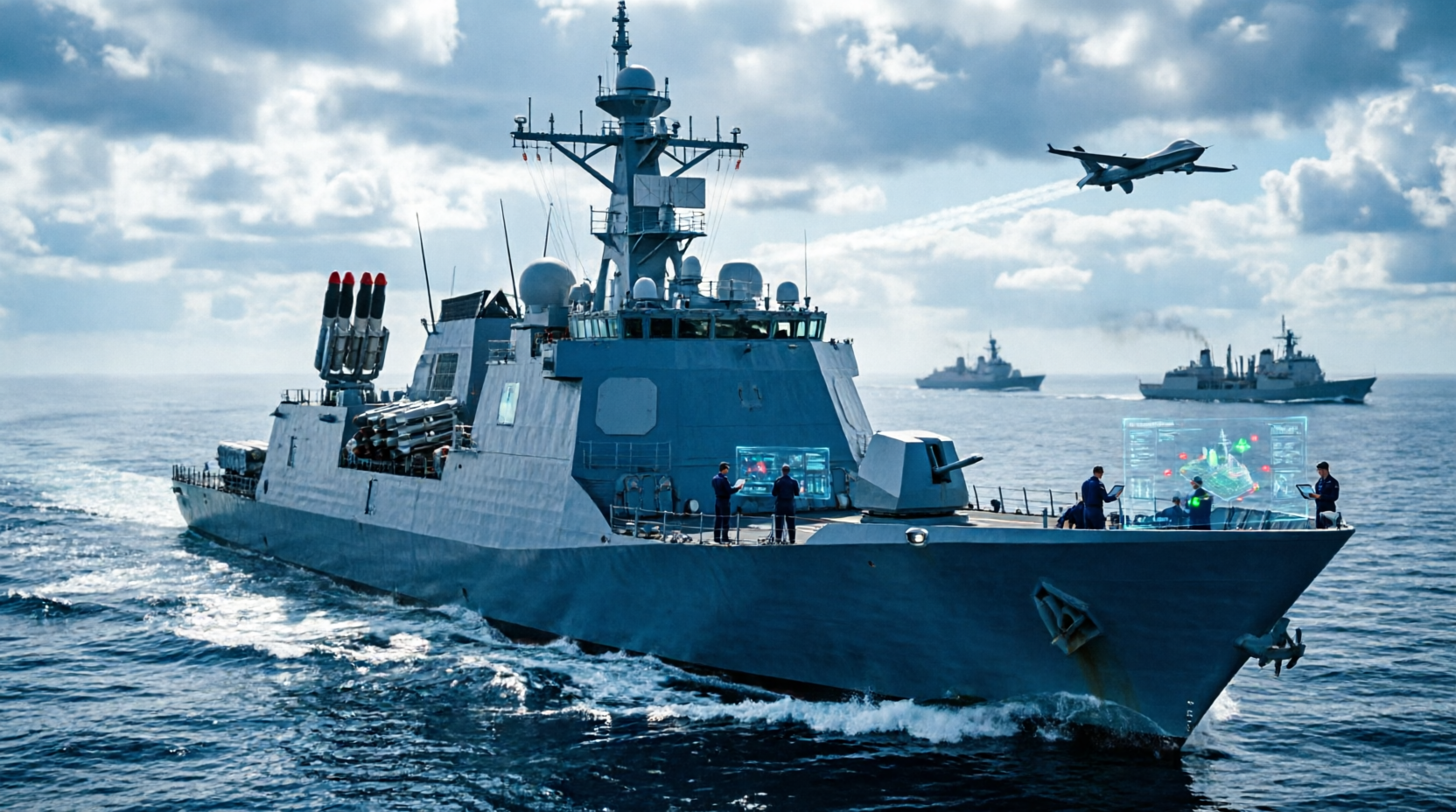
Challenges of Using AI
Despite its advantages, AI also has limitations.
Military organizations must ensure that AI systems remain secure against hacking.
AI requires high-quality data to make accurate recommendations.
Human commanders must always verify critical decisions.
Ethical and legal questions also arise when autonomous systems are involved in military operations.
For this reason, most navies use AI as a powerful assistant rather than allowing it to make final combat decisions on its own.
The Future of AI in Naval Defense
The role of AI will continue to grow.
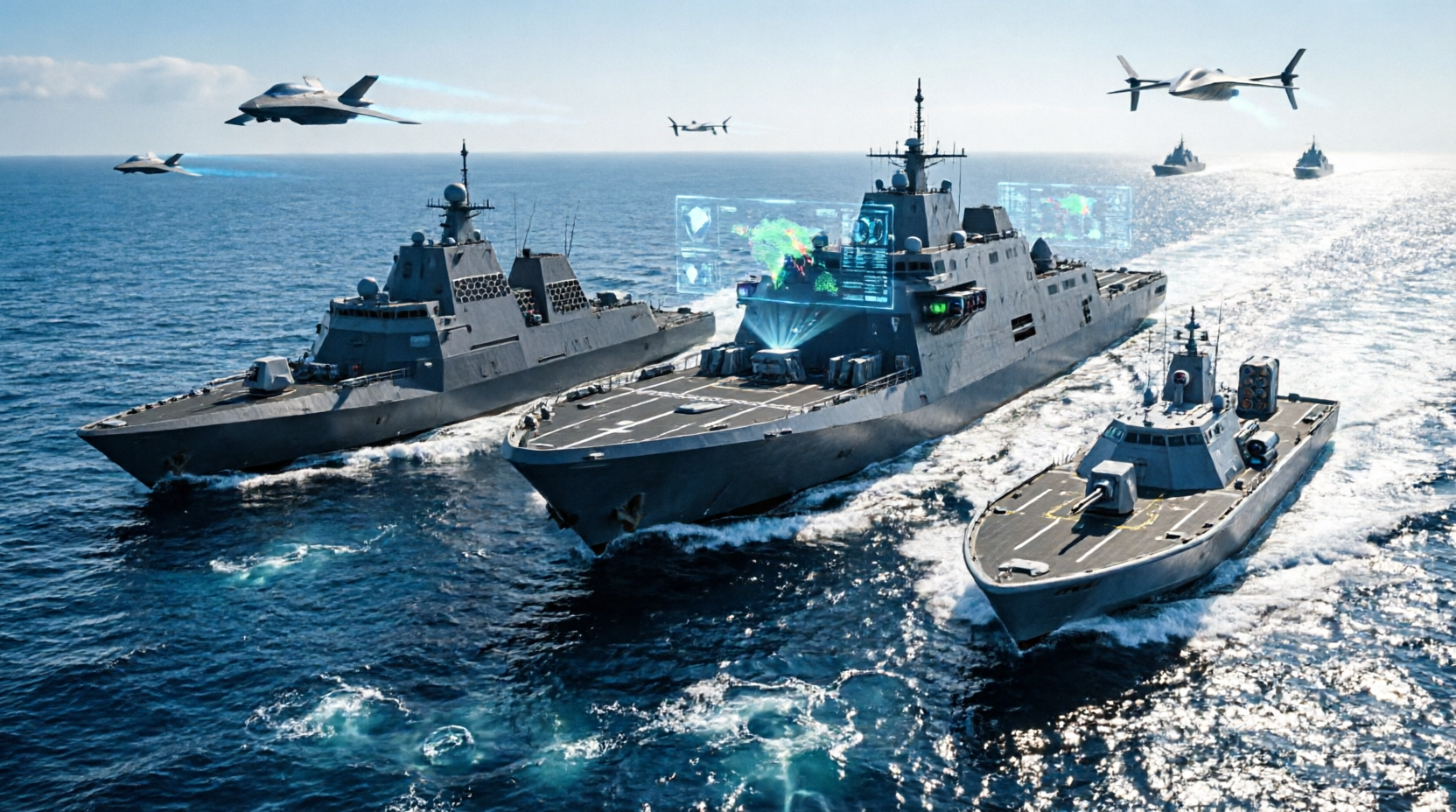
Future Navy ships are expected to become more connected, more autonomous, and more intelligent.
AI may coordinate fleets, manage drones, improve logistics, strengthen cybersecurity, and provide commanders with real-time battlefield awareness.
Instead of replacing sailors, AI will allow them to focus on strategy, leadership, and complex decision-making while intelligent systems handle routine analysis.
The future Navy will combine human experience with machine intelligence to create faster, safer, and more effective maritime defense.
Conclusion
Artificial Intelligence is changing the way modern Navy ships operate. From navigation and maintenance to cybersecurity and threat detection, AI helps naval forces respond more quickly and work more efficiently.
The world's strongest naval powers are investing in AI because they know that future maritime security will depend on intelligence as much as firepower. Smart ships equipped with advanced AI can process huge amounts of information, reduce human workload, improve mission success, and strengthen national defense.
As technology continues to evolve, AI will become an even more important partner for sailors, engineers, and military commanders. The future of naval defense is not only about bigger ships or stronger weapons—it is about making every decision smarter, faster, and more accurate.
Comments (0)
Please sign in to join the conversation.
No comments yet. Be the first to join the discussion!