
Why Millions of Children Quietly Give Up — And Why Nobody Notices Until It's Too Late.
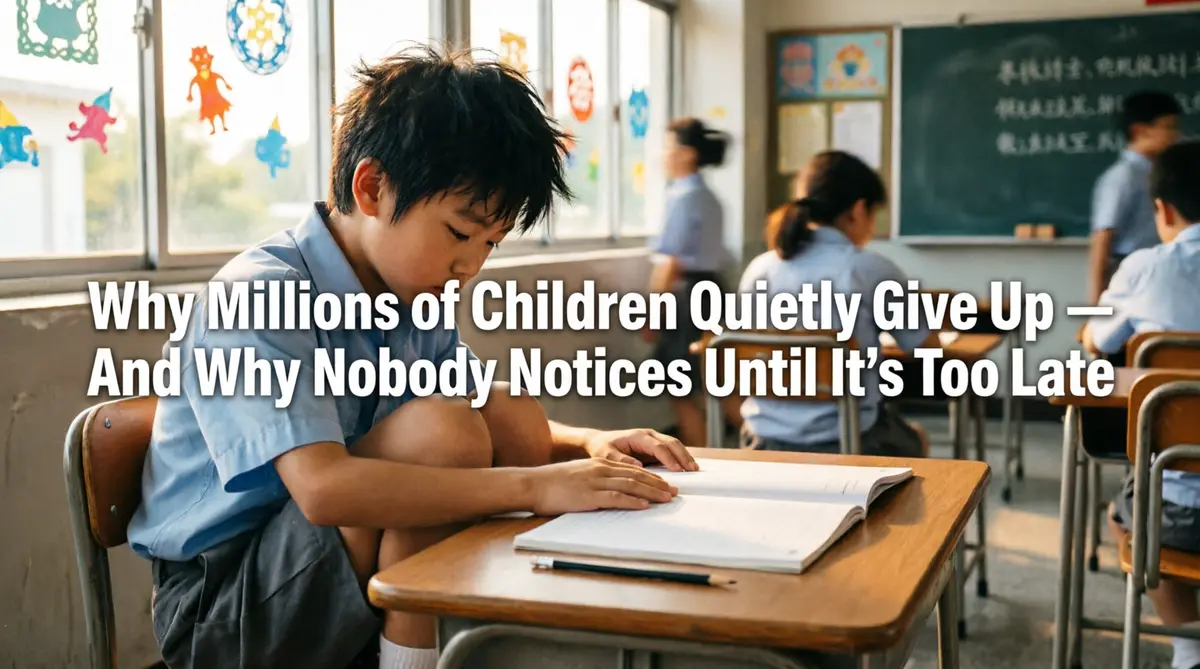
One teacher. Forty children. Two months of silence.
That's all it took.
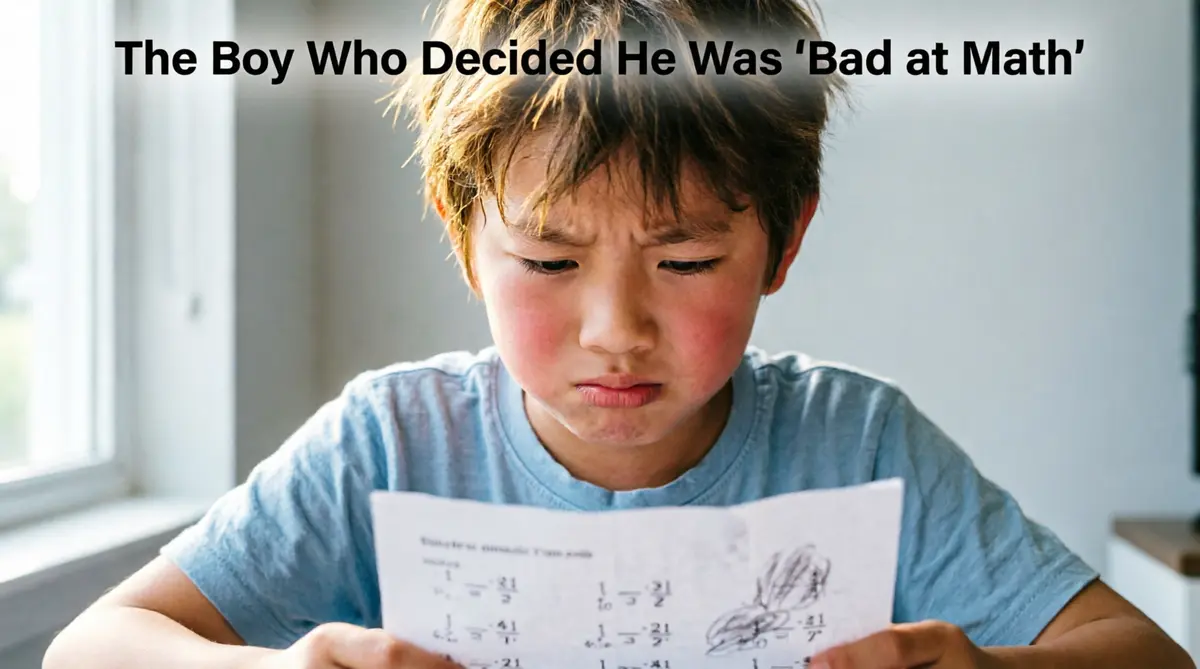
The Boy Who Decided He Was "Bad at Math".
Arjun was nine.
He didn't fail a test to reach that conclusion. No doctor told him. No report card said it in those exact words.
He decided it quietly, on his own, somewhere between the second time he failed a chapter on fractions and the third time his teacher moved on without him.
His teacher wasn't careless. She had forty other children. One class period. A syllabus that didn't wait for anyone.
She noticed something was wrong with Arjun in April.
He had stopped raising his hand in February.
Two months.
That's how long it took one caring, hardworking adult to realize a child had quietly given up on himself.
And here's the part that should bother every single one of us: this isn't one unlucky classroom. This is what education looks like almost everywhere, in almost every country, right now, today.
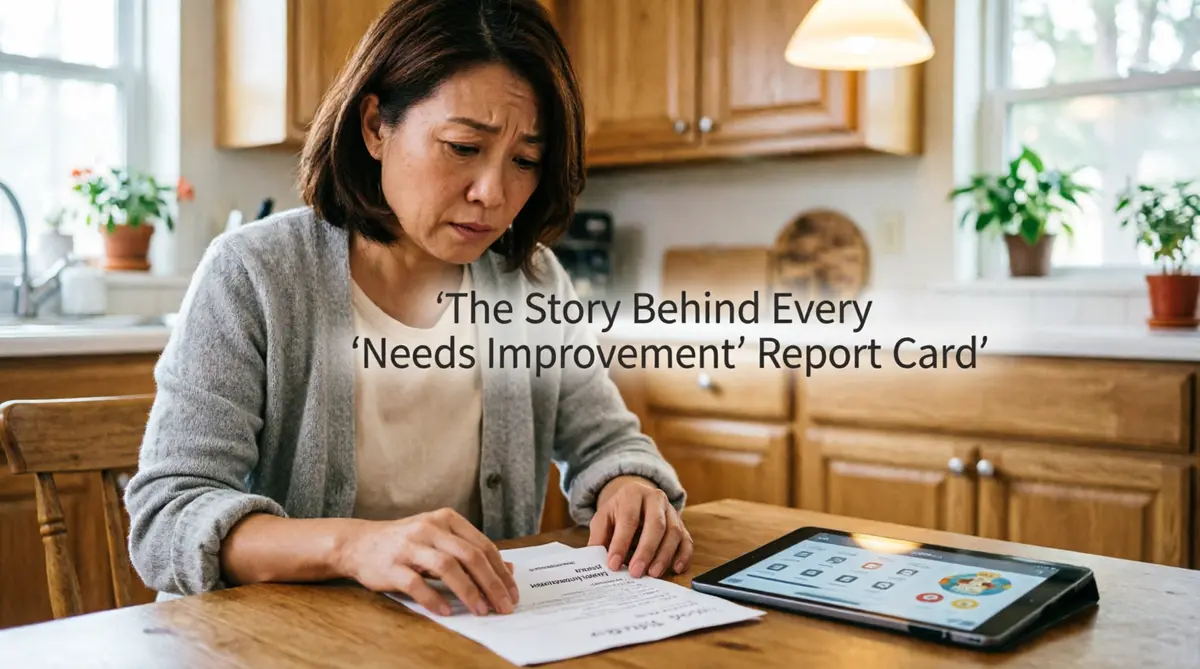
The Story Behind Every "Needs Improvement" Report Card.
There's a mother who spent close to two years trying to understand why her son couldn't keep up in math.
Every report card said the same empty sentence. Needs improvement.
Nobody could tell her what exactly he didn't understand. Not the teacher, not the school, not the extra tuition classes she paid for out of pocket.
She tried an AI-based learning app almost out of desperation, not because she trusted it.
Within a week, it showed her something no report card ever had.
Her son had been stuck on one single idea — denominators — since the third grade.
One small gap. Left unnoticed for two years. Quietly convincing a child he simply wasn't smart enough.
That's not a learning problem.
That's an information problem.
And it's the exact problem AI already knows how to solve.
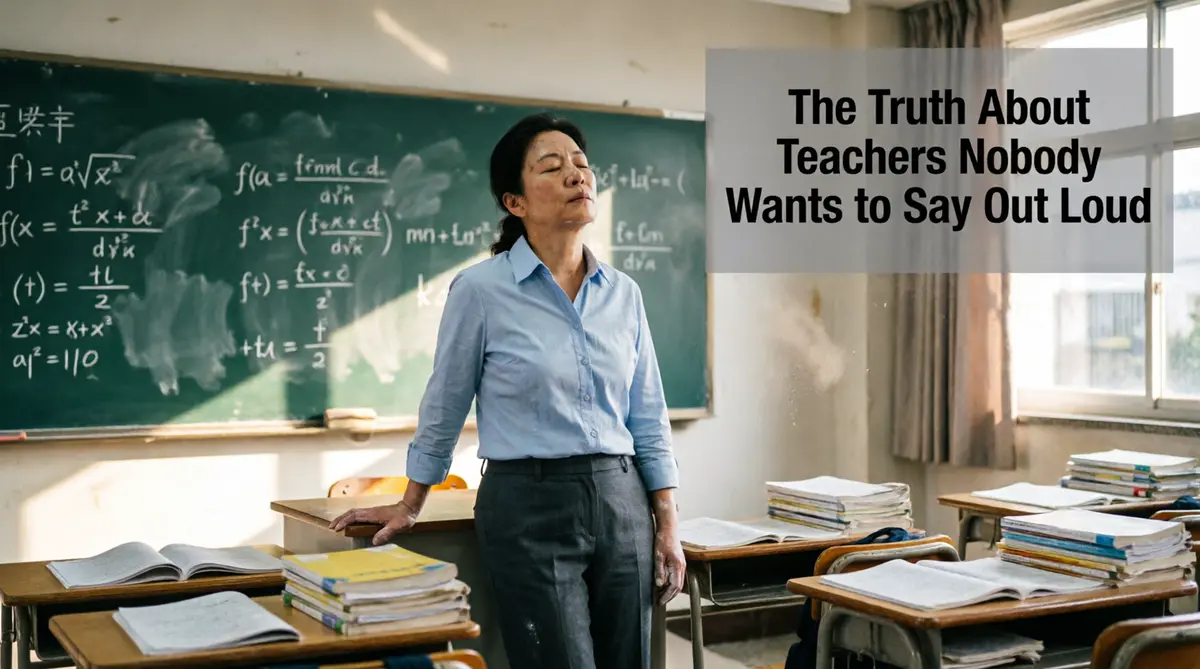
The Truth About Teachers Nobody Wants to Say Out Loud.
Teachers are not failing our children.
A system that was never designed to notice individual struggle is failing all of them, teachers included.
Here's what almost nobody admits publicly: a large part of a teacher's day has nothing to do with teaching. It's attendance. It's paperwork. It's discipline. It's repeating the same explanation to thirty children who each needed something slightly different, in a slightly different way, at a slightly different pace.
In many under-resourced schools, one teacher manages sixty students at once.
Sixty.
Work out the math on that, and it comes to less than a minute of real, individual attention per child, per class.
No teacher — however dedicated, however brilliant — can out-work that ratio alone.
AI is not here to replace her.
AI is here to finally do the one job she was never given enough hours in the day to do: notice.
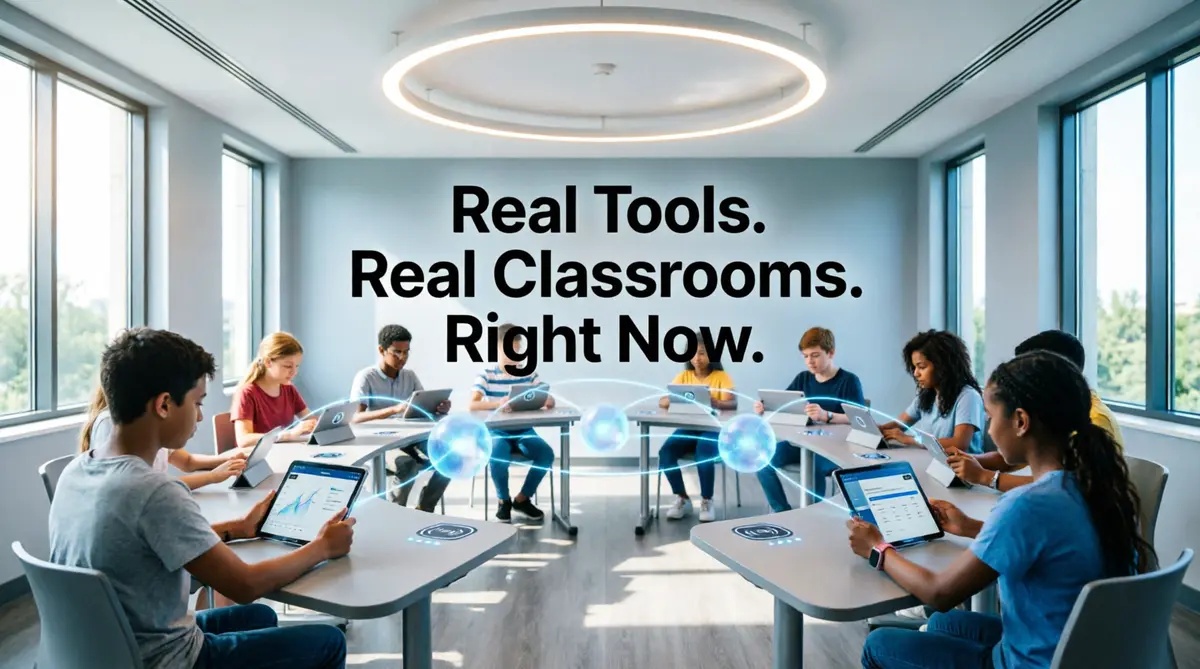
Real Tools. Real Classrooms. Right Now.
This isn't a future prediction. It's already running.
Khan Academy's Khanmigo guides a student through a problem the way a patient older sibling would — asking questions instead of simply handing over the answer.
Duolingo quietly restructures a lesson the moment it notices a learner slipping on the same grammar rule again and again.
Squirrel AI, used widely across schools in China, builds a separate learning map for every single student instead of one lesson plan for an entire class.
Century Tech, used in parts of the UK, flags exactly which topics a student has forgotten over time, not just which answers they got wrong on last week's test.
None of this belongs to science fiction anymore.
The only real question left is whether your local school adopts something like this before another child quietly stops raising his hand, or after.

The Honest Part Most People Skip.
I won't pretend this is simple.
AI in classrooms will struggle in its first couple of years, almost everywhere it's introduced.
Teachers won't be trained properly at first. Internet connections will drop in the middle of a lesson. Half the content will be built around a language, a culture, or a curriculum that has nothing to do with the children actually using it.
The same struggle happened with chalkboards once. With projectors. With the first computer labs anyone ever wheeled into a classroom.
Every new tool in education starts out clumsy before it becomes useful.
The nations that get this right will not be the ones spending the most money on shiny new hardware.
They will be the ones who train their teachers first, and buy software second.
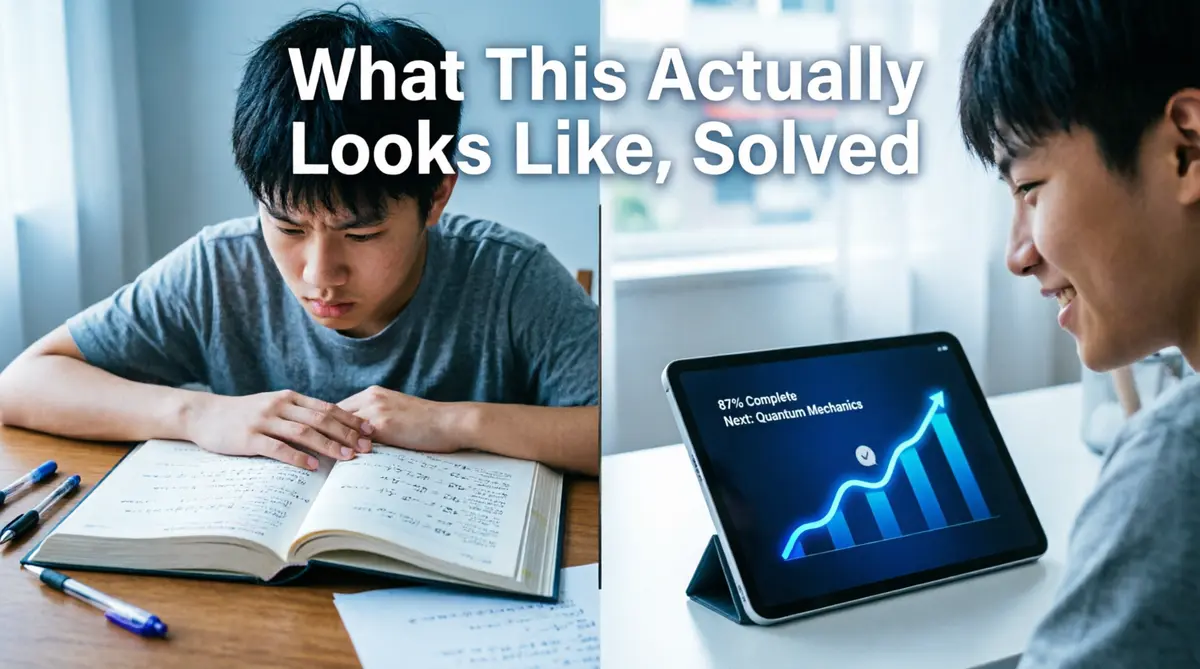
What This Actually Looks Like, Solved.
Here is where most articles stop at a warm feeling. This one won't.
For a struggling school system, the fix starts small. Pick one subject. Basic math, or early reading. Introduce one lightweight AI tool that works on a basic smartphone, not expensive lab equipment nobody can afford to maintain. Track results for a single term before touching anything else.
For a national education ministry, the fix looks like this: stop treating AI as a purchase and start treating it as a habit. Fund short, practical teacher-training sessions before funding devices. A brilliant tool sitting unused in a storeroom has never helped a single child.
For a developing country working with a tight budget, the fix is picking offline-friendly tools that store a student's progress locally and sync only when a connection is available, instead of waiting for perfect infrastructure that may take another decade to arrive.
For a wealthier country already ahead, the fix is resisting the temptation to over-automate. Use AI to spot the gap. Let a human still be the one who sits down and closes it.
For every country, rich or poor, the fix is building local content — in local languages, with local examples — instead of importing a system built for someone else's classroom and hoping it fits.
This is not a wish list. Every single one of these steps is already being tested somewhere in the world today.

What You Can Actually Do, Starting Tomorrow.
If you're a parent, ask your child's school one direct question: "What exactly are you tracking about my child's learning gaps, and how are you using that information?" If the honest answer is nothing, that answer tells you everything you need to know.
If you're a teacher, choose any free AI learning tool and use it with just five students for one week. Most teachers who try this come back saying the same thing: they had no idea how much they were missing.
If you're a policymaker, resist the urge to equip every school in the country at once. Start with one subject, in one district, for one year. Measure it honestly. Prove it works with real numbers before spending real money at scale.
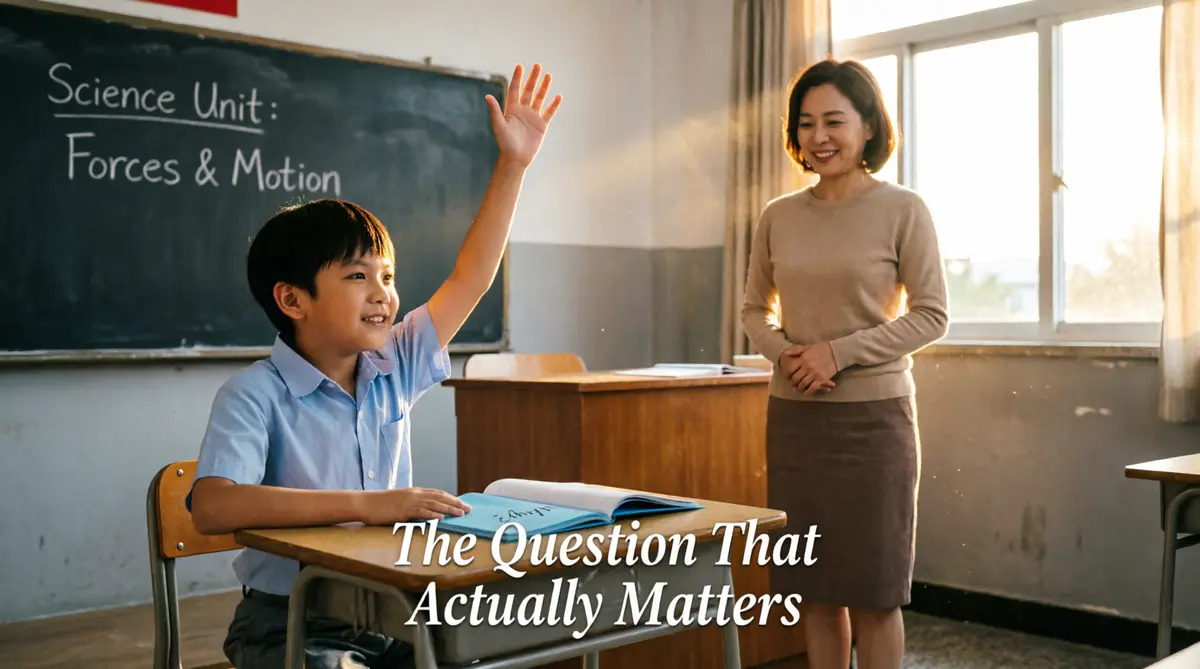
The Question That Actually Matters.
Arjun is in the eighth grade now.
He still doesn't love math. He probably never will.
But a few months ago, for the first time in two years, he raised his hand and said, quietly, "I think I get it now."
His teacher admitted later she got a little emotional hearing that.
Not because he finally got the answer right.
But because this time, nobody had to wait two years to find out what he actually needed.
The technology to catch a gap like his, early, already exists — in classrooms, in villages, in cities, right now, today.
So the real question isn't whether AI can reshape education.
It already is.
The real question is whether the people running our schools and our education ministries are honest enough to admit the old model was never built to notice a child like Arjun — and brave enough to finally do something about it, before the next child quietly stops raising his hand.