
The Crown Chakra Blueprint: A 7-Day Guide to Feeling Whole Again
(Grounded in tradition. Backed by real research.)
I Had Everything — And Felt Nothing

Zainab cried in her car the day she got promoted.
Not happy tears. Confused ones.
She'd done everything "right." A career people envied. A husband who actually listened. A house she'd spent years turning into a home. By every measurable standard, she'd won.
So why did winning feel like a lie?
For months she told herself it was just stress. A phase. Burnout that would pass once things slowed down. She downloaded meditation apps she opened twice. Bought a journaling course she never finished. Booked a weekend retreat she cancelled the morning of.
Nothing stuck. The hollow feeling just sat there, patient, waiting for her to stop running.
What she didn't realize — what most people never realize — is that she wasn't broken. She was disconnected from something ancient traditions have a name for.
A blocked crown chakra.
Before you dismiss that as vague spiritual talk, stick with me. What follows isn't just tradition repackaged as a trend. Some of it is genuinely testable, and some of it — the part almost nobody talks about — involves how AI can finally make this practical instead of aspirational
Quick Check: Is Your Crown Chakra Blocked?
Read through these. Count how many feel true.
Sign | Does this sound like you?
1 .You feel "successful but empty," like you're going through the motions.
2 .You can't sit in silence for two minutes without reaching for your phone.
3 .Your mind rarely feels quiet, even when your body is still.
4 .You sense something bigger is missing, but can't name it.
5 . You've tried meditation before and quit within a week.
0–1:You're likely doing fine.
2–3: Partially blocked — keep reading.
4–5:Your crown chakra is asking loudly for attention.
What the Crown Chakra Actually Is
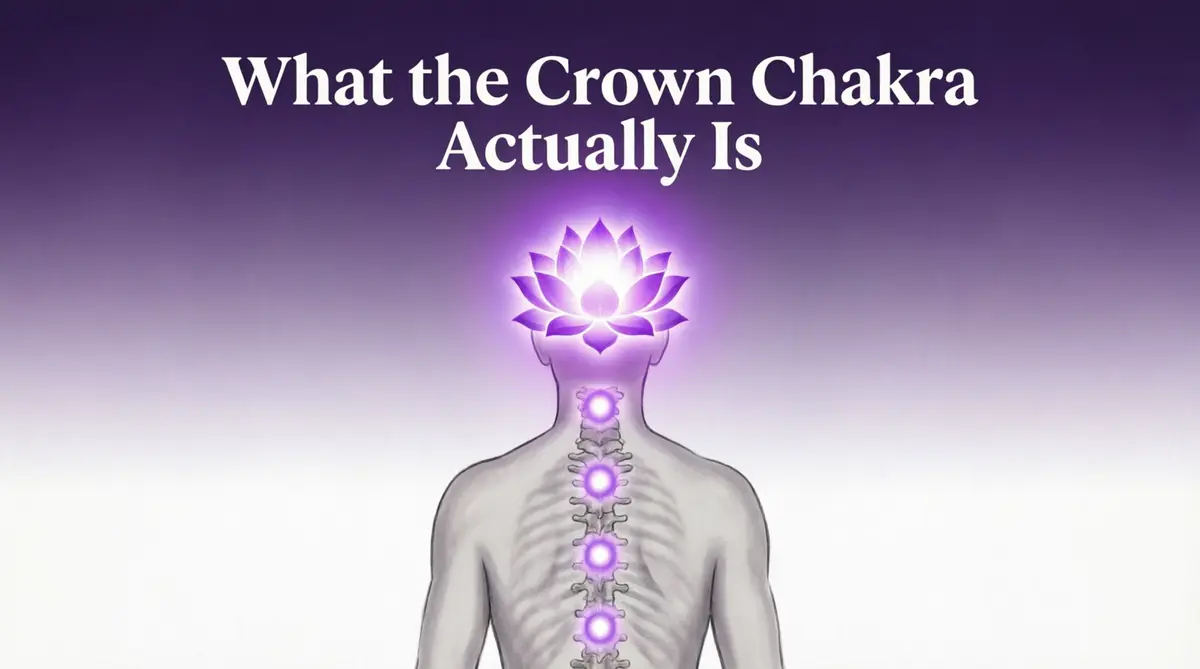
In yogic tradition, the seventh chakra Sahasrara sits at the crown of the head. It's described as the seat of higher awareness, the place where a person feels connected to something larger than their daily grind. Some call that consciousness. Some call it purpose. Some just call it stillness.
It's usually pictured as violet or white symbolizing clarity and openness.
To be honest with you: this is a spiritual framework, not a medical one. No brain scan lights up a "chakra." But the human experience behind the idea — disconnection, restlessness, a quiet ache for meaning is real, common, and worth taking seriously regardless of what you believe about energy centers.

The Quiet Epidemic Nobody's Naming
Look around. The pattern is everywhere.
We're more digitally connected than any generation in history — and loneliness keeps climbing. We have more convenience and choice than ever — and burnout keeps climbing right alongside it. We hit goal after goal, and the finish line just keeps moving.
Familiar symptoms:
- Constant overthinking
- Difficulty sitting still without distraction
- A nagging feeling of performing life rather than living it
- Waking up tired even after a full night's sleep.
None of this means you're failing. It means your inner world hasn't caught up to your outer one. Your crown chakra — your sense of meaning — is asking for attention. Most people are just too busy to notice the ask.
What It Feels Like When It Opens.
- Waking with a quiet mind instead of a racing one
- Sitting in silence for ten minutes without needing a distraction
- Actually being present in conversations, not mentally elsewhere
- A sense of direction, not just momentum
- Sleep that leaves you rested
- Small, unforced moments of peace
This isn't about becoming a monk. It's about being human without the constant static.

Why Nothing You've Tried Has Worked.
| The Problem | What's Actually Happening |
| You didn't know which technique fit you | Too many generic options, none personalized |
| You quit within three days | No gradual build, no accountability |
| You tried to do it completely alone | No check-ins, no feedback loop |
| Your environment fought you | Notifications and noise pulling you back out |
It was never a willpower problem. It was a system problem.
The Science Behind the Practices (For the Skeptics)
Here's where honesty matters most, because this is the part that gets exaggerated everywhere online.
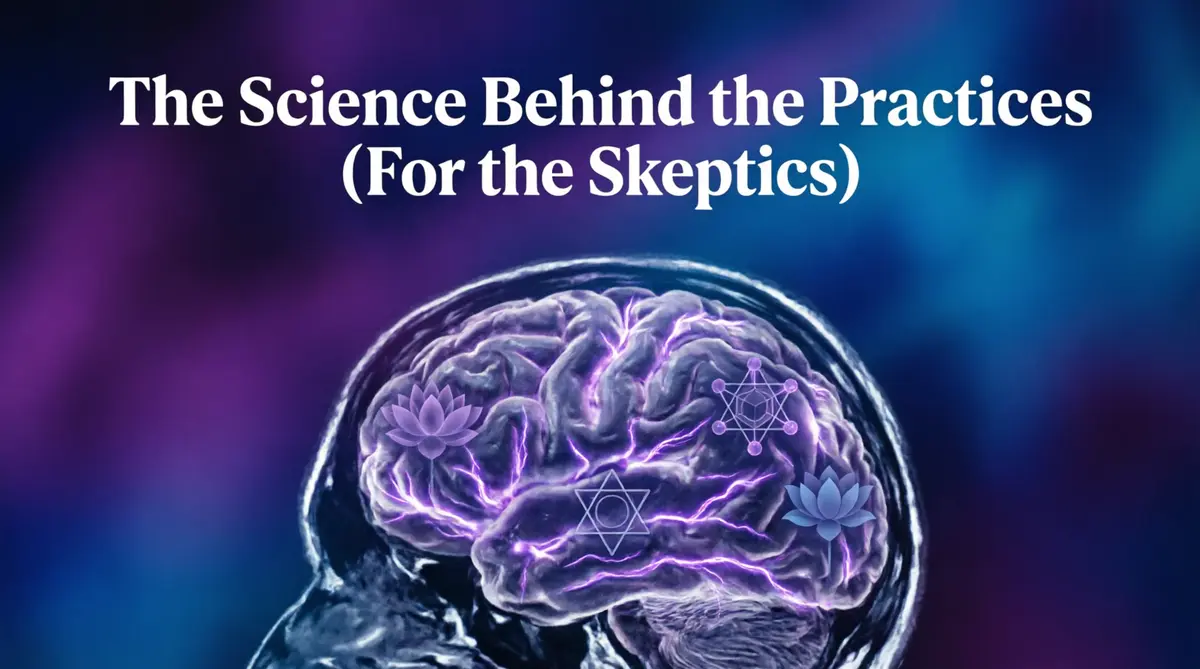
Chakras themselves are a belief system rooted in ancient tradition — not something a lab can measure. But the practices tied to crown chakra work — meditation, mindfulness, sitting in stillness — have real, peer-reviewed research behind them.
<cite index="8-1,8-2">A 2011 Massachusetts General Hospital study, led by Harvard researcher Sara Lazar, found that participating in an eight-week mindfulness program produced measurable changes in brain regions tied to memory, sense of self, empathy, and stress.</cite> <cite index="8-2">MRI scans showed increased gray-matter density in the hippocampus, the region involved in learning and memory, along with areas linked to self-awareness and compassion.</cite> Participants who reported feeling less stressed also showed measurable changes in the amygdala, the brain's stress-processing center — suggesting the calm people describe after meditating isn't just in their heads. It's showing up on a scan.
Separately, researchers studying the brain's default mode network — the system responsible for mind-wandering and rumination — have repeatedly found that consistent meditators show reduced activity in that network. That likely explains why long-term practitioners report less repetitive, looping thought.
Translation: whether or not you believe in energy centers, the underlying habit — sitting with your own mind on purpose — has measurable, documented effects. That's not mysticism. That's neuroscience meeting a much older tradition.
Where AI Actually Fits In.
This is the part most spiritual content skips entirely.
Ancient traditions required a teacher, a monastery, or years of solitary discipline. Powerful, but never something everyone could access daily.
What if the missing piece isn't another app you'll abandon in a week, but a guide that's genuinely with you every day, without judgment?
AI won't replace real spiritual experience — let's be clear about that upfront. But it can do something older traditions never had access to:
Personalization at scalenoticing .
patterns in your mood, sleep, and stress, and adjusting suggestions accordingly.
Gentle accountability.a quiet nudge instead of a guilt trip.
Turning vague intentions into habits. "I should meditate more" becomes something trackable
Zero judgment. you can say you skipped three days and it won't shame you, it'll just help you restart
Think of it as old wisdom finally getting a patient, consistent companion.

Your 7-Day Crown Chakra Practice.
No apps to buy. No retreat to book. Just five to ten minutes a day, using an AI check-in or a plain notebook, whichever you'll actually stick to.
| Time | Practice | How AI Can Help |
| Morning (5 min) | Slow breathing before touching your phone | "Guide me through five deep breaths" |
| Midday (2 min) | One honest check-in | "How's my mind right now?" — answer for real |
| Evening (3 min) | Two-line journal entry | "What felt heavy today? What felt light?" |
| Night (1 min) | One gratitude anchor | "What's one good thing from today?"
Weekly review:once a week, ask your AI assistant — *"Based on what I've told you this week, what patterns do you notice in my mood and stress?"
This is where it actually gets useful. Patterns surface. You start seeing why you feel a certain way, not just that you feel it.
Day-by-Day Focus
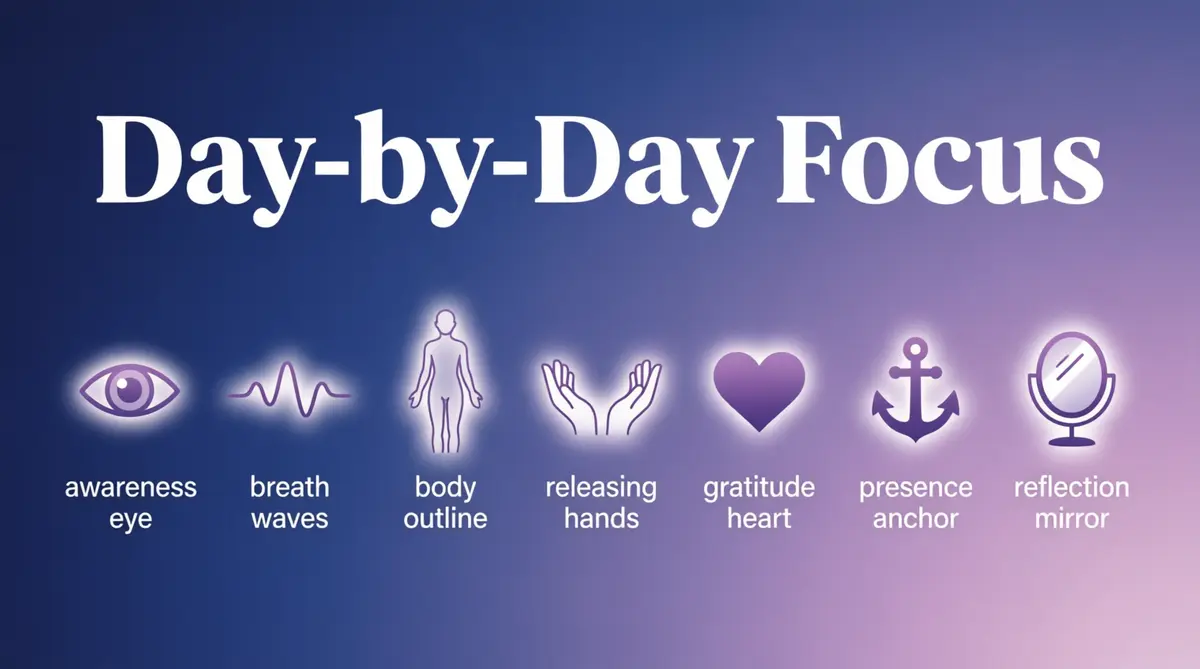
| Day | Focus | Prompt to Sit With |
| 1 | Awareness | Just notice your mind. Don't try to change it. |
| 2 | Breath | Five slow inhales, five slower exhales. Count each one. |
| 3 | Body | Where are you holding tension right now? |
| 4 | Letting go | What are you carrying that was never yours to carry? |
| 5 | Gratitude | Name three small things that went right today. |
| 6 | Presence | When did you feel most "here" today? |
| 7 | Reflection | What shifted this week, even slightly?
You're not meditating for hours. You're building a thin, consistent thread of awareness. Over time, that thread becomes something strong enough to pull you out of the hollow feeling.

Zainab, Three Weeks Later.
Zainab didn't overhaul her life. She just started answering one honest question every evening, through a simple AI-guided check-in. Five minutes, no pressure.
Within a few weeks, something shifted not a dramatic before-and-after, but a quieter mind. Fewer nights staring at the ceiling. A growing sense that she was finally listening to herself instead of sprinting past herself.
She still has hard days. She still overthinks sometimes. But now she has something to return to, and that alone changes everything.
What People Generally Notice.
Reports from people who've tried similar simple daily check-ins tend to cluster around a few consistent shifts: falling asleep faster, snapping less at the people they love, and feeling less like they're just reacting to their day. These aren't guaranteed outcomes and they won't look identical for everyone — but they're the kind of small, believable changes that show up when a five-minute habit actually gets kept.
Frequently Asked Questions.
Do I have to believe in chakras for this to work?
No. The practices work whether or not you believe in energy centers — the same way exercise works whether or not you think about muscle fibers while doing it.
What if I don't want to use AI for this?
A notebook works fine. The AI is just a convenient accountability partner — the actual work is you showing up.
How long before I notice anything?
Most people notice small shifts within seven to ten days. Deeper change tends to take four to six weeks of consistency.
What if I miss a day?
Don't quit — just restart tomorrow. This is about consistency, not perfection.
Can this replace therapy?
No. If you're dealing with trauma, clinical depression, or acute distress, please see a licensed professional. This is a complementary practice, not a substitute for care.
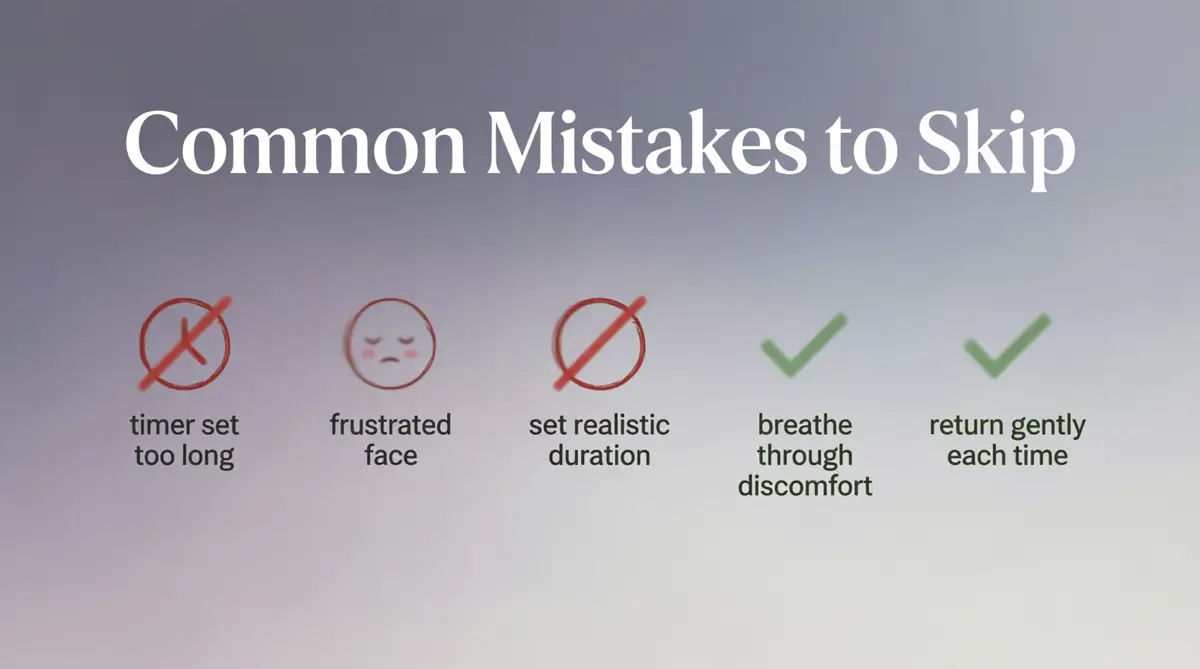
Common Mistakes to Skip.
| Mistake | Do This Instead |
| Trying twenty minutes on day one | Start with two or three minutes and build slowly |
| Judging yourself for a "bad" session | There's no such thing — noticing is the whole point |
| Expecting instant transformation | This is a practice, not a pill |
| Going all-in for three days, then quitting | Five minutes daily beats thirty minutes once |
| Doing it with no way to track progress | Use an AI check-in or a simple notebook |
The Deeper History, For the Curious.
The idea of Sahasrara appears in ancient yogic texts dating back centuries, described as a "thousand-petaled lotus" symbolizing infinite potential and connection beyond the individual self. Related concepts show up in Buddhist Vajrayana practice and in the Kabbalistic Tree of Life in Western mysticism.
Different names, different eras, same underlying idea: the highest state of human awareness involves connection beyond the self. Modern neuroscience describes something similar when it talks about the default mode network quieting down. Same phenomenon, different vocabulary.

What to Do Tonight.
1. Set a five-minute timer before bed.
2. Ask yourself one honest question: how am I really doing?
3. Write the answer in one sentence, minimum.
4. Commit to this for seven days, no skipping.
5. Set a reminder for the same time tomorrow.
That's the whole start.
The Real Point.
The crown chakra was never about believing in something invisible.
It was always about finally paying attention to what was already there.
You don't need to quit your job or move to an ashram. You just need to pause long enough to hear what your own mind has been trying to tell you, underneath the notifications, underneath the deadlines, underneath all the noise.
The answer was never outside you.
It never was.
Your turn: what's the one thing that's kept you from meditating consistently?
Reply, comment, or just sit with the question tonight — the answer might tell you more than you expect.