
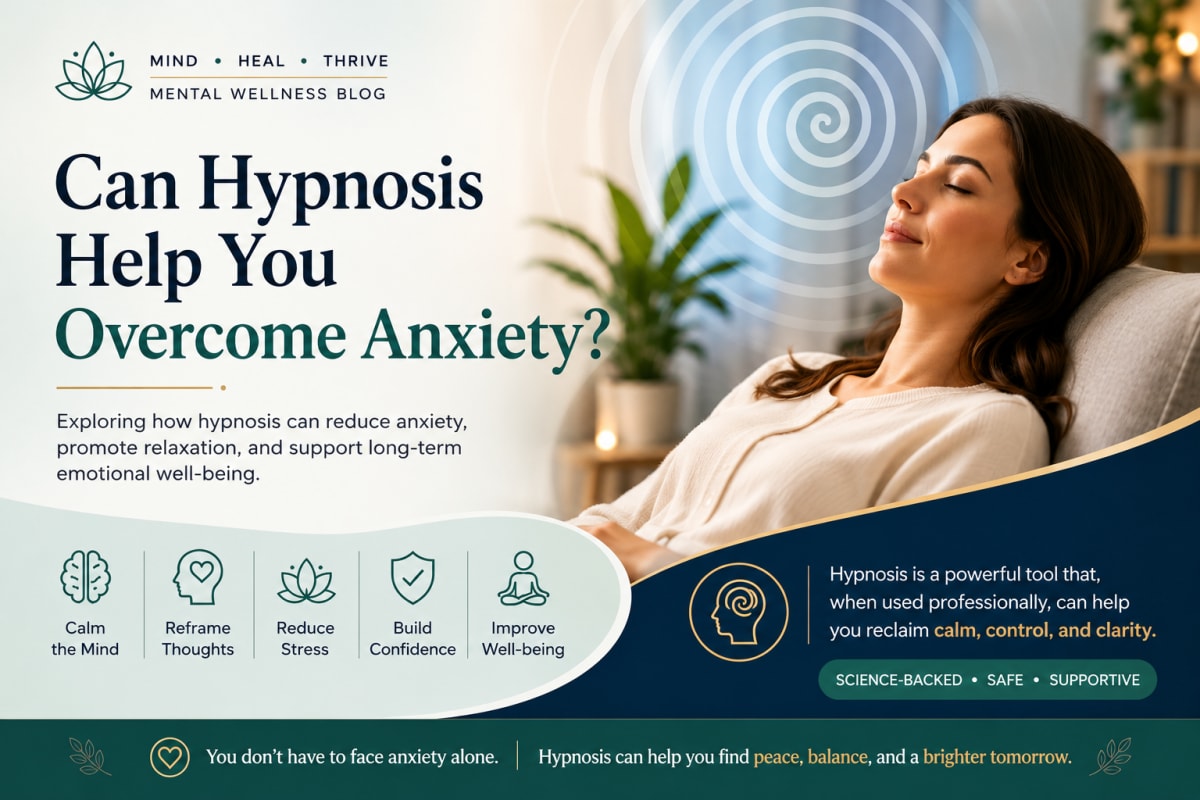
Can Hypnosis Help You Overcome Anxiety?
Picture this. It's 2 a.m. and your mind is running laps around a problem that won't exist by Tuesday. Your chest is tight. Your thoughts are looping. You've tried the deep breathing, the meditation app, maybe even a sleeping pill or two. And somewhere in the middle of that exhaustion, a thought crosses your mind: what about hypnosis?
It's a fair question, and one that more people are asking than you'd think. Anxiety has quietly become one of the defining struggles of our time, and people are tired of solutions that feel like homework. Hypnosis, for all its Vegas-stage-show baggage, is quietly earning a seat at the table in serious anxiety treatment. So let's actually talk about it, without the mysticism and without the eye-roll skepticism either.
What Hypnosis Actually Is (Because It's Not What You Think).
Forget the swinging pocket watch. Forget the idea of losing control of your mind while someone else pulls the strings. Real clinical hypnosis is closer to a very deep, very focused state of relaxation — something like the feeling right before you fall asleep, or the trance you fall into when you're driving a familiar route and suddenly realize you don't remember the last ten minutes.
In that state, your conscious mind — the part of you that overthinks, judges, and argues — steps back a little. Your subconscious, which holds your habits, your automatic reactions, and a lot of your emotional wiring, becomes more open to suggestion. A trained hypnotherapist doesn't control you in this state. They guide you. You're aware. You can hear everything. You could open your eyes and walk out any time you wanted. What's different is that your mind becomes more receptive to new patterns of thinking, which is exactly what makes it useful for anxiety.
Anxiety, after all, is largely a subconscious pattern. Nobody consciously decides to catastrophize about an email or spiral before a work presentation. It just happens. Hypnosis works by going straight to where the pattern lives instead of trying to argue with it from the outside.
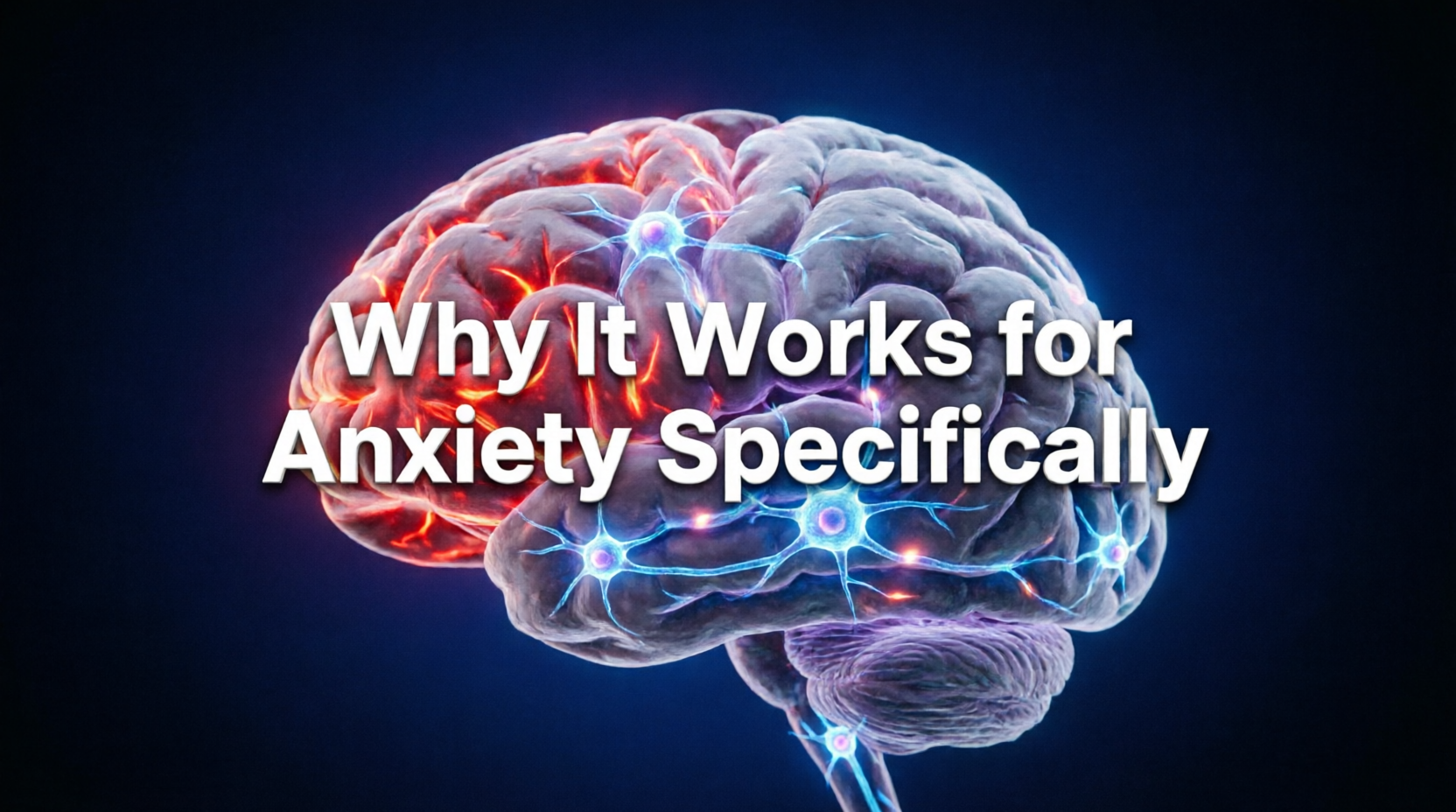
Why It Works for Anxiety Specifically.
Anxiety doesn't come from nowhere. It's built from repetition — years of the nervous system learning that certain situations mean danger, even when they don't. Talk therapy works on understanding that pattern. Medication works on the chemistry underneath it. Hypnosis works somewhere in between: it speaks the language the subconscious already understands, which is imagery, emotion, and suggestion rather than logic and argument.
During a hypnotherapy session for anxiety, a person is usually guided into a relaxed state and then walked through a few key processes. Sometimes it's about revisiting the root of a fear and reframing it. Sometimes it's rehearsing a future stressful event — a flight, a job interview, a hard conversation — in a way that trains the body to respond calmly instead of bracing for impact. Sometimes it's as simple as teaching the nervous system what "safe" actually feels like again, because for a lot of anxious people, that feeling has been missing for so long they've forgotten what it's supposed to be.
Several studies over the past two decades have pointed to real reductions in anxiety symptoms following hypnotherapy, particularly when it's combined with cognitive behavioral approaches — a pairing often called cognitive hypnotherapy. It's not a replacement for professional mental health care in serious cases, and any responsible hypnotherapist will say so upfront. But as a tool for generalized anxiety, performance anxiety, phobias, and stress-related tension, it has earned genuine credibility.
What a Session Actually Feels Like.
Most people expect something dramatic. What they get is something closer to a guided nap with a purpose. A session typically starts with conversation — not a script, but an actual discussion about what's going on, what triggers the anxiety, and what the person wants to feel instead. Then comes the induction: a slow, deliberate relaxation process, often starting with the breath and moving through the body.
Once in that relaxed state, the hypnotherapist uses language carefully. Not commands, but suggestions woven into imagery. A person might be guided to imagine themselves handling a stressful situation with ease, to feel what calm actually feels like in their body, or to release a memory that's been quietly feeding their anxiety for years. The session usually ends with a gentle return to full awareness, often leaving the person feeling like they've just had the best nap of their life, minus the grogginess.
The real work happens afterward, in daily life, when those new patterns start showing up uninvited — a moment of calm where panic used to live.

Is It Right for Everyone?
Honestly, no single tool is right for everyone, and hypnosis is no exception. It tends to work best for people who are open to the process and willing to engage with their own imagination. People with certain psychiatric conditions need to work with a qualified professional who understands when hypnosis is appropriate and when it isn't. And it's not a magic fix after one session — like anything worth doing, it usually takes a few sessions to build lasting change.
But for the average person dealing with everyday anxiety, work stress, social nervousness, or specific fears that have outlived their usefulness, hypnotherapy offers something a lot of other treatments don't: a direct line to the part of the mind where the anxiety actually lives.
The 7-Day Advanced Hypnotherapist Training Program: Mastering Anxiety Work.
For those who don't just want to experience hypnotherapy but want to practice it — to actually sit across from someone who's struggling and help them find their way back to calm — here is a seven-day advanced training path. This isn't a beginner's overview. It assumes a working knowledge of induction techniques and basic trance theory, and it's built specifically around anxiety as a specialty.
Day 1: Understanding the Anxious Mind From the Inside Out.
The first day isn't about technique at all. It's about building a real, working understanding of what anxiety looks like from the inside — the physiology of a triggered nervous system, the difference between generalized anxiety, panic disorder, social anxiety, and phobia-driven anxiety, and how each shows up differently in a session.
Trainees spend this day studying case histories, learning to recognize the subtle physical tells of an activated stress response (shallow breathing, restlessness, guarded posture), and practicing intake interviews that get to the real root of a client's anxiety without turning the conversation into a clinical interrogation. The goal by the end of day one: the ability to sit with an anxious client and immediately understand what's happening beneath the surface.
Day 2: Building Trust and Rapport Before You Ever Induce Trance.
Anxious clients are, understandably, some of the hardest people to relax. Their entire nervous system is wired to stay alert. Day two focuses entirely on rapport-building techniques tailored to anxious personalities — pacing and leading language patterns, mirroring breath and tone, and creating an environment where the client's guard naturally lowers before any formal induction begins.
This day also covers how to handle resistance gracefully. Anxious clients often intellectualize, question everything, or worry about "losing control." Trainees practice responding to these concerns with confidence and warmth rather than defensiveness, because the moment a client feels dismissed, the trust needed for deep work disappears.
Day 3: Advanced Induction Techniques for Hypervigilant Minds.
Standard inductions don't always work on someone whose mind is constantly scanning for threats. Day three introduces slower, layered induction methods designed specifically for hypervigilant clients — including progressive relaxation combined with grounding techniques, fractionation for clients who struggle to let go quickly, and permissive language patterns that give the anxious mind a sense of choice rather than surrender.
Trainees practice in pairs, taking turns inducing and receiving trance, paying close attention to pacing. With anxiety work, rushing the induction almost always backfires.
Day 4: Reframing the Root — Working With Origin Events.
Many anxiety patterns trace back to a specific moment, or a string of moments, where the nervous system learned to associate a situation with danger. Day four is dedicated to techniques for safely uncovering and reframing these origin points, including regression-based approaches and the use of metaphor to separate the client emotionally from the original event while still processing it.
This is advanced, delicate work, and the day includes extensive practice on emotional safety protocols: how to keep a client grounded throughout, how to recognize if a memory is becoming overwhelming, and how to close a session properly so nothing is left unresolved.

Day 5: Future Pacing and Rehearsal for Real-World Confidence.
Once the roots are addressed, day five shifts to the future. This is where trainees learn future-pacing techniques — guiding a client through an upcoming anxiety-inducing event (a flight, a presentation, a difficult conversation) while they're in trance, rehearsing calm responses so the nervous system builds new associations before the real event even happens.
This day also covers anchoring: teaching a client to install a physical cue, like pressing thumb to finger, that triggers a calm state on command outside of sessions. It's one of the most practical tools an anxious client can walk away with.
Day 6: Integrating Cognitive Techniques With Hypnotic Suggestion.
The most effective anxiety-focused hypnotherapists don't rely on trance alone. Day six covers how to weave cognitive behavioral principles into hypnotic suggestion — challenging distorted thought patterns while the client is in a receptive state, and reinforcing new, more balanced beliefs about themselves and their capability to handle stress.
Trainees also learn to build personalized self-hypnosis scripts that clients can use independently between sessions, extending the work far beyond the therapy room.
Day 7: Practicum, Ethics, and Building a Real Practice.
The final day is where everything comes together. Trainees run full sessions from intake to closure under supervision, receiving direct feedback on pacing, language, and emotional attunement. The day also covers the ethical boundaries of anxiety work — knowing when a client needs to be referred to a psychiatrist or psychologist, understanding the limits of hypnotherapy, and maintaining honest, non-exaggerated claims about what the work can and cannot do.
The program closes with practical guidance on building a real-world practice: structuring a course of sessions for anxiety clients, setting expectations from the first consultation, and creating a referral network with other mental health professionals for a well-rounded, responsible practice.
By the end of these seven days, a trainee isn't just someone who knows hypnosis techniques. They're someone equipped to sit with a person in real distress and help them find their way back to steady ground — not through tricks or theatrics, but through a genuine understanding of how
the anxious mind works, and how to gently, patiently guide it toward something calmer.
Comments (0)
Please sign in to join the conversation.
No comments yet. Be the first to join the discussion!