
Your Third Eye Is Sleeping — This 30-Day AI Plan Wakes It Up.
Table of Contents.
1. A Bold Claim Most Teachers Will Argue With
2. What Is the Third Eye, In Plain Words
3. When It's Closed: What Life Feels Like
4. When It Opens: What Changes
5. One Person's 30 Days, Told Honestly
6. The Skeptic's Objection — And a Fair Answer
7. Old Way vs AI Way: A Side-by-Side Look
8. Quick Check: Is Yours Sleeping or Stirring?
9. The Full 30-Day Plan, Week by Week
10. Lines Worth Remembering
11. Where This Goes From Here
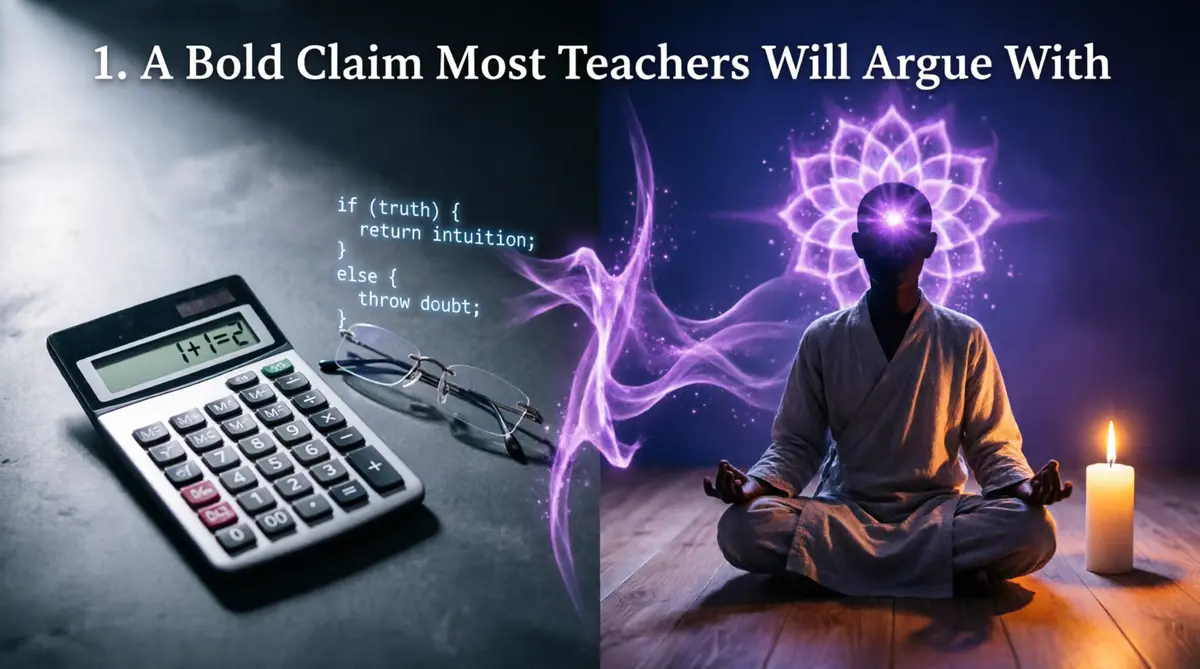
1. A Bold Claim Most Teachers Will Argue With.
Every spiritual teacher will tell you that a machine cannot wake up your inner eye. And in one sense, they are right — no app can hand you awareness. But most people who try to meditate quit within a week, not because the practice failed them, but because nobody reminded them to show up on day four, or day twelve, or day twenty-five. That is the gap where AI actually earns its place. Not as a guru. As the one thing that never forgets to knock on your door.

2. What Is the Third Eye, In Plain Words.
In yoga and tantric teaching, the third eye lives at the point between the eyebrows, called Ajna. It is not a physical organ you could find in an anatomy book. It is an inner sense — the part of you that notices things before words arrive, that feels a decision is wrong before the mind explains why. Your two eyes read the outside world. This inner eye reads the world of thought, feeling, and instinct.
3. When It's Closed: What Life Feels Like.
A dull or closed third eye shows up as fog. You second-guess your instincts. Small decisions feel exhausting. Dreams either vanish the moment you wake or never come at all. There's a low, background static in the mind — a sense of scrolling through your own life instead of living it. Some people also notice tension right at the forehead, as if thinking has become physically heavy.
4. When It Opens: What Changes.
People who describe an awakening third eye talk about a strange kind of quiet confidence. Answers show up before the question is fully asked. Sleep becomes rich with vivid, often symbolic dreams. Coincidences stop feeling random and start feeling like messages. Many describe a soft pulse or warmth right between the brows during meditation — and a growing ability to watch their own thoughts pass by, like clouds, without getting pulled into every single one.
5. One Person's 30 Days, Told Honestly.
Day 1: Nothing happened. Just an odd pressure between the eyebrows and a loud inner voice saying this is a waste of time.
Day 12: Started remembering fragments of dreams for the first time in years. Nothing dramatic — a hallway, a door, a color that wouldn't leave the mind all day.
Day 30: A dream of an old family member, long gone, handing over a mirror. Woke up in tears — not sad tears, recognition tears. As if something had been asleep in the corner of the room the whole time, and finally opened its eyes.
Whether this exact story is yours or not, this is the shape awakening usually takes. Slow, quiet, unglamorous — until it isn't.
6. The Skeptic's Objection — And a Fair Answer.
A fair critic will say: using AI for something spiritual is like using a calculator to write a poem — it misses the entire point.
Here is a fair answer. The calculator never writes the poem. It just handles the counting so the poet's mind is free to work on the actual verse. AI plays the same role here. It manages the reminders, the tracking, the small daily structure. The awakening itself — the felt experience of a mind becoming clear — stays completely, only, yours.

7. Old Way vs AI Way: A Side-by-Side Look.
| Old Way | With AI | What Actually Wins |
| Search for years to find the right teacher | Get a guided script in seconds | AI wins on accessibility |
| Study old texts in unfamiliar language | Ask AI to explain it in plain words | AI wins on understanding |
| Rely on willpower alone, most days you skip | AI reminds you, tracks streaks, adjusts the plan | AI wins on consistency |
| The actual moment of inner clarity | No algorithm can produce this | This one always belongs to the human |
8. Quick Check: Is Yours Sleeping or Stirring?
Answer honestly, in your head:
Do you remember your dreams? Often / Rarely / Never
Do you trust a gut feeling, or talk yourself out of it? Trust it / Doubt it / Ignore it
During quiet moments, do you feel any pressure or warmth between your eyebrows? Yes / No / Never tried sitting still long enough
Mostly first answers — your third eye is already stirring, and the 30-day plan below will accelerate it. Mostly second or third answers — it's asleep, not broken, and the same plan is exactly where to begin.
9. The Full 30-Day Plan, Week by Week.
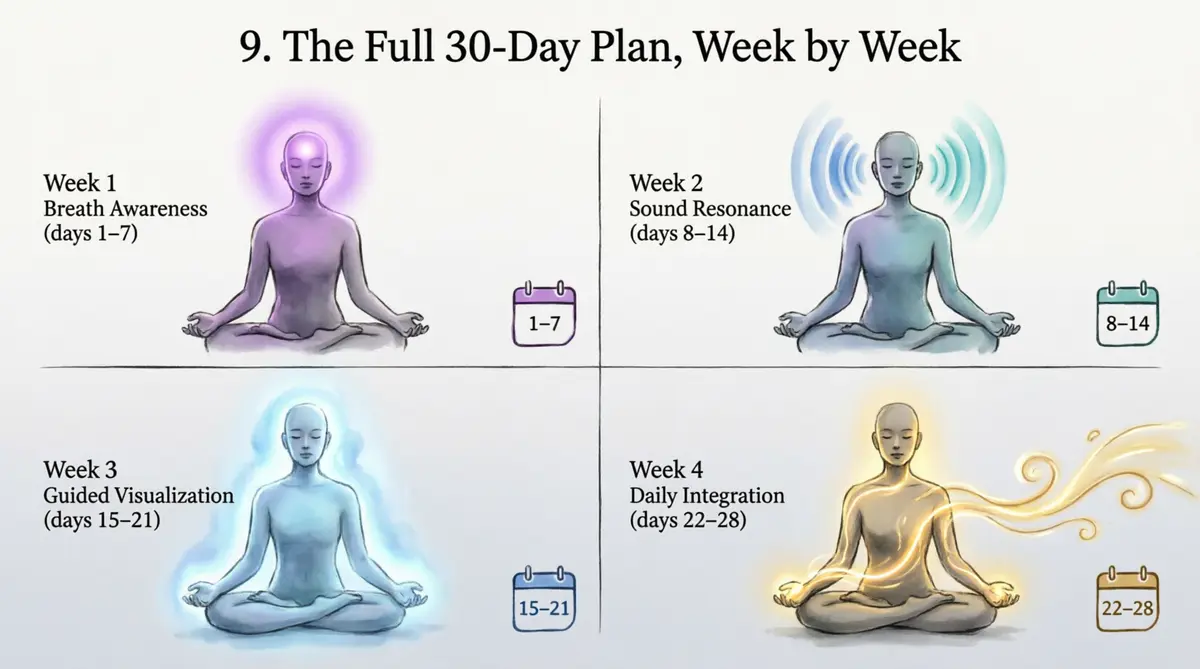
Week 1 — Just Show Up (Days 1–7)
Each morning, ask an AI assistant for a short two-minute breathing script that keeps your attention on the space between the eyebrows. Sit, close your eyes, follow the words. Each evening, tell the AI how your day went and ask it to point out any pattern in your worries or your calm moments. This week is only about building the habit of noticing yourself.
Week 2 — Sound and Stillness (Days 8–14).
Ask AI to explain the traditional link between the sound "Om" and the Ajna point, in plain modern words. Chant it softly for five minutes daily. Have the AI put together a short list of calm, low tones for background focus. Keep a simple log — pressure, warmth, tingling, or nothing at all — there is no wrong answer here.
Week 3 — Seeing With Closed Eyes (Days 15–21)
Request short visualization scripts from AI — a soft indigo glow at the forehead, growing gently with each breath. Practice ten minutes daily. Right after waking, describe any dream fragments to the AI and let it help you spot repeating symbols, since repetition is often where the subconscious is trying to speak louder.
Week 4 — Carrying It Into Life (Days 22–30)
This week moves the practice off the meditation cushion and into daily choices. Ask AI to design small daily challenges: trust one gut decision and watch what happens, pause three seconds before reacting in an argument, notice intuition before reaching for the phone. On day 30, write a short letter to yourself, with AI's help structuring it, describing exactly what shifted over the month.
10. Lines Worth Remembering.
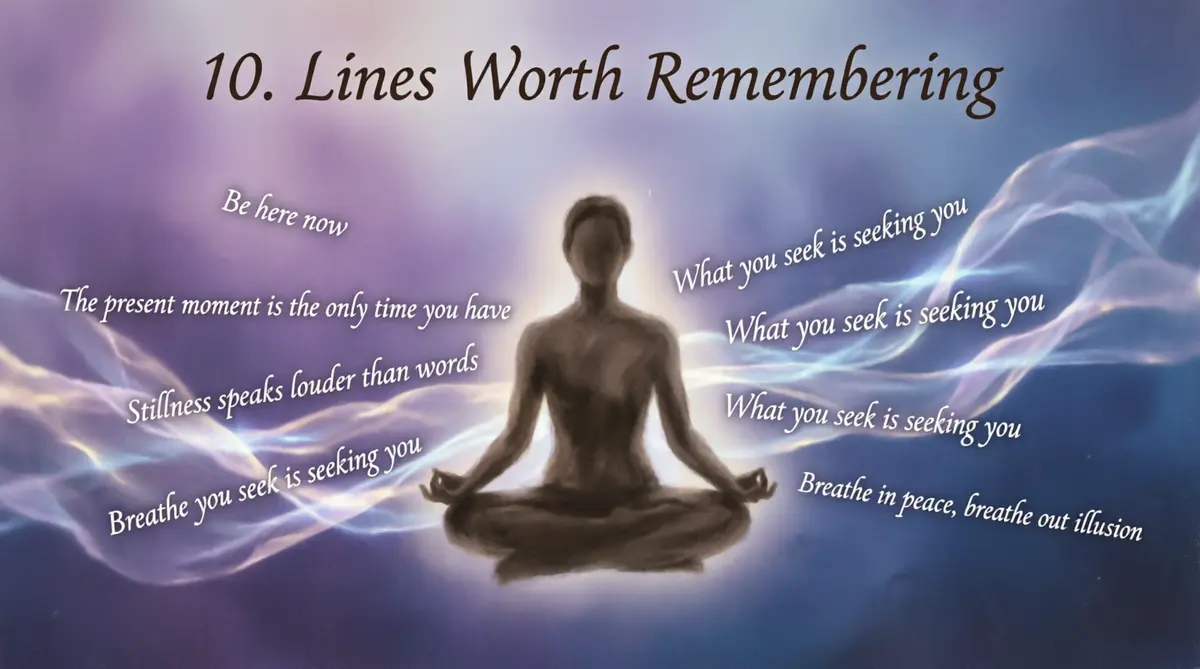
"The third eye doesn't open by force. It opens the way a flower opens — toward patient attention, not pressure."
"AI can't hand you enlightenment. But it can be the one that keeps showing up, every single day, holding the lamp."
"Who is watching my thoughts? That question has no mouth — and it's louder than any alarm clock."

11. Where This Goes From Here
Start day one tomorrow morning. Come back and share what you actually felt — even if it was nothing. Especially if it was nothing. Thirty days from now, read it back and see if the person who wrote it still sounds the same. This isn't a plan you finish alone in silence. It's one worth walking with other people doing the exact same thing, at the exact same time.