How AI Can Turn an Average Cricket Team Into a World Champion.
Ravi runs a small cricket academy on the outskirts of a district town in India. Last monsoon, one of his fifteen-year-old bowlers picked up a shoulder problem that nobody noticed until it had already turned into something serious, because there was no one around trained to tell normal soreness apart from the early stage of a stress injury. Ravi has watched at least six boys with real talent fade out over the years for the same reason: not lack of skill, but lack of anyone tracking their bodies, their sleep, or the pressure quietly building in their heads.
This is not a story about magic. It is a story about a gap that already has a proven fix, just not one that has reached most of cricket yet.
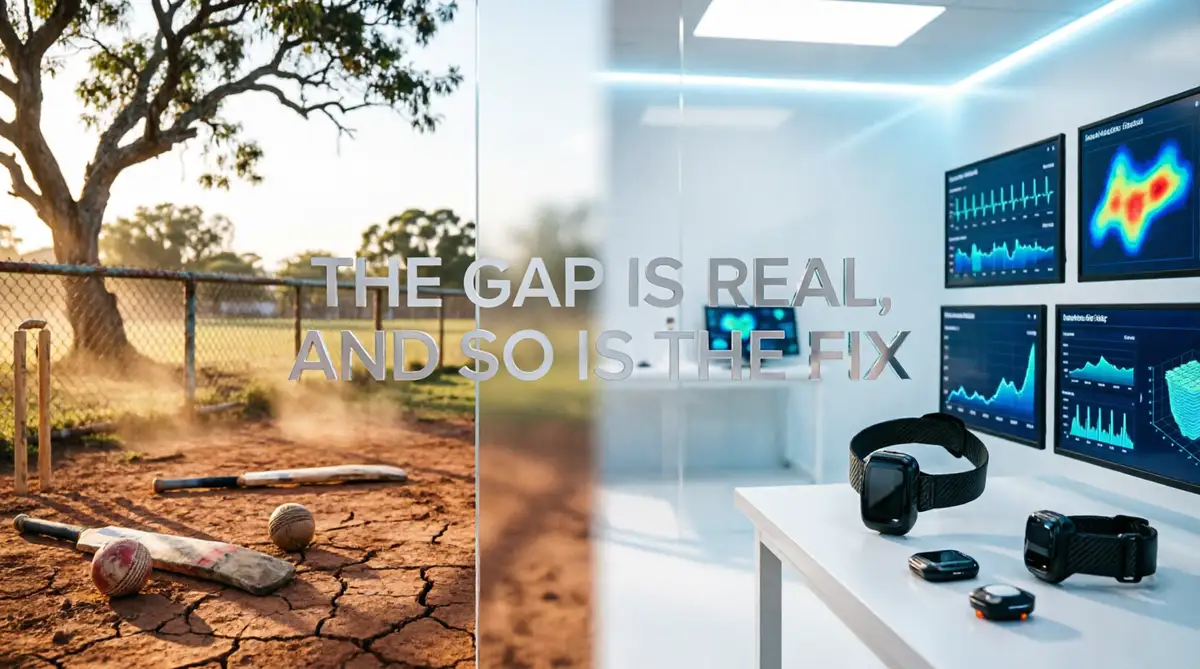
The Gap Is Real, and So Is the Fix.
India's National Cricket Academy already runs exactly this kind of system for its contracted pace bowlers. Fast bowlers wear GPS and heart-rate devices from companies like Catapult, Statsports, and Whoop, and the data feeds models that flag a bowler once his workload crosses a risky threshold. Physios at the NCA have used these workload scores to manage bowlers across formats, and the recurrence of stress fractures among India's fast bowlers has dropped by close to thirty percent over the last three seasons as a result. England's cricket board has reported a similar pattern, with data-driven training cutting injury rates by roughly a fifth. Mumbai Indians credited a model built to plan death-over bowling changes for a near thirty percent jump in wickets taken during overs sixteen to twenty in the 2025 IPL season.
None of this is speculative. It is already running inside the wealthiest teams in the sport. The problem is not whether this technology works. The problem is that it currently exists only where the money already is.
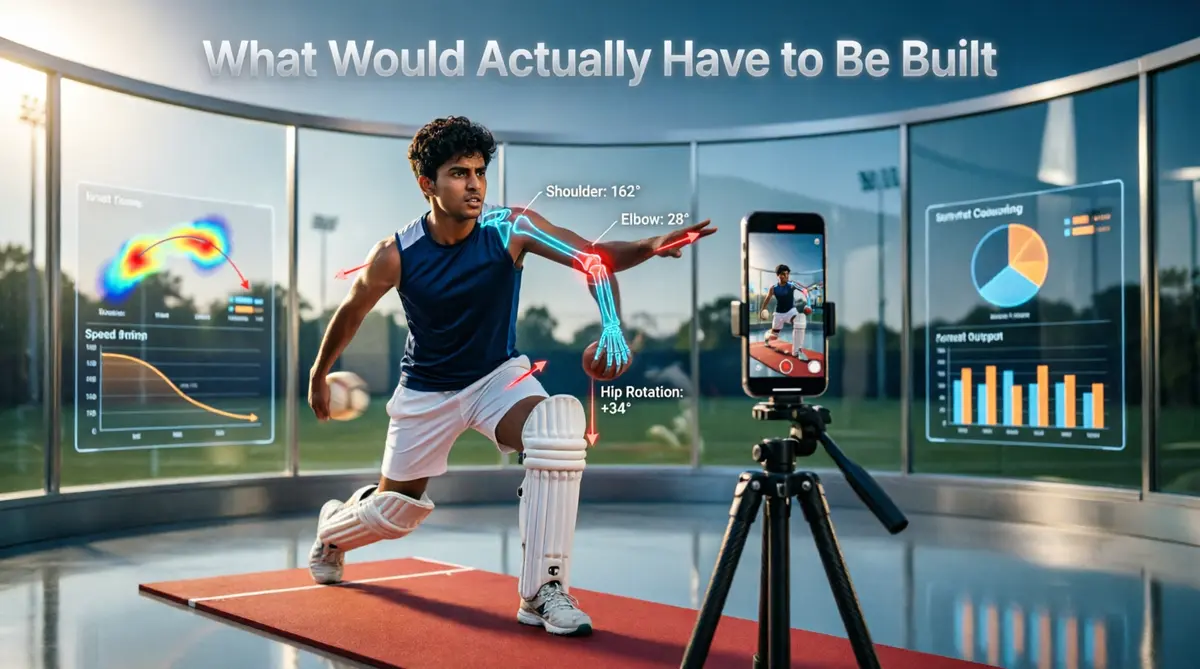
What Would Actually Have to Be Built.
A workable version of this for a mid-size or smaller cricket board does not need to copy the IPL franchise setup, which can cost lakhs per player per season in wearables, staff, and software licensing. It needs three things, built cheaply and shared across many players at once.
First, a basic wearable or even a smartphone-based motion tracker at the nets, recording bowling action and running load, cross-checked against the biomechanical ranges that research groups have already published on safe shoulder rotation and foot-landing angles. Computer vision models used in the IPL can already classify bowling actions and flag risky ones with well over ninety percent accuracy from ordinary video footage, which means an academy does not need expensive sensors bolted onto every player. A phone camera at the right angle can do a large part of this job.
Second, a simple daily check-in, on any basic phone, asking about sleep, soreness, and mood. This is the least technically difficult part, and also the part most academies skip entirely, because nobody owns the job of following up on the answers. An automated system that flags a three-day pattern of poor sleep or rising soreness to a coach solves that ownership problem without needing a psychologist on staff.
Third, a diet plan built around locally available food rather than imported supplement brands, adjusted to a player's own body weight, training load, and match schedule. This is the cheapest part to build and the part most academies currently do worst, usually relying on generic advice copied from a magazine rather than anything specific to the player in front of them.

Where This Should Not Be Oversold.
It would be dishonest to present this as a guaranteed shortcut to producing world-class cricketers. A system like this reduces injuries and catches problems early; it does not replace hours in the nets, and it cannot manufacture natural timing or hand-eye coordination that a player either has or does not. Boards that have adopted AI-based analytics fastest, India, Australia, and England, still lost key players to injuries and loss of form that no algorithm predicted. Wearable data is also only as useful as the willingness of coaches to act on it, and there have been cases in domestic cricket where workload alerts were logged and simply ignored because a player was needed for an important match.
There is also a legitimate concern around privacy. Constant tracking of a teenager's sleep, mood, and body data raises real questions about who owns that data, how long it is kept, and whether a board could one day use it against a player during a contract negotiation. Any board adopting this needs a clear, written policy on data ownership before a single wearable is handed out, not after.
A Realistic Starting Point for a Smaller Board.
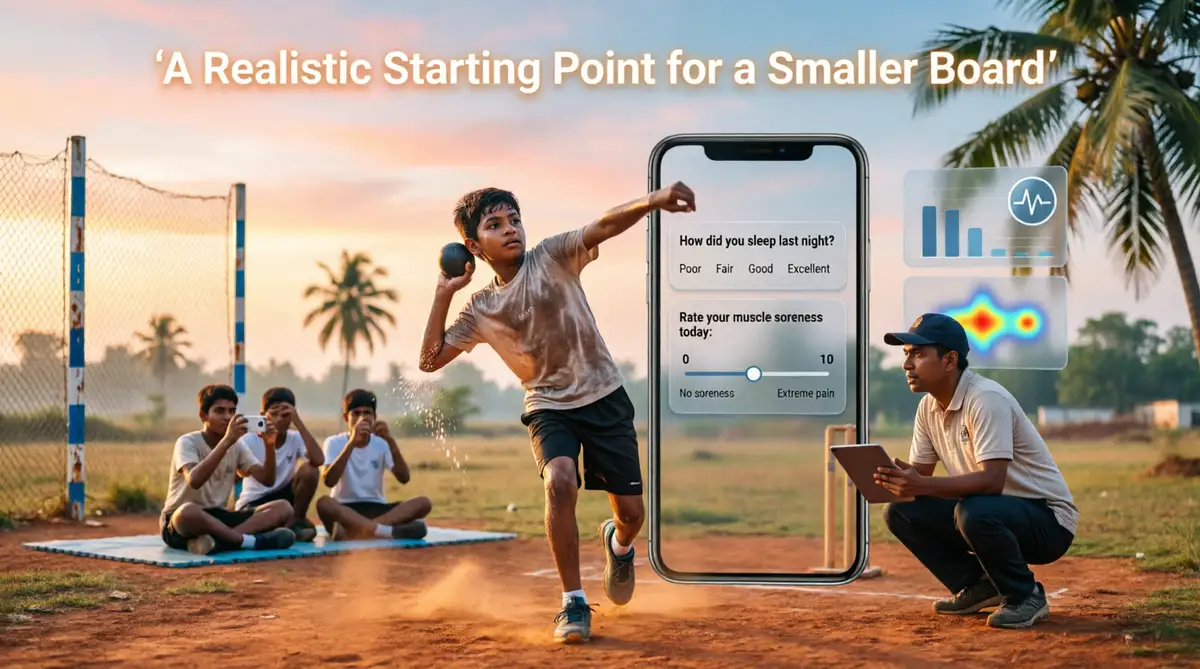
A board without IPL money does not need to build all of this at once. A sensible first step is a single pilot: twenty to thirty fast bowlers across two or three age-group squads, tracked with nothing more than smartphone video analysis and a daily check-in app, run for one full domestic season. The cost of this is a fraction of hiring a full-time physiotherapist for even one team, and the injury and workload data collected in that one season becomes the foundation for tuning the system before it is expanded further.
The market for this kind of cricket analytics software has grown fast enough, valued at a few billion dollars globally as of 2025 and still expanding quickly, that tools built for major leagues are starting to filter down to price points a state-level academy could realistically afford within a few years, the same way video analysis software went from something only national teams could afford in the 2000s to something available in most club-level setups today.
Ravi's bowler, the one with the shoulder nobody caught in time, is exactly the player this kind of system is built for. Not a guarantee of stardom, just an early warning that costs a fraction of what it costs to lose a talented seventeen-year-old to an injury that a phone camera and a daily three-question check-in could have flagged in week one.