
The Real 2026 Roadmap: How Agriculture Actually Catches Up With AI.
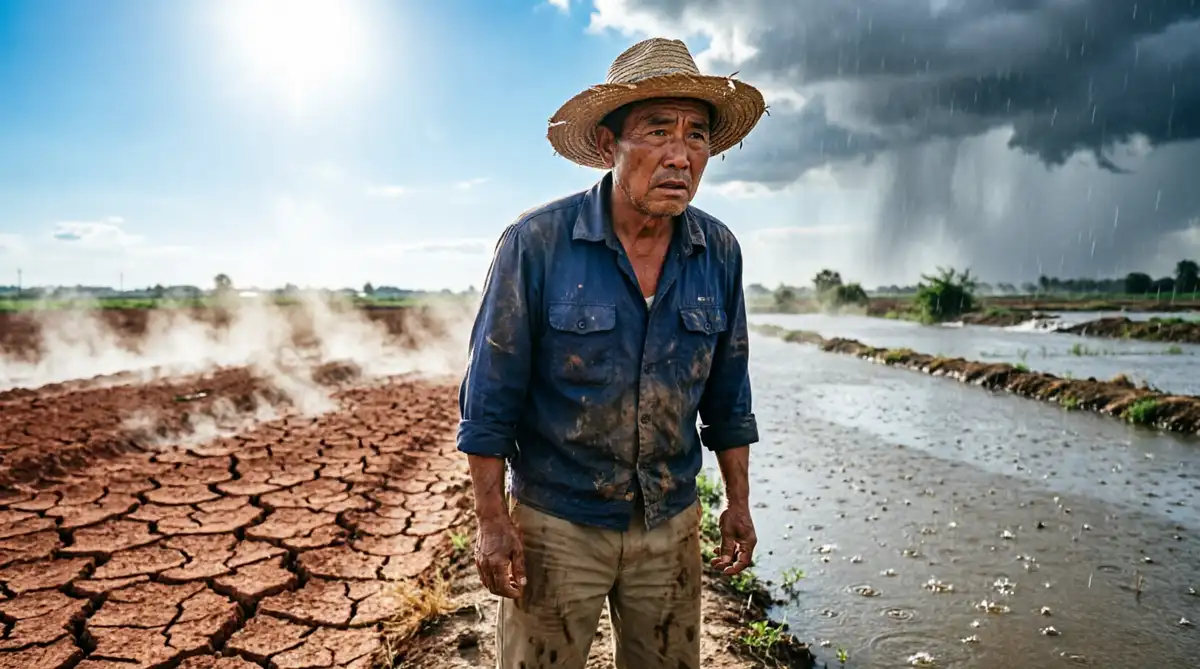
Climate change doesn't care whether your pilot program is finished yet.
Rain shows up late, or early, or not at all, and the old calendars everyone grew up trusting just can't keep pace anymore. Pests are turning up in fields where nobody's grandfather ever had to deal with them. Rivers that used to be enough are now barely getting a village through the dry months. None of this is a "someday" problem. It's sitting in the soil right now, this season.
Which is exactly why 2026 shouldn't be one more year of conferences about AI in farming. It needs to be the year this stuff actually shows up in daily work — on a two-acre plot, not just on the mega-farms with the deep pockets.
There's a workable path here, so let's get into it.
Step One: Start With One Crop, One Season, One Village.
Trying to fix an entire country's farming system in one go is how most of these programs quietly fall apart. Go smaller. Go specific.
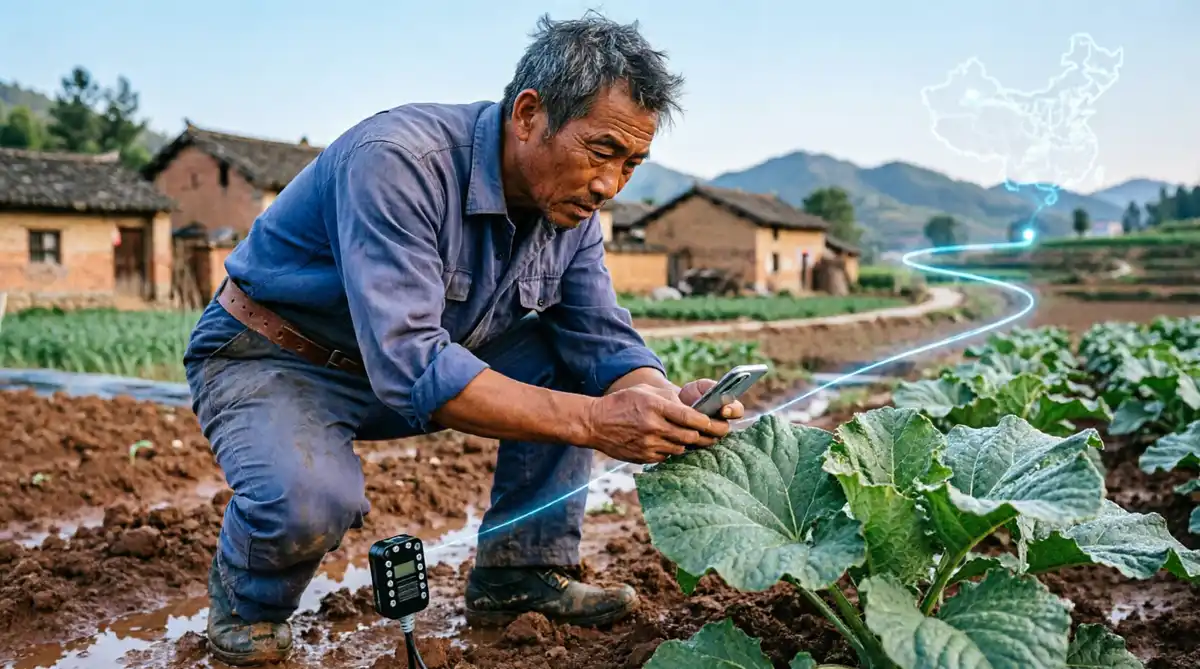
Choose one crop that a region actually depends on. One growing season. A handful of neighboring villages, not a whole province. Give them one or two tools — say, a phone app that spots crop disease and a cheap soil sensor — and track exactly what happens once that season wraps up. If the crop chosen is already struggling with new pests or a shrinking water table, the pilot ends up doing double duty: proving the tech works, and testing how well a region can actually adapt to what the climate's throwing at it.
Farmers rarely get convinced by a policy memo. They get convinced when the neighboring farm's harvest looks noticeably better than theirs did last year.
But local doesn't mean the story stays local forever. A fungal outbreak has no idea where a district line or a border sits — it just spreads. And whatever water one village saves upstream is water a village downstream is counting on. So the pilot can't just live on its own island. From the very first week, it needs a wire running back to a regional data system, so if disease turns up in one village, the district agriculture office knows about it immediately — not three weeks later, after it's already shown up in four other places and everyone assumed it was a separate problem.
Step Two: Be Honest About What This Actually Costs.
Most write-ups about AI in agriculture quietly skip the price tag, and that silence doesn't help anyone.
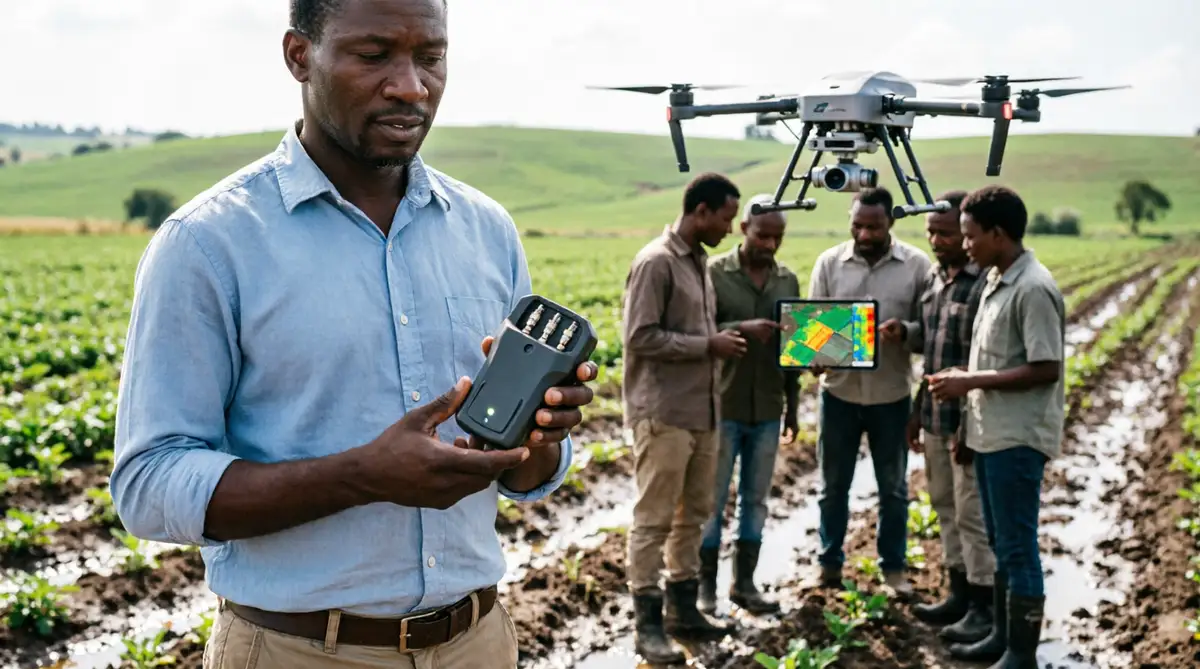
A basic soil sensor plus a season of app access lands somewhere close to what a farmer already spends on fertilizer or seed — real money, but not an impossible ask, especially split across a cooperative. Bigger equipment is a different story. Drone spraying and satellite monitoring only really pencil out at the level of a whole village or district, not for one small plot.
So here's what actually makes sense: let cooperatives and local governments pool money for the expensive, shared equipment, and let individual farmers only carry the cost of the cheap, personal tools like a sensor or an app subscription. Nobody should be promising a farmer earning a few dollars a day that a $2,000 drone is basically within reach. That kind of promise burns trust the moment it fails to materialize.
This shared-cost approach matters even more now that climate shocks are hitting closer together. A drought year, or a sudden pest wave, tends to arrive right when a single farmer has the least spare cash to buy anything new. Shared ownership means the tool's already sitting there, already paid for, ready before the next bad season lands — instead of something everyone scrambles to find money for after the damage is done.
Step Three: Fix the Boring Problems First — Power, Language, and Devices
This is the part that gets skipped in almost every excited AI write-up, and it's usually the exact reason a genuinely good tool ends up gathering digital dust.
Power. A phone with zero charge can't run anything, and plenty of rural regions still have electricity that comes and goes. Solar charging points in village centers, shared community charging spots, low-power devices — none of this is optional if the plan is serious.
Language. Build a tool only in English, or only in the country's official national language, and a huge share of farmers get left out — because plenty of them think and talk in a local dialect, not the language of a head office three hundred kilometers away. Real adoption happens when the tool speaks the way the farmer speaks.
Devices. Assuming every farmer owns a smartphone is unrealistic in a lot of places. Shared community phones, tablets owned by the cooperative, even a plain voice-call line that needs nothing more than a basic handset — all of these can move the same information to someone who's never touched a touchscreen.
Get these three right, and adoption takes off on its own. Skip them, and even the smartest app on earth just sits there, unopened. And as heatwaves and storms put more strain on already shaky power grids, solar charging stops being a nice-to-have — it becomes the thing standing between a flood warning arriving in time and arriving too late to matter.
Step Four: Big Farms and Small Farms Need Each Other, Not a Rivalry.
Large operations aren't villains in this story, even though it's tempting to frame it that way. Big farms are usually where new tools get tested first, simply because they're the ones who can absorb the cost and the risk of something not working right away.
The smarter setup treats large farms as the proving ground and small farms as the eventual destination. Once a tool's been tested, refined, and its price has come down on a bigger operation, a simpler, cheaper version of that same tool can move down to smallholders through cooperatives and shared-access setups.
It's not generosity flowing from big farms to small ones. It's just how most new technology becomes affordable for everyone — someone larger tests it first, and the rest of the chain benefits from what they learned.
Step Five: Bring In the Private Sector as a Partner, Not a Threat.
Government programs, on their own, rarely move fast enough or go deep enough technically to keep these tools updated for years. Private agri-tech companies usually can.
The setup that actually works splits the job by strength: governments handle infrastructure, subsidies, and reaching remote areas; private companies handle building and maintaining the actual software and hardware; universities handle training tools on local crops and soil conditions; and farmer cooperatives handle the last stretch — physically getting the tool into someone's hands and answering their questions in the field.
None of these groups can pull this off solo. Treating private companies like outsiders who shouldn't be trusted just slows everything down, and farmers end up stuck with tools that never get properly maintained.
Step Six: Build Trust, Don't Assume It.
A farmer who's slow to try something new isn't being difficult. His entire year's income rides on getting decisions right, and handing that kind of risk to an unfamiliar tool is a heavy ask.
Trust builds through small, low-stakes trials, not sweeping commitments. Let a farmer run the new tool on one corner of his land, right next to his usual method, so he can watch the comparison with his own eyes instead of taking anyone's word for it. A local trainer who speaks the same language and knows the same crops earns more trust in one conversation than any national awareness campaign ever will.
This takes time. Rush it, and the second attempt at trust becomes even harder than the first.
Step Seven: Track Real Numbers, Not Just Good Feelings.
A program with nothing measurable attached to it is a program that nobody can honestly fix or defend six months later.
Every rollout needs a short list tracked before and after: how much of the harvest was actually saved from pests or disease, how much water and fertilizer got used, how much the farmer walked away with at final sale, and — maybe most telling of all — how many farmers are still using the tool a full year in, not just during the excited first month.
These numbers matter twofold. They tell everyone honestly whether the thing is actually working, and they give a ministry solid evidence to expand a program on, instead of a hopeful guess dressed up as a success story.
Step Eight: Solve the Problems No Single Village Can Fix Alone.
Starting hyper-local is the right call, but a few problems were never local to begin with, and pretending they are just creates a headache down the road.
Pests cross borders without asking permission. A locust swarm or a fungal outbreak starting in one country's fields can be in a neighboring country's fields within days. The fix here isn't more technology — it's agriculture ministries in nearby countries agreeing ahead of time to share pest-detection data as it happens, instead of scrambling for a summit once the outbreak's already spreading. Build that early-warning network once, and it protects every village plugged into it.
Water never respects a village boundary. An AI-managed irrigation system that saves water upstream can quietly mean less water reaching a farm downstream — and that kind of tension caused real conflict long before any algorithm entered the picture. Rolling out smart irrigation seriously means a regional water-sharing agreement sitting underneath it, worked out by water authorities across the whole affected area, not left for individual villages to negotiate on their own.
Procurement rules can strangle a good pilot before it scales. A pilot that works beautifully in one village often stalls the second it needs to be purchased at scale, because national procurement systems were designed around tractors and fertilizer contracts, not software subscriptions or sensor networks. Governments that actually want this to scale need a separate, faster procurement lane built specifically for digital agriculture tools — one where a $2 sensor doesn't get buried under the same paperwork as a decade-long infrastructure contract.
None of these three issues get resolved by a village-level pilot, no matter how well that pilot runs. They need a layer sitting above it — regional agreements on pests and water, and a procurement system actually designed for how digital tools get bought and renewed. Skip that layer, and a genuinely successful local pilot quietly turns into a program that can never grow past the village where it started.
Putting It All Together.
Real progress for agriculture in 2026 won't arrive as one big announcement. It's a chain of realistic, connected moves:
Start small — one crop, one place — but pick a crop already under climate stress, and wire the pilot into national tracking from day one
Be upfront about the real cost and who's paying for what, so shared tools are already in place before the next drought or pest wave hits
Fix power, language, and device gaps before blaming farmers for slow adoption
Treat big and small farms as one connected chain, not competitors
Bring private companies in as builders, not outsiders to keep at arm's length
Earn trust through small trials, not big promises
Measure real results season after season, not just launch-day enthusiasm
Back every local pilot with regional pest and water agreements, plus a procurement system fast enough to actually buy the tools it needs
None of this calls for a miracle. It calls for coordination, patience, and honesty about what farming actually looks like on the ground — not what it looks like in a slide deck. And with weather turning less predictable every season, that coordination stops being a bonus. It becomes the thing deciding whether a region adapts in time, or spends the next decade reacting after the damage is already done.
That's the real gap between another year of talking about AI in agriculture, and a year where it actually changes how food gets grown — and how ready that food supply is for the climate it now has to survive.
If you're shaping policy: pick one crop, one region, one season, this year. Measure it properly. But start the regional pest and water conversations with neighboring authorities at the same time, and fix procurement rules before you need them — not after a pilot proves itself and then sits stuck waiting on paperwork built for a completely different era.
If you're a farmer:nobody's asking you to trust an entire
new system overnight. Try it small, on one corner of your land, and let your own harvest do the convincing.