

Picture this: a woman lying in bed at night, one hand resting gently on her belly, a whole world growing inside her that hasn't even opened its eyes yet. She thinks, "What will my child become? Will they be brave? Will they be able to handle this hard world without breaking down?"
This is not just one mother's question. It is the question of our times. Everywhere we look, there is stress, anxiety, phones stealing children's attention, and less and less real courage and peace. So here is the real question: can strength begin even before birth? Can a baby growing inside the womb already start building calmness and emotional strength?
The honest answer is: yes, to some real extent. Science does not say we can set an exact "percentage" of leadership inside a baby's brain. But science does say something powerful and true — a mother's mental state, her sleep, her voice, her food, and her love all shape her baby's nervous system, even before the baby is born. This is the real, honest knowledge every mother deserves to know.
So let's go through five real, trustworthy practices — in simple words, step by step.
Table of Contents
1. A Calm Mother, A Calm Baby — Stress Reduction and Mindfulness
2. The World of Sound — Prenatal Music Therapy
3. Food and Sleep — The Real Building Blocks of the Brain
4. Breath and Movement — Prenatal Yoga
5. A Bond That Starts Before Birth — Bonding Practices
6. Month-by-Month Guide
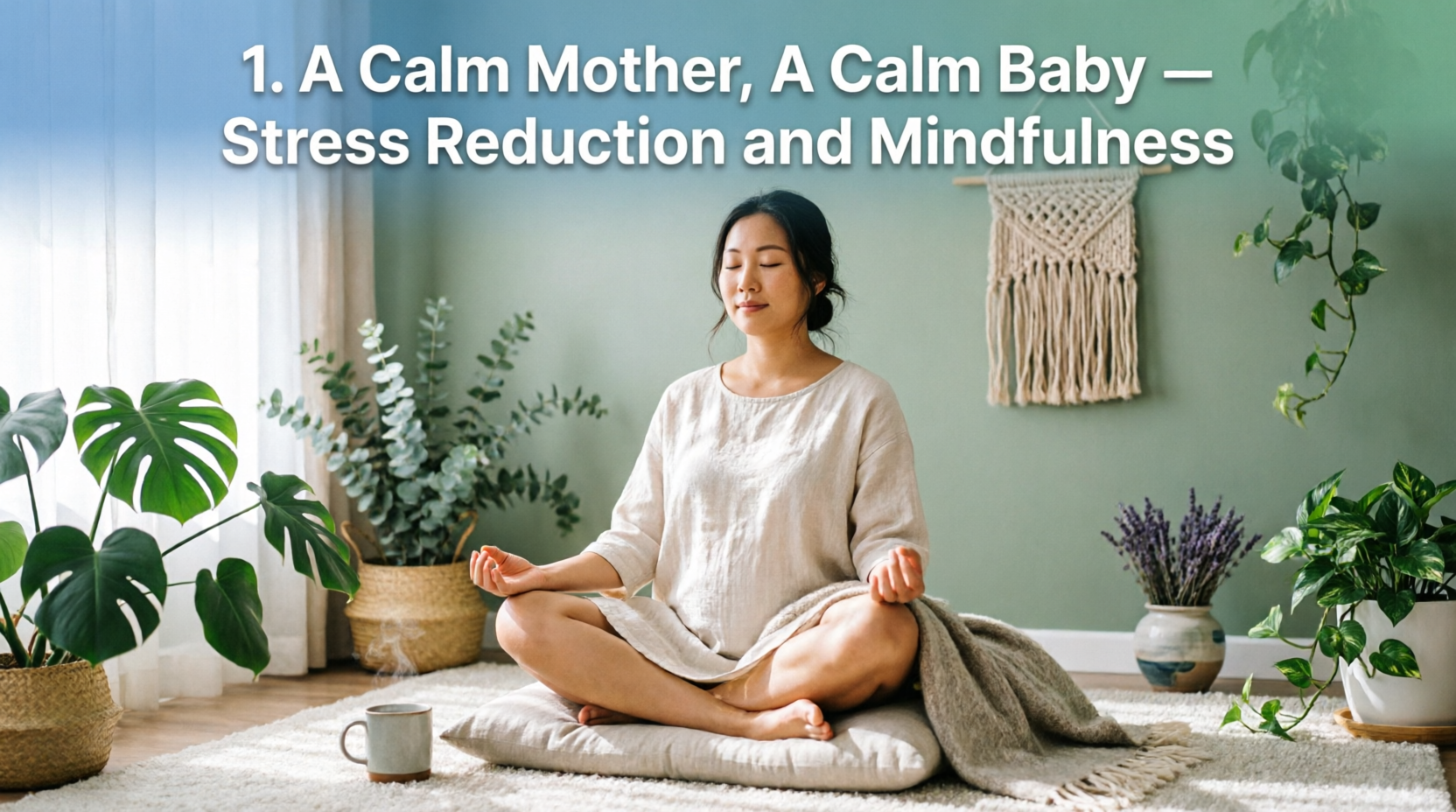
1. A Calm Mother, A Calm Baby (Stress Reduction and Mindfulness).
When a mother feels stressed, angry, or tense again and again, her body releases a hormone called cortisol. This hormone travels through the blood and reaches the baby too. Repeated, heavy stress can set the baby's nervous system into "alert mode" from the very start, which may make the child more anxious or easily upset later in life.
On the other hand, when a mother takes time each day to sit quietly, breathe deeply, or meditate, her body creates calming hormones — and this calmness reaches the baby too.
How to do it:
- Sit in a quiet place for 10 minutes every morning or night
- Close your eyes, breathe in slowly for 4 seconds, breathe out for 4 seconds
- Just think in your mind: "I am calm, my baby is calm too"

2. The World of Sound (Prenatal Music Therapy).
A baby can start hearing sounds from around the 18th to 20th week in the womb — the mother's voice, her heartbeat, and soft sounds from outside. Listening to gentle, soothing music helps the mother relax, and this shows up as calmer movement and heartbeat in the baby too.
How to do it:
- Listen to soft classical music, gentle songs, or peaceful tunes for 15–20 minutes daily
- Try to avoid loud noise, shouting, or angry arguments as much as possible
- You can also place a hand gently on your belly and talk softly to your baby

3. Food and Sleep — The Real Building Blocks.
A baby's brain grows very fast inside the womb, and it needs the right nutrition — especially iron, folic acid, omega-3 (found in fish, walnuts, or supplements recommended by a doctor), and protein. A mother's sleep matters just as much — poor sleep affects the mother's mood, and mood directly affects the baby.
How to do it:
- Try to get at least 7–8 hours of sleep every night
- Take folic acid and iron supplements as advised by your doctor
- Include green vegetables, lentils, fruits, and milk in your diet
- Try to reduce too much tea, coffee, and fried outside food
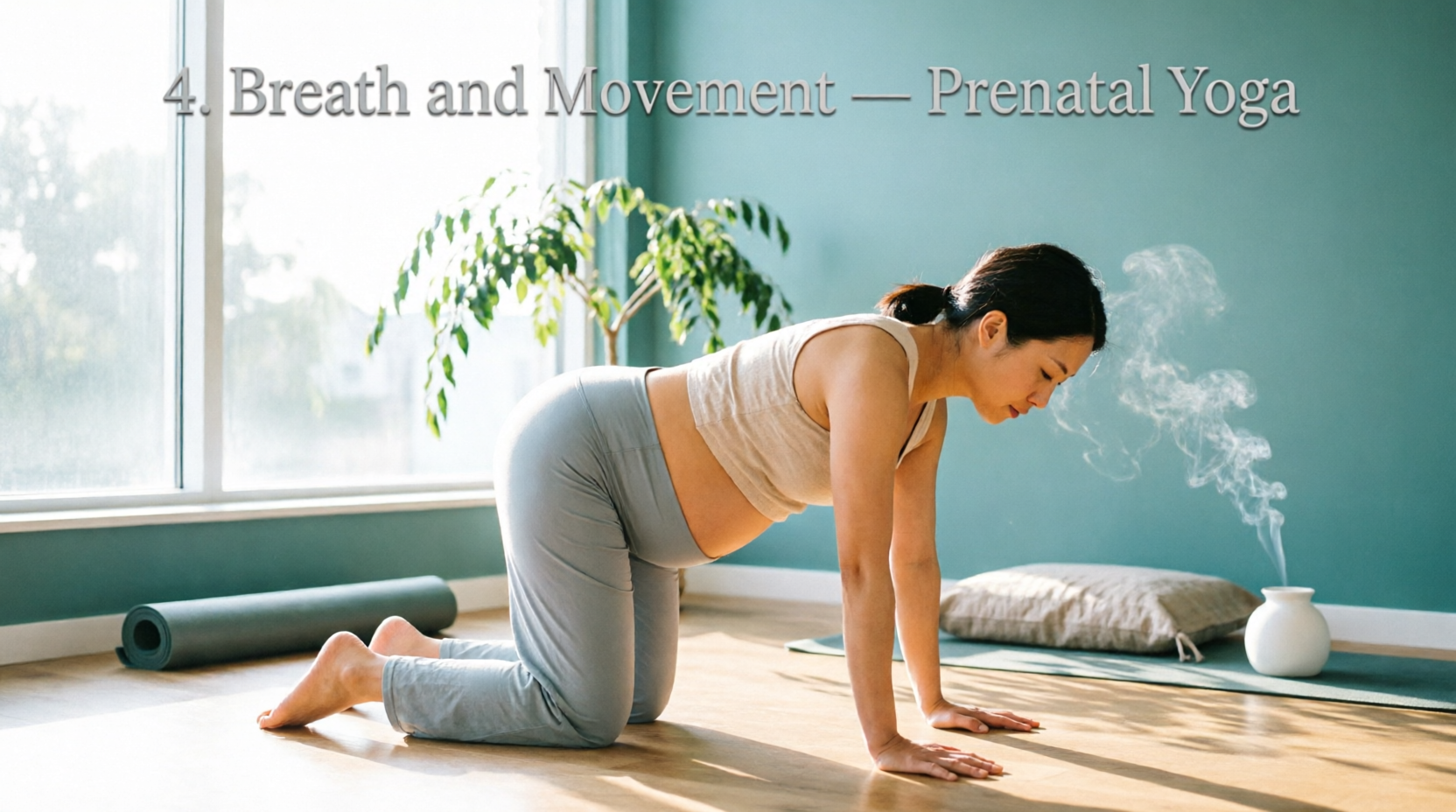
4. Breath and Movement (Prenatal Yoga).
Gentle prenatal yoga and breathing exercises don't just help the mother's body — they help her mind too. These practices can make labor easier, and by reducing the mother's stress, they bring calmness to the baby as well.
How to do it (only with your doctor's approval):
- Do gentle prenatal yoga 3–4 days a week, guided by a trained instructor
- Practice 5 minutes of deep breathing every morning
- Avoid heavy exercise or jumping movements
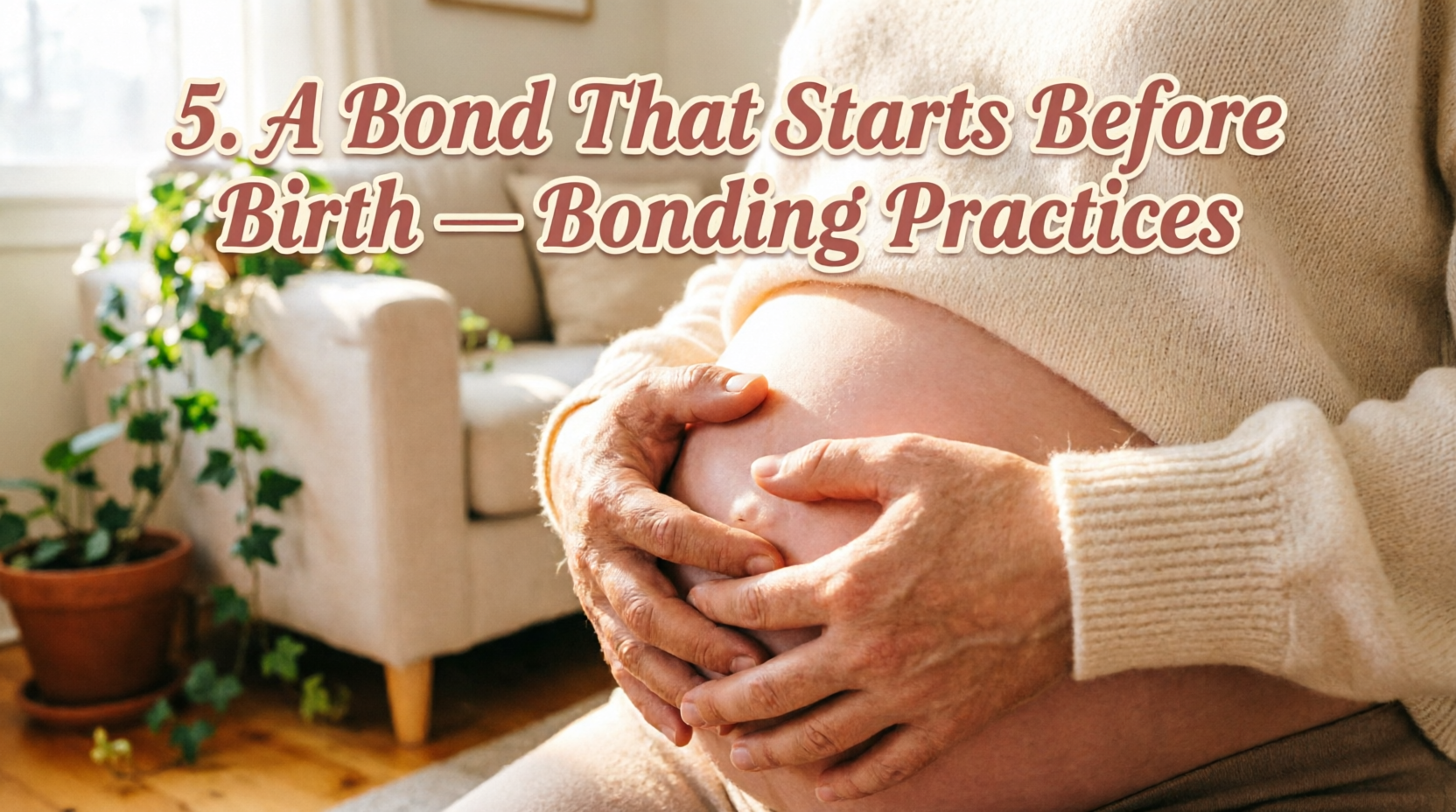
5. A Bond That Starts Before Birth (Bonding Practices).
When a mother — and father too — talks to the belly, gently pats it, or hums a soft tune, it's more than just an emotional moment. It creates the baby's very first sense of safety and connection. This early feeling of security becomes the foundation of the child's confidence later in life.
How to do it:
- Spend a few minutes each day talking to your baby with your hand on your belly
- Involve the father too — babies start recognizing his voice as well
- Hum a gentle lullaby or a soft prayer every day

Month-by-Month Guide.
Months 1–3 (First Trimester):
This is a time of major body changes and tiredness. Just start simple — sit quietly for 10 minutes daily and focus on good sleep. Skip heavy yoga for now; gentle breathing exercises are enough.
Months 4–6 (Second Trimester):
By now, the baby can start hearing sounds. This is the time to begin listening to music and talking to your belly. With your doctor's approval, you can also start gentle prenatal yoga.
Months 7–9 (Third Trimester):
Now bring all five practices together into a simple daily routine — calmness, music, good food and sleep, gentle movement, and daily bonding time. The closer you get to delivery, the more a calm and prepared mind helps both you and your baby.
There is no magic in these five practices, and no shortcut. They are not a guarantee of a "perfect" child, and there is no exact formula or percentage involved. But one thing is true: a calm mother, full of love, good sleep, and good food, can give her baby a strong, safe, and peaceful start even before
the baby enters the world. And maybe that is where real courage — and real belonging — truly begins.
Comments (0)
Please sign in to join the conversation.
No comments yet. Be the first to join the discussion!